Mortise

Definition and stakes

Chambers's Twentieth Century Dictionary…

“ Mortise, mor′tis, n. a cavity cut into a piece of timber to receive the tenon, a projection on another piece made to fit it: stability, power of adhesion—also Mor′tice.—v.t. to cut a mortise in: to join by a mortise and tenon. [Fr. mortaise; ety. unknown.]
Mortmain, mort′mān, n. the transfer of property to a corporation, which is said to be a dead hand, or one that can never part with it again.—Statutes of mortmain, acts of parliament restricting or forbidding the giving of property to religious houses. [Fr. mort, dead, main—L. manus, the hand.]
”

Source: Gutenberg

Edgar Pangborn,  The Trial of Callista Blake

“ On lifting the body I found that rigor was complete, and post-mortem lividity noticeable in the face and hands."
"Please explain those terms for the jury, will you?"
"Rigor mortis is the stiffening that takes place, usually from two to six hours after death, and may continue from twelve to forty-eight hours. Post-mortem lividity is a discoloration caused by the settling of the blood to whatever [78] parts of the body are lowest when the heart action ceases."
”
Source: Gutenberg

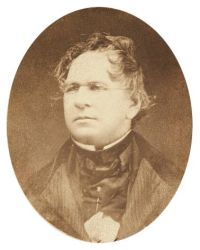
Portrait of Francis Henry Giles Francis Henry Giles,  About a Love Philtre, Known to the Siamese as Nam Man Prai… (1938)

“ Another method adopted for obtaining the fluid matter from a corpse is as follows:— The earth of the grave covering the upper portion of the corpse is removed so as to be able to undo the funeral wrappings that the corpse may rise to a sitting posture. A post is driven into the earth, to which the corpse while in this position is tied. The doctor then proceeds to drain off the liquid from the forehead or chin by applying a lighted candle. Should the corpse have a wax mask on its face, this must be taken off. ”
Source: Wikisource

Get perspective with Kwize: daily news enlightened by great literature