“ The form of a musical composition must be simple indeed if I am to grasp it honestly. My opinion about music is not worth having. Yet, sometimes, at a concert, though my appreciation of the music is limited and humble, it is pure. Sometimes, though I have a poor understanding, I have a clean palate. Consequently, when I am feeling bright and clear and intent, at the beginning of a concert for instance, when something that I can grasp is being played, I get from music that pure aesthetic emotion that I get from visual art. ”
Musical appreciation
Definition and stakes
The theme of “musical appreciation” has been addressed by authors such as Carl E. Seashore, De Witt H. Parker, Thomas Carlyle, Daniel Gregory Mason and Clive Bell. It is often associated with terms like music, harmony, melody, symphony and opera.
Quotes about “musical appreciation”
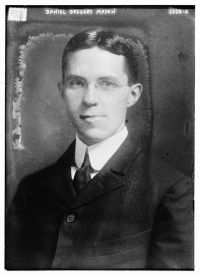 Daniel Gregory Mason,
The Appreciation of Music - Vol…
Daniel Gregory Mason,
The Appreciation of Music - Vol…
“ The great object of musical analysis must always be to concentrate the attention of the music-lover, to focus his mind as well as his ears on the melodies, and their developments, which he hears, and so eventually to increase his pleasure in music, and to help him to substitute for that "drowsy reverie, relieved by nervous thrills," an active, joyful, vigorous co-operation with composers, through which alone he can truly appreciate their art. ”
 Wesley Mills,
Voice production in singing and speaking…
Wesley Mills,
Voice production in singing and speaking…
“ Whatever difference of opinion there may be as to choral singing, singing in schools, etc., there can be no question that time spent in developing the appreciation of musical art is well spent, and makes for the development and provides for the innocent and elevating sources of enjoyment of a people. If some of the time spent in bad piano-playing were devoted to the development of the power to appreciate and delight in really good music, including the sweet sounds of speech and song, the world would thereby be greatly the gainer. ”
Francis B. Pearson, The Vitalized School
“ Music and life.—Having a sensory foundation capable of reacting to the best music, this man opens wide the portals of his world for the reception of the orchestra, the concert, the opera, and the choir, and his spirit revels in the “concord of sweet sounds.” Through the toil of the day he anticipates the music of the evening, and the next day he goes to his work buoyant and rejuvenated by reason of the musical refreshment. He has music in anticipation and music in retrospect, and thus his world is regaled with harmony. ”
 Augusta Theodosia Drane,
Christian Schools and Scholars
Augusta Theodosia Drane,
Christian Schools and Scholars
“ Moreover, the discipline of music is diffused through all the acts of our life. For when we keep the commandments of God, and observe His law, it is certain that our words and acts are associated by musical rhythm with the virtues of harmony. ”
The Art of Music, Vol. 02 (of 14…
“ And so in the nineteenth century men came to feel that beautiful music cannot be merely contemplated and admired, but must be lived with and felt. Accordingly composers of this period emphasized continually the sensuous in their music, developing orchestral colors, dazzling masses of tone, intense harmonies and biting dissonances, delicate half-lights of modulation, and the [Pg 221] deep magic of human song. The change in attitude from music as a thing to be admired to music as a thing to be felt is perhaps the chief musical fact of the early nineteenth century. ”
Thomas Carlyle, Sartor Resartus, and On Heroes… (1901)
“ If your delineation be authentically musical, musical, not in word only, but in heart and substance, in all the thoughts and utterances of it, in the whole conception of it, then it will be poetical; if not, not.—Musical: how much lies in that! A musical thought is one spoken by a mind that has penetrated into the inmost heart of the thing; detected the inmost mystery of it, namely the melody that lies hidden in it; the inward harmony of coherence which is its soul, whereby it exists, and has a right to be, here in this world. All inmost things, we may say, are melodious ”
Francis David Morice, Pindar (1879)
“ It is then the less surprising, though it is surprising still, that they were contented in their music to gratify their sense of melody and rhythm, without exploring the mines of musical enjoyment which have been opened to modern audiences by the discoverers of counterpoint and harmony. ”
 Vernon Lee,
Laurus Nobilis: Chapters on Art and Life
Vernon Lee,
Laurus Nobilis: Chapters on Art and Life
“ It must be shaped, and strung, and kept carefully in tune; no easy matter in surroundings little suited to delicate instruments and delicate music. Possessing it, we possess, in the only true sense of possession, the whole world. For going along our way, whether rough or even, there are formed within us, singing the beauty and wonder of what is or what should be, mysterious sequences and harmonies of notes, new every time, answering to the primæval everlasting affinities between ourselves and all things; our souls becoming musical under the touch of the universe. ”
John Weeks Moore, Complete Encyclopaedia of Music… (1880)
“ Of all the fine arts, music is that which has most influence on the passions, and which the legislator ought the most to encourage. A musical composition of an intellectual character, if the work of a master, never fails to touch the feelings ”
“ Every character, male and female, is “passionately fond of music.” Which means? That the readers of this stuff consider a passionate love of music to be fashionable. It is so easy, you see, to possess it. There is no need to study either musical theory, practice, history, or biography. An inane expression of vacuous content when music is being rendered, a quantity of rhapsodical rubbish about Chopin and Beethoven without any knowledge of either, and behold! a lover of music. ”
 John Muir,
The Story of My Boyhood and Youth
(1913)
John Muir,
The Story of My Boyhood and Youth
(1913)
“ Alighting on nearby trees, they sing with a hearty vengeance, bursting out without any puttering prelude in gloriously glad concert, hundreds or thousands of exulting voices with sweet gurgling _baumpalees_ mingled with chippy vibrant and exploding globules of musical notes, making a most enthusiastic, indescribable joy-song, a combination unlike anything to be heard elsewhere in the bird kingdom; something like bagpipes, flutes, violins, pianos, and human-like voices all bursting and bubbling at once. ”
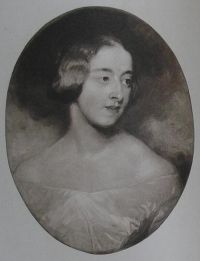 Elizabeth Rundle Charles,
The Ravens and the Angels, with Other Stories and Parables
Elizabeth Rundle Charles,
The Ravens and the Angels, with Other Stories and Parables
“ Every living leaf of mine had melody, and all together made a stream of many-voiced music; whilst around me were countless living trees like myself, who woke at every dawn to a chorus in the morning breeze. But since the axe was laid at our roots, all the music has gone from our branches. We are useful still, they say, in the gallant ship, and our country mentions us with honour even in death; but the music has gone from us with life for ever, and we can only groan and creak in the storms. Life made us musical," said the Oak-beam.What makes creatures musical? ”
Leta S. Hollingworth, Special talents and defects (1923)
“ It is not agreed as to whether birds can appreciate music. They respond to it, and even imitate it, as in the case of the mocking bird, but we cannot be sure that their singing is for “pure joy,” or for the love of the melody rendered. With the majority of men we know that musical tones arranged in melody or harmony act as original satisfiers, by and in themselves. “Music hath power to soothe the savage breast.” ”
 E. T. A. Hoffmann,
Weird Tales, Vol. 2 (of 2)
E. T. A. Hoffmann,
Weird Tales, Vol. 2 (of 2)
“ No art, I believe, affords such strong evidence of the spiritual in man as music, and there is no art that requires so exclusively means that are--purely intellectual and ætherial. The intuition of what is Highest and Holiest--of the Intelligent Power which enkindles the spark of life in all Nature--is audibly expressed in musical sound; hence music and song are the utterance of the fullest perfection of existence--praise of the Creator! ”
 Fanny Fern,
Caper-Sauce: A Volume of Chit-Chat about Men…
Fanny Fern,
Caper-Sauce: A Volume of Chit-Chat about Men…
“ Happy they, whose full souls can lighten their secret burdens by the low musical plaint, understood only by those who have themselves loved and suffered! [Pg 257] Of how many tried and aching hearts has music been the eloquent voice? The ruffled brow grows smooth beneath its influence ”
Charles Edwyn Vaughan, English literary criticism
“ But the sense of musical delight, with the power of producing it, is a gift of imagination; and this, together with the power of reducing multitude into unity of effect, and modifying a series of thoughts by some one predominant thought or feeling, may be cultivated and improved, but can never be learnt. ”
 William De Morgan,
Somehow Good
William De Morgan,
Somehow Good
“ If so, you have no doubt felt, as we have, a sense of perfect satisfaction at faultless musical structure, without having to surrender your soul unconditionally to the passionate appeal of a Beethoven, or to split your musical brains in conjectures about what Volkanikoffsky is driving at. You will find at the end that you have passed an hour or so of tranquil enjoyment, and are mighty content with yourself, the performers, and every one else. ”
The German Classics of the Nineteenth and Twentieth Centuries…
“ I can no longer separate myself from it, but with impetuous rapture I must reproduce it in all modulations, and, in the final moment, I triumph over the musical idea—and that, you see, is a symphony! Yes, music is truly the mediator between the spiritual and the sensuous world. ”
 James M. Trotter,
Music and Some Highly Musical People
James M. Trotter,
Music and Some Highly Musical People
“ Here is seen, it must be admitted, what appears very much like genius in the melody-making power. Something it is, undoubtedly, that shows an innate comprehension, power in expression, and love of harmony, in a degree that is simply intense. The history of the colored race in this country establishes the fact, too, that no system of cruelty, however great or long inflicted, can destroy that sympathy with musical sounds that is born with the soul. ”
Mrs. John Lane, The Champagne Standard
“ No other art is able to inflict such merciless suffering! Under the name of music we are afflicted with every variety of noise, including the hand organ, the bagpipes, the German band, the man who toots the cornet in the street, the harp man, the lady who has seen better days and who sings before our house in the evening, the active piano-organ invented by a heartless genius, the musical box and all its amazing progenies, the gramophone and the pianola. ”
H. Ernest Hunt, Spirit and Music
“ Surely it is to the young that we must look if the love of music is to be fostered and encouraged in the coming years. "Let the rising generation become thoroughly well acquainted with the best Musical works through the medium of concert-lectures, the mechanical piano-player, municipal, hotel, and garden concerts. ”
James M. Trotter,
Music and Some Highly Musical People
“ Its tones of melody and harmony require only to be heard in order to awaken in the breast emotions the most delightful. And yet who can speak at all of an agency so charming in other than words of warmest praise? Again: if music be a thing of such consummate beauty, what else can be done but to tender an offering of praise, and even of gratitude, to those, who, by the invention of most pleasing combinations of tones, melodies, and harmonies, or by great skill in vocal or instrumental performance, so signally help us to the fullest understanding and enjoyment of it? ”
Carl E. Seashore, Why We Love Music (1941)
“ It may be good or bad, inborn or cultivated, genuine or simulated, and often runs into eccentricities so that we frequently view it in a superior attitude of amusement. But let us thank all the gods in the Kingdom of the Muses for their great gift, the potentially good musical temperament. ”
George T. Ferris, The Great German Composers
“ There could be no question as to the utter incongruity of any dramatic picture of ordinary events, or ordinary personages, finding expression in musical utterance. Genuine and profound art must always be consistent with itself, and what we recognize as general truth. Even characters set in the comparatively near hack-ground of history are too closely related to our own familiar surroundings of thought and mood to be regarded as artistically natural in the use of music as the organ of the every-day life of emotion and sentiment. ”
De Witt H. Parker, The Principles of Aesthetics
“ For when the musical meaning is specialized through the emotions that are the burden of the song, it necessarily loses the power which it would otherwise have of expressing one's own inner life—once more, what it gains in definiteness it loses in scope. It no longer possesses the unique function of the musical. ”
Famous Composers and Their Works…
“ One feels that here a superior artistic spirit, an eminent musical genius reigns; a genius drawing inspiration from the purest musical source, guided by high literary and æsthetic culture, scorning imitation and cheap, tawdry effects, but in each new song striving for strength, character and perfect harmony with the poet whose work his music honors. ”
James M. Trotter,
Music and Some Highly Musical People
“ Indeed, it would seem that the time has not yet come for attempts to be made to improve upon the works of those great musical luminaries; for they have left too much that is deep, classical, charmingly beautiful, and soul-satisfying. The musical world has paused, not caring to go farther, to conscientiously study their noble creations, so fruitful in the delights, the soul-elevating influences, which they afford. ”
“ Incapable of feeling the austere emotions of art, I begin to read into the musical forms human emotions of terror and mystery, love and hate, and spend the minutes, pleasantly enough, in a world of turbid and inferior feeling. At such times, were the grossest pieces of onomatopoeic representation—the song of a bird, the galloping of horses, the cries of children, or the laughing of demons—to be introduced into the symphony, I should not be offended. ”
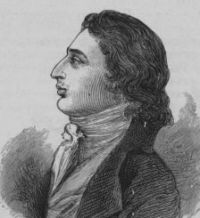 Robert Southey,
The doctor, &c., vol. 2 (of 7)
(1834)
Robert Southey,
The doctor, &c., vol. 2 (of 7)
(1834)
“ We in some sort listen to such music as we do to the pleasing murmur of a neighbouring brook, the whisper of the passing breeze, or the distant warblings of the lark and nightingale; and if agreeable natural voices have the power of soothing the contemplative mind, without interrupting its contemplations, simple musical effusions must assuredly have that power in a superior degree. ”
George T. Ferris, Great Musical Composers: German…
“ How much further music can be made to assimilate to the other arts in directness of mental suggestion, by wedding to it the noblest forms of poetry, and making each the complement of the other, is the knotty problem which underlies the great art-controversy about which this article concerns itself. On the one side we have the claim that music is the all-sufficient law unto itself; that its appeal to sympathy is through the intrinsic [Pg 134] sweetness of harmony and tune, and the intellect must be satisfied with what it may accidentally glean in this harvest-field ”
Edward Baxter Perry, Descriptive Analyses of Piano Works
“ But there is, I claim, a deeper interest and a higher pleasure to be derived from seeking, beneath the smoothly flowing harmonies and graceful, rippling embellishment, for the allegorical significance or suggestion mirrored in their clear depths, as scenes and faces are reflected in the tranquil stream, and which are rarely, if ever, wanting in the true art work.The “theme and variations” in music, which owes its origin to the first crude attempts of early composers to elongate and develop a musical idea into a symmetrical art form, corresponds to a very early phase of another art. ”
 Romain Rolland,
Jean-Christophe, Volume I
Romain Rolland,
Jean-Christophe, Volume I
“ But where music is concerned,—hands off! I will not suffer you to debase the loveliness of the world by heaping up in the same basket things holy and things shameful, by giving, as you do at present, the prelude to Parsifal between a fantasia on the Daughter of the Regiment and a saxophone quartette, or an adagio of Beethoven between a cakewalk and the rubbish of Leoncavallo. You boast of being a musical people. You pretend to love music. What sort of music do you love? ”
De Witt H. Parker, The Principles of Aesthetics
“ The second cause for the concreteness of the musical experience I take to be certain emotions and feelings which are aroused by association, not with the rhythmic elements of music alone, but with the tone-color, intensity, and melody also. There is a human quality, a poignancy and intimacy, about much music, which can be understood only through its analogy with the sounds of the human voice. ”
Carl Engel, Musical Myths and Facts, Volume 2…
“ Many more examples from nations in different stages of civilization could be cited evidencing the remarkable variety and instability of musical taste. Much of our own music, which about a century ago was greatly admired, appears [Pg 240] now unimpressive; and great masters who introduce important innovations are sure at first not to be understood by the majority of musical people. ”
Related terms
Authors who wrote about “musical appreciation”
Carl E. SeashoreDe Witt H. ParkerThomas CarlyleDaniel Gregory Mason Clive Bell
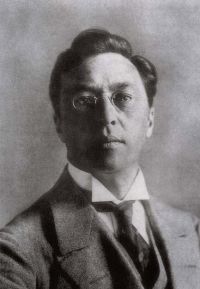 Wassily Kandinsky
 Herbert SpencerEdward Baxter PerryGeorge T. FerrisJames M. TrotterFrancis B. PearsonJohn Muir
 William McFeeJohn Weeks MooreVernon LeeFrancis David MoriceAugusta Theodosia DraneWesley MillsElizabeth Rundle CharlesMrs. John Lane
Daniel Gregory MasonClive BellWassily KandinskyHerbert SpencerEdward Baxter PerryGeorge T. FerrisJames M. TrotterFrancis B. PearsonJohn MuirWilliam McFeeJohn Weeks MooreVernon LeeFrancis David MoriceAugusta Theodosia DraneWesley MillsElizabeth Rundle CharlesMrs. John Lane