“ Upon their destruction she wastes so much of her valuable time that, could there be a thought in their small, slimy, gelatinous bodies, they must look upon her as the fell destroyer of their race,—a sort of natural enemy. ”
Natural enemy
Definition and stakes
The theme of “natural enemy” has been addressed by authors such as Washington Irving, William James, Alfred Russel Wallace, W. H. Hudson and Edmund Selous. It is often associated with terms like insect, animal, species, human and nature.
Quotes about “natural enemy”
 Sir Samuel White Baker,
Wild Beasts and Their Ways, Reminiscences of Europe…
Sir Samuel White Baker,
Wild Beasts and Their Ways, Reminiscences of Europe…
“ My experience does not support this theory. Nearly all animals have some natural enemy, which keeps them on the alert, and renders them suspicious of all strange objects and sounds that would denote the approach of danger. ”
William Bingley, Useful Knowledge: Volume 3. Animals
“ Being a natural enemy of the whole serpent race, and of other noxious reptiles which infest that country, it unsparingly attacks and destroys them. It combats, without dread, even the most venomous serpents ”
 Washington Irving,
The Sketch-Book of Geoffrey Crayon
Washington Irving,
The Sketch-Book of Geoffrey Crayon
“ The natural principle of war is to do the most harm to our enemy with the least harm to ourselves; and this of course is to be effected by stratagem. ”
 John Burroughs,
The Breath of Life
John Burroughs,
The Breath of Life
“ Behold the enemies that beset him without and within, and that are armed for his destruction! The intelligence that appears to [Pg 247] pervade the organic world, and that reaches its conscious expression in the brain of man, is just as manifest in all the forms of animals and plants that are inimical to him, in all his natural enemies,—venomous snakes and beasts of prey, and insect pests,—as in anything else. ”
William James, Remarks at the Peace Banquet
“ Our permanent enemy is the noted bellicosity of human nature. Man, biologically considered, and whatever else he may be in the bargain, is simply the most formidable of all beasts of prey, and, indeed, the only one that preys systematically on its own species. ”
Arabella Burton Buckley, The winners in life's race (1883)
“ Should we not think that with such weapons as these the poisonous snakes would conquer every enemy? Yet they, too, only have their fair chance of life, for besides the destruction of their eggs other dangers await them. ”
 Edmund Edward Fournier d'Albe,
Hephæstus; or, The Soul of the Machine
(1925)
Edmund Edward Fournier d'Albe,
Hephæstus; or, The Soul of the Machine
(1925)
“ Man’s war of conquest against the animal world had begun. He brought to them a death more sudden than had existed up to his time. For he had the power of driving his wedge into the most vulnerable and essential part of his enemy’s body. ”
comte de Georges Louis Leclerc Buffon, Buffon's Natural History. Volume 05…
“ Next to man, animals which live on flesh only are the greatest destroyers: they are both the enemies of nature, and the rivals of man. It is only by a careful attention that our flocks [215] and fowls can be sheltered from birds of prey, the wolf, fox, weazle, &c. and it is only by a continual war that we can preserve our grain, fruits, and even clothing from the voracity of rats, moths, mites, &c. for insects are among those creatures which do more harm than good. ”
 Alfred Russel Wallace,
Social Environment and Moral Progress
Alfred Russel Wallace,
Social Environment and Moral Progress
“ Enemies are escaped by strength, by swiftness, by acute vision, by wariness, [87] or by colours which conceal the various species in their natural surroundings; and those which possess these or any other advantages will in the long run survive. The weaker, the less well-defended, and the smaller species often have special protection, such as nocturnal habits, making burrows in the earth, possessing poisonous stings or fangs, being covered with protective armour ”
comte de Georges Louis Leclerc Buffon, Buffon's Natural History. Volume 06…
“ Nature has supplied them with resources against other animals; with them they are on a level; they [25] know their strength, their cunning, their designs, their haunts, and if they cannot avoid, they oppose them with force to force. But how can they guard against beings who can seize without seeing, and can destroy without approaching them? ”
Harold W. Fairbanks, Conservation Reader
“ We have learned something about the many enemies of the trees, but the worst one has not yet been mentioned. Can you guess what it is? This terrible enemy is man,—not savage man or Indian, but civilized man. ”
Old Humphrey, History, Manners, and Customs of the North American Indians
“ Have you patience to bear the stings of tormenting mosquitoes; and courage to defend your life against the grizzly bear, the buffalo, and the tomahawk of the red man, should he turn out to be an enemy? ”
James H. Schmitz, Left hand, right hand (1962)
“ A biological weapon limited to attack one species: the enemy. It is insidious. There is no warning and no defense. Unconsciousness and death occur painlessly within an hour after contact, and the victim has not realized he is being destroyed. ”
 Tito Vignoli,
Myth and Science
Tito Vignoli,
Myth and Science
“ In fact, an animal which fights with another, which seizes on his food as a prey, or which is in dread of some enemy or unfamiliar object, recognizes either the species or the individual from its external form, and constitutes it into an animated subject, and ultimately into an actively offensive or defensive power, or into one which satisfies his appetites. ”
 Herbert Spencer,
The Principles of Biology, Volume 1…
Herbert Spencer,
The Principles of Biology, Volume 1…
“ For what, expressed in mechanical terms, is the effect wrought on a species by some previously-unknown enemy, that kills such of its members as fail in defending themselves? The disappearance of those individuals which meet the destroying forces by the smallest preserving forces, is tantamount to the yielding of the species as a whole at the places where the resistances are the least. ”
 W. H. Hudson,
Birds in Town & Village
W. H. Hudson,
Birds in Town & Village
“ Now, I owe my best thanks to this individual nightingale, for sharply calling to my mind a common pestilent delusion, which I have always hated, but had never yet raised my voice against--namely, that all wild creatures exist in constant fear of an attack from the numberless subtle or powerful enemies that are always waiting and watching for an opportunity to spring upon and destroy them. ”
 David Hume,
Dialogues Concerning Natural Religion
David Hume,
Dialogues Concerning Natural Religion
“ The stronger prey upon the weaker, and keep them in perpetual terror and anxiety. The weaker too, in their turn, often prey upon the stronger, and vex and molest them without relaxation. Consider that innumerable race of insects, which either are bred on the body of each animal, or, flying about, infix their stings in him. These insects have others still less than themselves, which torment them. And thus on each hand, before and behind, above and below, every animal is surrounded with enemies, which incessantly seek his misery and destruction. ”
Charles James Sprague, The Atlantic Monthly (1866)
“ In this destruction, the weaker animals and plants—those least fitted to thrive under the influences around—become the prey of others better fitted for the struggle, or die of their own lack of assimilative force. ”
 Charles Catton,
Animals drawn from Nature and engraved in aqua-tinta
(1788)
Charles Catton,
Animals drawn from Nature and engraved in aqua-tinta
(1788)
“ Nature, in all her productions, gives to every animal some particular quality—in some she implants a fierce and savage cruelty, regarding only the gratification of an inordinate appetite; in others a mind harmless and peaceable, yet possessed of powers and faculties to act on the defensive, such as extreme caution, or cunning, which may be called an internal defence; or an external one, such as shields the animal now before us—thus guarding the weaker against the overbearing oppression of the stronger, thereby preserving an equality and balance in her productions. ”
Jr. John W. Campbell, The voice of the void (1930)
“ There had been no decadence in this race, through all their history had come a constant fight with a persistent enemy, Nature. But it was a kindly enemy, for the contest had constantly developed man to meet the new emergencies. ”
“ Inert and defenceless life, especially vegetable, deprived of locomotion, would succumb to it but for the stronger support of the indefatigable enemy of the parasite, the merciless pursuer, the winged conqueror of the monsters. ”
 Daniel G. Brinton,
The Myths of the New World
Daniel G. Brinton,
The Myths of the New World
“ Probably this much talked of fascination is nothing more than by its presence near their nests to incite them to attack, and to hazard near and nearer approaches to their enemy in hope to force him to retreat, until once within the compass of his fell swoop they fall victims to their temerity. ”
“ Snakes may be clear enough—you always call the enemy something dirty. But Spiders—our name for ourselves? Bear with me, Ilhilihis; I know that no being is created dirty or malignant by Nature, but this is a matter of anthropoid feelings and folkways. ”
“ Let us consider this fact in connection with that of pre-natal suggestion—of weak species frequently excited to an extremity of fear at the sight, familiar to them, of some deadly enemy, and the possible effect of that constantly recurring violent disturbance and image of terror on the young that are to be. ”
 William Lucas Distant,
The Zoologist
(1899)
William Lucas Distant,
The Zoologist
(1899)
“ But many of the means of animal defence are in themselves almost inscrutable; we see the weapon used, but cannot account for its present existence. Natural selection may explain the improvement and survival of such useful organs, but their origin is still obscure. ”
“ Nature endows him with reason, and then challenges it at every turn. She puts a weapon into his hand that she has given to no other animal, and then confronts him with foes such as no other animal knows. ”
“ The species to which it belonged swarmed in immense numbers, but were surrounded by monsters even more remarkable than they. The deep which they inhabited must have been constantly lashed and torn with their fierce conflicts; for it was an age of war, and the powers of offense and defense, which the monsters of that period possessed, were terrible. Winged reptiles filled the air, in appearance more hideous than any creation of the imagination. ”
Edmund Selous, The romance of insect life (1914)
“ If one of these should find herself alone and in the midst of enemies, she makes no effort to escape, as many, though not all, other species would, but fights on to the end, making constant agile leaps to this side or that, at every one of which she transfixes an enemy, and dies at last biting hard. ”
Washington Irving,
A Tour of the Prairies
(1890)
“ When they have thus gained sufficiently upon the enemy, they will suddenly raise themselves in their saddles, and come like a rushing blast, all fluttering with feathers, shaking their mantles, brandishing their weapons, and making hideous yells. ”
Baron Edward Bulwer Lytton Lytton, A Strange Story — Complete
“ Tush! the poor wretch spoke of a Demon. Who can tell? Nature herself is a grand destroyer. See that pretty bird, in its beak a writhing worm! All Nature’s children live to take life; none, indeed, so lavishly as man. What hecatombs slaughtered, not to satisfy the irresistible sting of hunger, but for the wanton ostentation of a feast, which he may scarcely taste, or for the mere sport that he finds in destroying! We speak with dread of the beasts of prey: what beast of prey is so dire a ravager as man,—so cruel and so treacherous? ”
 Philip Henry Gosse,
Natural History, Reptiles
(1850)
Philip Henry Gosse,
Natural History, Reptiles
(1850)
“ Yet it cannot be denied that there is another side to the picture: the knowledge that many kinds are armed with a most deadly potency of mischief; the difficulty of knowing (at first sight, and by the unskilled, at least) how to discriminate between the venomous and the innocent; the fierce boldness and preparedness for war which almost all manifest, if disturbed; and the threatening aspect with which, open-mouthed, they face an adversary, combine with a something of malignity in the eye and physiognomy, more or less observable in all, to inspire fear and aversion. ”
John George Wood, Once a Week (1862)
“ They then attack the wingless body with ruthless violence, biting at it like a hungry cat at a slice of meat, or perhaps more like a herd of wolves at their prey: they soon deprive it of life, haul it to the nest, drag it up the side, and literally tumble it into one of the holes. ”
Alfred Russel Wallace,
Darwinism (1889)
“ For the enemy is one which hunts for food, not for pleasure or excitement; and it is doubtful whether any carnivorous animal in a state of nature begins to seek after prey till driven to do so by hunger. ”
Vishnu Sharma, The Panchatantra (1925)
“ But strife rooted in nature never disappears. Thus there is enduring strife between mungoose and snake—herbivorous creatures and those armed with claws—water and fire—gods and devils—dogs and cats—rival wives—lions and elephants—hunter and deer—crow and owl—scholar and numskull—wife and harlot—saint and sinner. In these cases, nobody belonging to anybody has been killed by anybody, yet they fight to the death. ”
Elizabeth Sandham, The Perambulations of a Bee and a Butterfly…
“ I should feel it more, but that I believe they take as great delight in destroying each other as they do in killing us; for I have heard them rejoicing together that so many of the enemy were slain, and I know they mean their fellow men by this appellation, for they don't dignify us with that title; their great enmity to insects arises from what they destroy ”
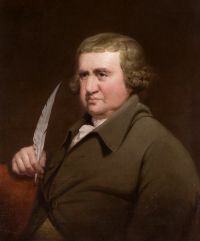 Erasmus Darwin,
Zoonomia, or, the Laws of Organic Life…
(1796)
Erasmus Darwin,
Zoonomia, or, the Laws of Organic Life…
(1796)
“ Hence, from the necessity of our nature, we may be supposed to have a right to kill those creatures, which we want to eat, or which want to eat us. But to destroy even insects wantonly shews an unreflecting mind or a depraved heart. ”
 Sarah Trimmer,
The Story of the Robins
(1873)
Sarah Trimmer,
The Story of the Robins
(1873)
“ And so far from having a pleasure in killing even the disagreeable insects which are troublesome in houses, I assure you I cannot do it or see it done without pain; and yet they certainly may be considered as enemies, and as such we have a right to destroy them. ”
 Wilhelmine von Hillern,
Only a Girl: or, A Physician for the Soul
Wilhelmine von Hillern,
Only a Girl: or, A Physician for the Soul
“ The parasite that preys upon its supporting plant, the insect depositing its eggs in the body of the caterpillar, the falcon pursuing the innocent dove, the tiger rending the mild-eyed antelope, and, lastly, the man who preserves his own existence by preying upon his fellow-men,--all are only the exponents of those hostile forces that are indispensable to the economy of nature. Who can venture to talk of good and evil? There is only one idea that we owe to our advanced culture,--only one varnish that bedaubs and conceals the beast in us,--regard for appearances! ”
“ For the first time he had a vast and confused vision of that race unknown to him, of all that miserable flesh, full of animal instincts and of bestial afflictions, bent and sweating on the glebe or buried in the depths of the cottages, beneath the perpetual menace of those dark powers. Amidst the sweet richness of the country which he had selected as the theatre of his love, he discovered a violent human agitation; and it was as if he had discovered a swarm of insects in the masses of magnificent hair impregnated with aroma. ”
 Eleanor Stackhouse Atkinson,
The How and Why Library — Section II
(1915)
Eleanor Stackhouse Atkinson,
The How and Why Library — Section II
(1915)
“ If men had no help in fighting these billions of enemies they would lose the battle. But these greedy little creatures have enemies of their own, that live among them and prey upon them. These enemies of the insects are our friends. ”
 Desiderius Erasmus,
Erasmus Against War
Desiderius Erasmus,
Erasmus Against War
“ Nor is it the nature of all wild beasts to fight, for some are harmless, as does and hares. But they that are the most fierce of all, as lions, wolves, and tigers, do not make war among themselves as we do. ”
 Bernard Shaw,
Killing for Sport: Essays by Various Writers
Bernard Shaw,
Killing for Sport: Essays by Various Writers
“ With this object in view he endeavours to extirpate all wild life which either is, or is supposed by him to be, in any way inimical to the birds in his charge; and, unfortunately, owing to the abysmal ignorance of the average keeper in all that relates to Nature’s intricate interplay of what we choose to call useful, harmless, and harmful forms, the list of supposed enemies is a long one. ”
 William Shakespeare,
King Richard II
William Shakespeare,
King Richard II
“ Feed not thy sovereign’s foe, my gentle earth, Nor with thy sweets comfort his ravenous sense, But let thy spiders, that suck up thy venom, And heavy-gaited toads lie in their way, Doing annoyance to the treacherous feet Which with usurping steps do trample thee. Yield stinging nettles to mine enemies; And when they from thy bosom pluck a flower, Guard it, I pray thee, with a lurking adder Whose double tongue may with a mortal touch Throw death upon thy sovereign’s enemies. ”
Jr. Horatio Alger, Life of Edwin Forrest, the American Tragedian…
“ There are animals and insects which on being touched, or being approached by a superior enemy, instantly assume the attitude and appearance of death. They recognize their peril, and seek to elude notice by a motionless condition which simulates death. They thus pretend to be other than they are, for the purpose of preserving the power to remain what they are. ”
James Henry Foss, The Gentleman from Everywhere
“ Every night they were pelted by bullets from unseen foes; stabbed and stung by innumerable insects; death for all stared them in the face; myriads of buzzards whirled above them, anxious for their prey. ”
J. Milton Mackie, Life of Schamyl
“ We must destroy the works of their hands, and slay them wherever we find them, in the house or in the field, by force or by cunning, so that their swarms shall vanish from the face of the earth. For they multiply like lice, and are as poisonous as the snakes that crawl in the steppe of Muhan. ”
Related terms
Authors who wrote about “natural enemy”
Washington IrvingWilliam JamesAlfred Russel WallaceW. H. HudsonEdmund SelousWilliam BingleyDuchessArabella Burton BuckleyJohn BurroughsSir Samuel White BakerEdmund Edward Fournier d'AlbeJames H. SchmitzTito VignoliHarold W. FairbanksOld HumphreyJr. John W. CampbellHerbert SpencerDaniel G. Brinton Jules Michelet
 Fritz Leiber