“ I’ve got, I suppose, to a time of life when things begin to take on shapes that have an air of reality, and become no longer material for dreaming, but interesting in themselves. I’ve reached the criticising, novel-writing age, and here I am writing mine—my one novel—without having any of the discipline to refrain and omit that I suppose the regular novel-writer acquires. ”
Novel writing
Definition and stakes
The theme of “novel writing” has been addressed by authors such as Clayton Meeker Hamilton, Young Ewing Allison, William J. Long, Richard Burton and Percy Lubbock. It is often associated with terms like fiction, literature, novelist, plot and romance.
Quotes about “novel writing”
| editor, The Lives of the Poets of Great Britain and Ireland (1753)
“ After very judiciously observing, that there is the same relation between romances and novels as between tragedy and comedy, he proceeds thus: ‘Since all traditions must indisputably give glace to the drama, and since there is no possibility of giving that life to the writing, or repetition of a story, which it has in the action; I resolved in another beauty to imitate dramatic writing, namely, in the design, contexture, and result in the plot. I have not observed it before in a novel. ”
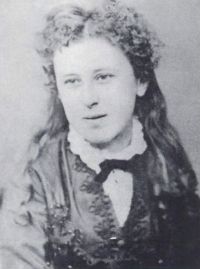 Vernon Lee,
Vanitas: Polite Stories
“ You see I have novel on the brain. Well, just suppose you were writing that novel, with me for a heroine, what would you advise me? One has got accustomed to having certain things—a certain amount of clothes, and bric-à-brac and horses, and so forth, and to consider them necessary. ”
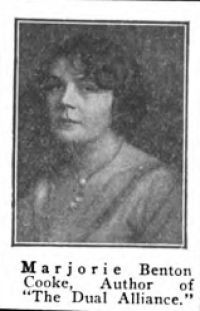 Marjorie Benton Cooke,
Bambi
(1914)
“ I have always thought it took genius to write a novel.” “My dear young woman, not in this day, when publishing houses gush books like so many geysers. Anybody with your gift of words and vivid reactions ought to find writing the line of least resistance. ”
 Wilkie Collins,
My Miscellanies, Vol. 1 (of 2)
“ The dull people decided years and years ago, as every one knows, that novel-writing was the lowest species of literary exertion, and that novel-reading was a dangerous luxury and an utter waste of time. ”
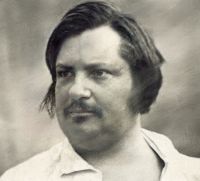 Honoré de Balzac,
Lost Illusions
“ Say that the new methods in literature concentrate all styles, comedy and tragedy, description, character-drawing and dialogues, in a series of pictures set in the brilliant frame of a plot which holds the reader's interest. The Novel, which demands sentiment, style, and imagery, is the greatest creation of modern days ”
Clayton Meeker Hamilton, Materials and Methods of Fiction
“ Certain materials of fiction are inherently epic, or dramatic, or novelistic, as the case may be. Also, an author, according to his mental attitude toward life and toward the subject-matter of his fictions, may cast his stories either in the epic, the dramatic, or the novelistic mood. In order to understand this distinction, we must examine the nature of the epic and the drama, and then study the novel in comparison with these two elder types of fiction. ”
Carleton Eldredge Noyes, The Gate of Appreciation: Studies in the Relation of Art to Life
“ A novelist conceives certain characters and assembles them in action and reaction, but it is we who in effect create the story as we read. We take up a novel, perhaps, which we read five years ago; we find in it now new significances and appeals. The book is the same; it is we who have changed. We bring to it the added power of feeling of those five years of living. ”
Clayton Meeker Hamilton, Materials and Methods of Fiction
“ In general, the novelist may build as he chooses. He may tell a tale, long or short, happening in few places or in many; and is not, like the dramatist, confined in place to no more than four or five different settings, and in time to the two hours' traffic of the stage. The novel, therefore, is far more serviceable than the drama as a medium for exhibiting the gradual growth of character,—the development of personality under influences extending over long periods of time and exerted in many different places. ”
 William J. Long,
Outlines of English and American Literature
“ This convenient division of prose fiction into romances and novels is open to challenge. Some critics use the name "novel" for any work of prose fiction. They divide novels into two classes, stories (or short stories) and romances. The story relates simple or detached incidents; the romance deals with life in complex relations, dominated by strong emotions, especially by the emotion of love. ”
 George Saintsbury,
A History of the French Novel, Vol…
“ The writer or writers, known or unknown, whose work we have been discussing, have got the plot, have got the characters, have got the narrative faculty required for a complete novel-romance. If they do not quite know what to do with these things it is only because the time is not yet. ”
Percy Lubbock, The Craft of Fiction
“ The business of the novelist is to create life, and here is life created indeed; the satisfaction of a clean, coherent form is wanting, and it would be well to have it, but that is all. We have a magnificent novel without it. ”
 H. G. Wells,
Social Forces in England and America
“ It is only slowly that we have developed the distinction of the novel from the romance, as being a story of human beings, absolutely credible and conceivable, as distinguished from human beings frankly endowed with the glamour, the wonder, the brightness, of a less exacting and more vividly eventful world. The novel is a story that demands, or professes to demand, no make-believe. The novelist undertakes to present you people and things as real as any that you can meet in an omnibus. ”
H. G. Wells,
An Englishman Looks at the World
“ And I think it is just in this, that the novel is not simply a fictitious record of conduct, but also a study and judgment of conduct, and through that of the ideas that lead to conduct, that the real and increasing value—or perhaps to avoid controversy I had better say the real and increasing importance—of the novel and of the novelist in modern life comes in. ”
Henry James, Notes on Novelists, with Some Other Notes
“ The order in which the drama simply says things gives it all its form, while the story told and the picture painted, as the novel at the pass we have brought it to embraces them, reports of an infinite diversity of matters, gathers together and gives out again a hundred sorts, and finds its order and its structure, its unity and its beauty, in the alternation of parts and the adjustment of differences. ”
 Richard Le Gallienne,
The Quest of the Golden Girl: A Romance
“ Indeed, I believe that there is an opportunity for a new form of novel, in which the novelist, as well as the reader, will skip all the dull people, and merely indicate such of them as are necessary to the action by an outline or a symbol, compressing their familiar psychology, and necessary plot-interferences with the main characters, into recognised formulae. ”
G. H. Mair, English Literature: Modern
“ Now literature (to repeat what has been than more once stated earlier in this book) is a way of escape from life as well as an echo or mirror of it, and the novel as the form of literature which more than any other men read for pleasure, is the main avenue for this escape. So that alongside this invasion of realism it is not strange that there grew a revival in romance. ”
Percy Lubbock, The Craft of Fiction
“ Such, I should think, is very nearly the theory of our criticism in the matter of the art of fiction. A novel is a picture of life, and life is well known to us; let us first of all "realize" it, and then, using our taste, let us judge whether it is true, vivid, convincing—like life, in fact. ”
Charles Herbert Sylvester, Journeys Through Bookland, Vol…
“ The novel of life and manners which is largely descriptive and in which the exigencies of the plot give way to the study of customs. (3) The novel of incident in which the plot is everything and description and character study are avoided or subordinated to action. (4) The romance which usually deals with things as they were in days long past and with actions that little concern the present. Marvelous and even supernatural incidents crowd its pages. (5) The idealistic novel which paints the world as it should be and makes its actors more nearly perfect than the world accepts as typical. ”
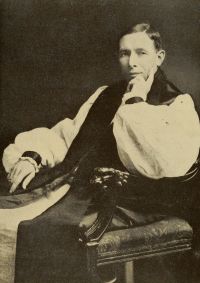 Charles Henry Brent,
The Sixth Sense: Its Cultivation and Use
“ The faculty which by a daring leap fixes on the evolutionary hypothesis, or with imaginative subtlety suggests the plot of a novel, is the self-same one which enables us to say, “Our Father, which art in heaven.” ”
Clayton Meeker Hamilton, Materials and Methods of Fiction
“ Questions of all kinds are presenting themselves for discussion. Has the rise of realism made romance impossible? Is there a valid distinction between romance and romanticism? Is the short-story a definite form, differing from the novel in purpose as well as in length? What is the best way to tell a story,—in the third person, as in the epic,—in the first person, as in an autobiography,—or in letters? Which is of most importance, character or incident or atmosphere? Is the novel-with-a-purpose legitimate? Why is it that dramatized novels often fail in the theater? ”
George Saintsbury,
The English Novel
“ A crowd of fantastic imaginings or additions, to supply the main substance, and a certain common-sense grasp of actual conditions and circumstances to set them upon, and contrast them with—these are the great requirements of Fiction in life and character. You must mix prose and poetry to get a good romance or even novel. The consciences of the ancients revolted from this mixture of kinds; but there was no such revolt in the earlier moderns, and least of all in our own mediæval forefathers. ”
George Saintsbury,
The English Novel
“ All these things and others are signs of an awakened conscience—of a sense of the fact that fiction, to be literature, must be something more than the relation of a bare fact, tragic, comic, or neutral—that the novelist is a cook, and must prepare and serve his materials with a sauce as much his own as possible, of plot, arrangement, character-drawing, scenery, conversation, reflection, and what not. ”
 Georg Wilhelm Friedrich Hegel,
The Philosophy of Fine Art, volume 4…
“ In respect to other spheres of our present national and social life I would observe in conclusion that in the field of epic poetry there are practically unlimited opportunities for the romance, the narrative, and the novel. ”
R. Brimley Johnson, The women novelists (1918)
“ Accordingly a style of novel has arisen, within the last fifteen or twenty years, differing from the former in the points upon which the interest hinges; neither alarming our credulity nor amusing our imagination by wild variety of incident, or by those pictures of romantic affection and sensibility, which were formerly as certain attributes of fictitious characters as they are of rare occurrence among those who actually live and die. ”
“ Here is a story whose artistic realism will appeal to everyone, while its distinction as a serious novel is made evident by its clever analysis, sparkling dialogue and thrilling and powerful situations. ”
H. G. Wells,
Social Forces in England and America
“ And all sorts of things that inevitably mar the tense illusion which is the aim of the short story—the introduction, for example, of the author’s personality—any comment that seems to admit that, after all, fiction is fiction, a change in manner between part and part, burlesque, parody, invective, all such things are not necessarily wrong in the novel. ”
Edmund William Gosse, 1911 Encyclopædia Britannica (1911)
“ But the novel adapts itself to so large a range of readers, and covers so vast a ground in the imitation of life, that it is the unique branch of literature which may be cultivated without any real distinction or skill, and yet for the moment may exercise a powerful purpose. ”
 Allen Upward,
A crown of straw
(1896)
“ The term novel has been made to cover books of such diverse character, now-a-days, that the reader is almost entitled to demand of a novelist that he shall affix some distinct label to the book he is putting forth, and make it clear beforehand whether his work is a dialogue on religion, a satire on morals, a political tract, a study in slum life, or a mere romance. ”

“ In discussing the art of any novelist as distinct from the poet or essayist there are three special questions that we may ask—as to the Theme, as to the Form, as to the creation of Character.It is possible to discuss these three questions in terms that can be applied, in no fashion whatever, to the poem or the essay, although the novel may often more truly belong to the essay or the poem to the novel, as, for instance, The Ring and the Book and Aurora Leigh bear witness. ”
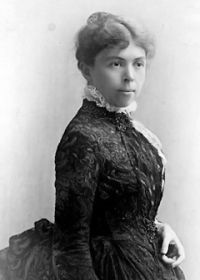 Alice Freeman Palmer,
The Teacher: Essays and Addresses on Education
“ Then come the thousands who read the best magazines, and whatever else is for the moment popular in novels and poetry—the last dialect story, the fashionable poem, the questionable but talked-of novel. Let a violent attack be made on the decency of a new story, and instantly, if only it is clever, its author becomes famous. ”
 Thomas Hill Green,
An Estimate of the Value and Influence of Works of Fiction in Modern Times
“ These are the primary springs from which it makes action and incident issue, with a perfect subordination which the laws of our lower nature and of social life must prevent from being realised in the world of experience, and which the novelist therefore, tied down to the world of experience, only offends us by attempting to exhibit. The essential character of the novel is not changed by its assumption of the form of a romance. ”
Richard Burton, Masters of the English Novel: A Study of Principles and Personalities
“ It is because this modern form of fiction upon which we fix the name Novel to indicate its new features has seized the idea of personality, has stood for truth and grown ever more democratic, that it has attained to the immense power which marks it at the present time. ”
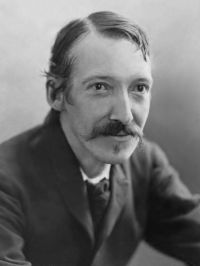 Robert Louis Stevenson,
Memories and Portraits
“ First each novel, and then each class of novels, exists by and for itself. I will take, for instance, three main classes, which are fairly distinct: first, the novel of adventure, which appeals to certain almost sensual and quite illogical tendencies in man; second, the novel of character, which appeals to our intellectual appreciation of man’s foibles and mingled and inconstant motives; and third, the dramatic novel, which deals with the same stuff as the serious theatre, and appeals to our emotional nature and moral judgment. ”
Various, The Atlantic Monthly, Volume 06…
“ Let any novel be finished, let all the resources of the mind be conscientiously expended on it, let it become a thorough intellectual creation, and, instead of remaining a novel, it would assume the dignity of an epic, lyric, drama, philosophy, or history. ”
Anonymous, How to Write a Novel: A Practical Guide to the Art of Fiction
“ Now, to which class is your projected novel to belong? In fiction you must walk by sight and not by faith. Never sit down to write believing that although you can't see the finish of your story, it will come out all right "in the end." It won't. You should know at the outset to which type of fiction you are to devote your energies; how, otherwise, can you observe the laws of art which govern its ideal being?Formation of the PlotIn one sense your plot is formed already—that is to say, the very idea of your story involves a plot more or less distinct. ”
Carveth Read, The Origin of Man and of His Superstitions
“ And if the reasoning is feeble, and if the subsidiary assumptions are too numerous or too facile, we say the work is flimsy or improbable—allowing for the genre; for a romance is not expected to be as probable as a modern novel. ”
Robert Huntington Fletcher, A History of English Literature
“ The novel, on the other hand, gives a much fuller portrayal of life than does the drama, and allows the much more detailed analysis of characters and situations which the modern mind has come more and more to demand.The novel, which for our present purpose must be taken to include the romance, is, of course, only a particular and highly developed kind of long story, one of the latest members of the family of fiction, or the larger family of narrative, in prose and verse. The medieval romances, for example, included most of the elements of the novel, even, sometimes, psychological analysis ”
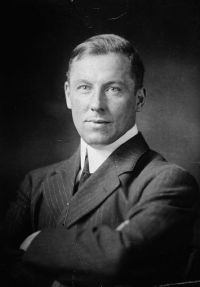 Robert W. Service,
The pretender: A story of the Latin Quarter
(1914)
“ When you sink you begeen work once more?”“I don’t know. I’m having one of my bad spells. Funny how it takes one. Times ideas come in a perfect spate, and I miss half grabbing for the others. At present the divine afflatus is on a vacation. I’m trying to start a novel and I haven’t got the Idea. You see this short story and article stuff is all very well to boil the marmite, but a novel’s my real chance. A successful novel would put me on my feet. Pray, Little Thing, I get the idea for a novel.” ”
F. Marion Crawford, The Novel; what it is
“ What we call a novel may educate the taste and cultivate the intelligence; under the hand of genius it may purify the heart and fortify the mind; it should never under any circumstances be suffered to deprave the one nor to weaken the other; it may stand for scores of years—and a score of years is a long time in our day—as the exposition of all that is noble, heroic, honest, and true in the life of woman or man ”
Related terms
Authors who wrote about “novel writing”
Clayton Meeker Hamilton Young Ewing AllisonWilliam J. LongRichard BurtonPercy LubbockGeorge SaintsburyBertha ThomasR. Brimley Johnson
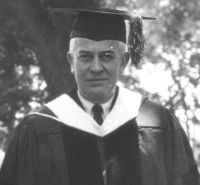 Carl Van DorenRobert Huntington Fletcher
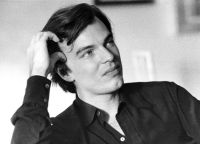 Edward Albert
 Walter Lionel GeorgeG. H. Mair
 Agnes Repplier
 Sidney Lanier
 E. M. ForsterEdmund William Gosse
 Charles Dudley Warner
 Arnold BennettRobert Saunders Dowst
Young Ewing AllisonWilliam J. LongRichard BurtonPercy LubbockGeorge SaintsburyBertha ThomasR. Brimley JohnsonCarl Van DorenRobert Huntington FletcherEdward AlbertWalter Lionel GeorgeG. H. MairAgnes RepplierSidney LanierE. M. ForsterEdmund William GosseCharles Dudley WarnerArnold BennettRobert Saunders Dowst