Police law

Definition and stakes

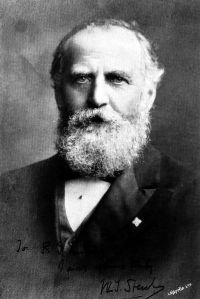
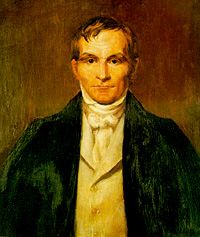
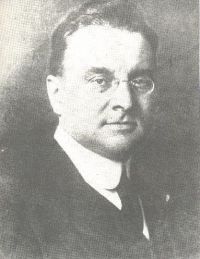
Portrait of Johann Gottlieb Fichte Johann Gottlieb Fichte,  The Science of Rights — Book Third Concerning Municipal Law (1889)

“ He who violates a police law must suffer all the disagreeable consequences which may result to him, and is, moreover, liable to a fine.
The chief principle of a well-regulated police is this: That each citizen shall be at all times and places, when it may be necessary, recognised as this or that particular person. No one must remain unknown to the police. This can be attained with certainty only in the following manner: Each one must always carry a pass with him, signed by his immediate government official, in which his person is accurately described.
”
Source: Wikisource

Gen. Schurz's Words of Warning

“ Now, you may say that the police force can be inspired with proper respect for the law even if the head of the police ordains that a certain law, impunity for the violation of which had formerly been one of the main sources of police corruption, shall be enforced only apparently, or a little, or not at all. ”
Source: Wikisource

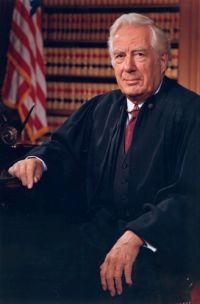
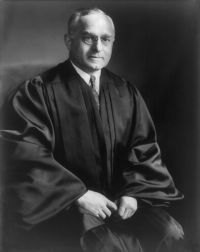
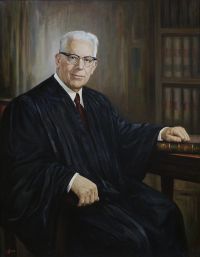
Portrait of Earl Warren Earl Warren,  Terry v. Ohio — Opinion of the Court

“ Upon suspicion that the person may be armed, the police should have the power to 'frisk' him for weapons. If the 'stop' and the 'frisk' give rise to probable cause to believe that the suspect has committed a crime, then the police should be empowered to make a formal 'arrest,' and a full incident 'search' of the person. This scheme is justified in part upon the notion that a 'stop' and a 'frisk' amount to a mere 'minor inconvenience and petty indignity,' [4] which can properly be imposed upon the citizen in the interest of effective law enforcement on the basis of a police officer's suspicion. ”
Source: Wikisource

Get perspective with Kwize: daily news enlightened by great literature