Potassium alum

Definition and stakes

1911 Encyclopædia Britannica (1911)

“ The precipitate is then dissolved in sulphuric acid, the requisite amount of potassium sulphate added and the solution allowed to crystallize.
Potash alum, K2SO4·Al2 (SO4) 3·24H2O, crystallizes in regular octahedra and is very soluble in water. The solution reddens litmus and is an astringent. When heated to nearly a red heat it gives a porous friable mass which is known as “burnt alum.” It fuses at 92° C. in its own water of crystallization. “Neutral alum” is obtained by the addition of as much sodium carbonate to a solution of alum as will begin to cause the separation of alumina
”

Source: Wikisource

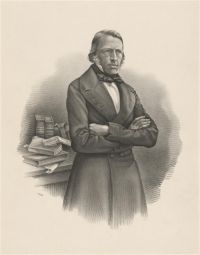
Portrait of Michael Faraday Michael Faraday,  On the various forces of nature and their relations to each other

“ In making the solution, it is best to add powdered alum to hot water as long as it dissolves; and when no more is taken up, allow the solution to stand a few minutes, and then pour it off from the dirt and undissolved alum.
8 Page 57. Red Precipitate of Biniodide of Mercury.—A little care is necessary to obtain this precipitate. The solution of potassium should be added to the solution of perchloride of mercury (corrosive sublimate) very gradually.
”
Source: Gutenberg

William Henry Doolittle,  Inventions in the Century

“ In 1807, Sir Humphry Davy discovered the metal potassium by subjecting moistened potash to the action of a powerful voltaic battery; the positive pole gave off oxygen and the metallic globules of pure potassium appeared at the negative pole. It is never found uncombined in nature. Now if potassium is heated in cyanogen gas (a gas procured by heating mercury) or obtained on a large scale by the decomposition of yellow prussiate of potash, a white crystalline body very soluble in water, and exceedingly poisonous, is obtained. ”
Source: Gutenberg

Get perspective with Kwize: daily news enlightened by great literature