“ Similarly, the decay of any of the RARE EARTH elements into other rare earth elements is not particularly helpful, because the rare earths are so similar chemically they tend to travel together when they move in nature. ”
Rare earth element
Definition and stakes
The rare earth elements (REEs) are 17 chemically similar metals, including the lanthanides, scandium, and yttrium, valued for their unique electromagnetic characteristics and uses in technology, magnets, and renewable energy. Although plentiful in Earth's crust, their widespread distribution and the challenges of isolating them make them economically scarce.
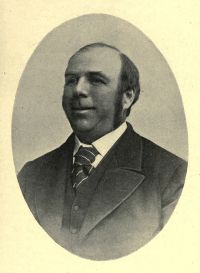
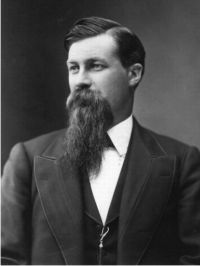
Authors such as Stanley Isaac Levy have highlighted the difficulties in separating them, while Henry Faul pointed out that their chemical similarity hinders natural distinction. Cecilia Payne-Gaposchkin associated them with stellar atmospheres, emphasizing their cosmic significance. Contemporary techniques, such as flash heating, seek to overcome extraction challenges, underscoring their strategic importance in global industries and geopolitics.
Quotes about “rare earth element”
Stanley Isaac Levy, The Rare Earths: Their Occurrence…
“ In any case, we have in the rare earth elements a series of bodies in which the change of properties from one member to another—and the consequent possibility of easy separation—is so very slight, and so far without parallel in the whole field of chemistry, that we are at least justified in asking whether some extension of our ordinary conception of an element is not required. ”
Stanley Isaac Levy, The Rare Earths: Their Occurrence…
“ See Soddy, The Chemistry of the Radio-Elements, Part II., Introduction. [142] CHAPTER X GENERAL METHODS OF SEPARATIONThe chemist who sets out to prepare a pure compound of a rare earth element is faced by a great difficulty. The rare earth compounds occur in nature, as one might expect from their great similarity, as mixtures of very complex composition. ”
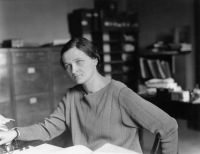 Cecilia Payne-Gaposchkin,
Stellar atmospheres
(1925)
Cecilia Payne-Gaposchkin,
Stellar atmospheres
(1925)
“ If the lines in the chromosphere and the star are indeed derived from the rare earths, the atoms concerned must be at least singly ionized. No series relations have as yet been published for any rare earth element, excepting a short list of relative term values for lanthanum. [349] From analogy with the previous long period it would seem unlikely that the first ionization potential of these atoms can be as great as 13 volts, the value which would be required if the lines have a maximum intensity at . ”
Stanley Isaac Levy, The Rare Earths: Their Occurrence…
“ A series of experiments soon showed that a fabric of suitable shape, impregnated with a solution of nitrates or acetates of the rare earth elements, after being dried and drawn together at one end by means of a platinum wire, can be ignited in a Bunsen flame in such a way as to leave a coherent skeleton of the earth oxides, which can be formed and hardened by suitable manipulation with a high temperature burner ”
Stanley Isaac Levy, The Rare Earths: Their Occurrence…
“ Fig. 4.—Part of the Periodic Table, showing the positions originally assigned to the Rare Earth Elements by MendelejeffIt was first pointed out by Brauner in 1881 that, with the exception of scandium (44·1) and yttrium (89·0) , the rare earth elements form a zone of increasing atomic weight between barium (137·37) and tantalum (181·5) . In 1902 he proposed [176] to consider the rare earth metals as a kind of zone or belt among the elements, comparable to the asteroids in the solar system, extending from cerium in Group IV to tantalum in Group V in a continuous series. ”
Stanley Isaac Levy, The Rare Earths: Their Occurrence…
“ The oxalates of the rare earth elements are of the greatest importance, on account of the fact that they are not only insoluble in water, but are also very sparingly soluble in dilute mineral acids, and in excess of oxalic acid. They can be completely precipitated even from strongly acid solutions by addition of sufficient excess of oxalic acid, or alkali oxalate, and thus afford a means of easily and completely separating the rare earth group from the commoner elements. ”
Stanley Isaac Levy, The Rare Earths: Their Occurrence…
“ The connection may be pushed even further; for whilst it appears that hardly any rock or mineral possesses absolutely no radio-activity, it is equally worthy of notice that traces of the rare earths, if not quite universal in the mineral world, are yet normally found in the majority of common minerals. As a natural consequence of their activity, the rare earth minerals are also as a rule rich in helium. ”
Stanley Isaac Levy, The Rare Earths: Their Occurrence…
“ The usual case is that a mineral contains chiefly yttria earths with some ceria earths, or vice versâ, the two sub-groups being almost always complex mixtures of several oxides, in which occasionally one may predominate. The remarkable similarity in chemical behaviour of the rare earth elements, and the difficulty of separating them, correspond to this peculiarity in their occurrence. ”
Stanley Isaac Levy, The Rare Earths: Their Occurrence…
“ The second is that of Edison, who proposed (1878) to utilise the observations of Bahr and Bunsen (1864) and of Delafontaine (1874) , of the remarkable incandescence exhibited by the yttria and erbia earths, and the terbia earths, respectively, when heated; he suggested the employment of a mantle of platinum wire covered with zirconia and the oxides of the rare earth metals, a proposal similar to that put forward nearly forty years earlier by Cruickshank.About the year 1880 Dr. Carl Auer began the study of the rare earth elements. ”
Stanley Isaac Levy, The Rare Earths: Their Occurrence…
“ Sixteen elements (excluding thorium and zirconium) are at the present time recognised as belonging to the rare earth group. With one or two exceptions, these show the closest resemblance to one another, both in chemical behaviour and in the properties of their compounds, so that the difficulties of separating and purifying them are very great. They may be said to form a series, in which the properties vary continuously but gradually from member to member, so that no sharp differences are anywhere perceptible. ”
Stanley Isaac Levy, The Rare Earths: Their Occurrence…
“ Absorption in the visible region of the spectrum is observed only with those rare earth compounds which are coloured, and is of value, therefore, chiefly for identification in the case of praseodymium and neodymium among the cerium elements, and of erbium among the yttrium metals; these give characteristic absorption bands, even in dilute solution. ”
Stanley Isaac Levy, The Rare Earths: Their Occurrence…
“ Several patents protect the use of rare earth compounds for flashlight powders. For most of the mixtures covered, it is claimed that the usual defects of fumes, slow firing, etc., are absent. The usual recipes [581] are for magnesium or aluminium powder with chromates, nitrates, or similar salts of thorium, cerium, etc.; in one case [582] the rare earth metals, alloyed with barium, silicon, uranium, or titanium, are to be used with ‘an oxidising agent which leaves a non-volatile residue.’ None of these mixtures appears to have been successful. ”
Stanley Isaac Levy, The Rare Earths: Their Occurrence…
“ We shall be set free from the need for experiment, knowing a priori what the result of each and every experiment must be; and our knowledge then will as much transcend our present scientific systems as the knowledge of the skilled mathematician of the present day exceeds that of primitive man, counting upon his fingers. The great problem of the nature and genesis of the elements is approaching solution, and when the consummation is reached it will undoubtedly be found that the study of the rare earths has been an important factor in bringing it about. ”
Stanley Isaac Levy, The Rare Earths: Their Occurrence…
“ In no department of chemistry have the methods of spectrum analysis proved of more value than in the field of the rare earths. They provide the chemist with a means of following and controlling his processes of separation which is far more delicate and decisive than the older method of determining the equivalent weight. Whilst the examination of emission spectra, and especially of arc spectra, is of decisive value in every case, it has the disadvantage of requiring delicate and complicated apparatus and great experimental skill ”
 Lorenz Oken,
Elements of Physiophilosophy
Lorenz Oken,
Elements of Physiophilosophy
“ With the separation of the ore and the Inflammable out of the primary water and the confluence of the Earthy into marine salt, its metamorphosis upon the surface or when exposed to light is at an end. All forms of the planet have been successively developed out of the earth-element. It can attain no further to anything new, and if nature had not yet been concluded, that which in the sequel is still dynamically developed upon our earth, must be thus a product, which extends beyond the mineral kingdom. ”
| override_editor, Advanced Automation for Space Missions… (1980)
“ Certainly still smaller bodies exist but cannot be seen from Earth. Table 4.8 summarizes available information on the widely variable surface compositions of asteroids (Lunar, 1978) . The predicted large quantities of rare elements, such as chromium and vanadium, and common metals such as iron and nickel might ultimately have great importance to terrestrial markets and space industries (Gaffey and McCord, 1977; Kuck, 1979) . Industrial facilities and habitats constructed from asteroidal materials would make possible the rapid spread of humanity throughout the Solar System. ”
Neal O. Hines, Atoms, Nature, and Man: Man-made Radioactivity in the Environment
“ The man-made nuclides, whether they reach the earth in fallout or by other means, 37 mix with the stable nuclides to which they are chemically related, increasing by small fractions the total amount of each element available to participate in plant growth cycles. Because artificial radionuclides behave so typically, they present, on the one hand, a possible long-term hazard and, on the other, the expectation that their detectability will reveal much about the biological courses of minerals and nutrients. ”
Stanley Isaac Levy, The Rare Earths: Their Occurrence…
“ The mineral contains a considerable amount of helium, which is remarkable in view of the very small content of uranium and thorium (cf. Thalenite) . It is radioactive, the active constituent being precipitated with the lead (and to a very small extent with the rare earths) .It is infusible, but at a red heat it loses much water, and becomes very brittle, with increase of specific gravity; no glowing is observed. It is attacked by boiling concentrated sulphuric acid, and by fused potassium bisulphate; also by hydrofluoric acid (40 per cent.) ”
 Edward Salisbury Dana,
A century of science in America
(1918)
Edward Salisbury Dana,
A century of science in America
(1918)
“ The Rare Earths.—Before the year 1818 two rare earths, the oxides of yttrium and cerium, were known in an impure condition. Since that time about fourteen others have been discovered as associates of the first 314two. The rare earths are peculiar from the fact that many of them are always found mixed together in the minerals containing them, and also from the circumstance that most of them are remarkably similar in their chemical reactions and consequently exceedingly difficult to separate from each other. ”
 John Joly,
The Birth-Time of the World and Other Scientific Essays
John Joly,
The Birth-Time of the World and Other Scientific Essays
“ When, however, we take into account the radioactive content of the sediments the matter assumes a different aspect.The facts as to the general distribution of radioactive substances at the surface, and in rocks which have come from considerable depths in the crust, lead us to regard as certain the widespread existence of heat-producing radioactive elements in the exterior crust of the Earth. We find, indeed, in this fact an explanation—at least in part—of the outflow of heat continually taking place at the surface as revealed by the rising temperature inwards. ”
J. Arthur Thomson, The Outline of Science, Vol. 1…
“ It is now an everyday intellectual tool. It was applied to the origin of the solar system and to the making of the earth before it was applied to plants and animals; it was extended from these to man himself; it spread to language, to folk-ways, to institutions. Within recent years the evolution-idea has been applied to the chemical elements, for it appears that uranium may change into radium, that radium may produce helium, and that lead is the final stable result when the changes of uranium are complete. Perhaps all the elements may be the outcome of an inorganic evolution. ”
Glen W. Watson, A Brief History of Element Discovery…
“ After 1934, the game among scientists took the form of seeing who could extend the length of the periodic system of the elements; as with medieval towers, it was Italy that again began with the most enthusiasm and activity under the leadership of Enrico Fermi.Merely adding neutrons would not be enough; that would make only a heavier isotope of the already known heaviest elements, uranium. However, if the incoming neutron caused some rearrangement within the nucleus and if it were accompanied by expulsion of electrons, that would make a new element. ”
Neal O. Hines, Atoms, Nature, and Man: Man-made Radioactivity in the Environment
“ Other radionuclides [5] occur singly, rather than in families, and some of them, such as potassium-40 and carbon-14, are major contributors of natural radioactivity. Traces of natural radioactivity can be found, in fact, in all substances on earth.When man began experimenting with atomic fusion and fission, he placed in his environment—across vast landscapes, in the oceans, and in the atmosphere—measurable additional amounts of radioactivity. These additions were composed of the longer-lived members of some 200 kinds of atomic radiation. ”
Stanley Isaac Levy, The Rare Earths: Their Occurrence…
“ The rare earths constitute the most striking example of the association of chemical substances with others which are closely allied to themselves, and from which they are separable only with extreme difficulty. They form a group to themselves, sharply demarcated from the other elements, and it is my belief that by following the study of them to the utmost limits, we may arrive at the explanation of what the chemical elements really are and how they originated, and discover the reasons for their properties and mutual relations. ”
Neal O. Hines, Atoms, Nature, and Man: Man-made Radioactivity in the Environment
“ Radiobiological developments on land result from combinations of environmental influences. Studies in the Rocky Mountains show that ecological conditions above the timberline, particularly in areas where snowbanks accumulate, are efficient in concentrating fallout radionuclides. Concentrations thus take place in the snow-packed heights that are the sources of mountain streams flowing to the plains far below.AtmosphereThe environment of the earth is a product of “weather”—of the transport of moisture, of the actions between winds and oceans, of the cycling of energy through biotic systems. ”
 Richard A. Proctor,
Pleasant Ways in Science
Richard A. Proctor,
Pleasant Ways in Science
“ But, most remarkable of all, and most perplexing, was the absence of all trace of oxygen and nitrogen, two gases which could not be supposed wanting in the substance of the great ruling centre of the planetary system. It might well be believed, indeed, that none of the five metals just named are absent from the sun, and indeed that every one of the forty metals not recognized by the spectroscopic method nevertheless exists in the sun. For according to the nebular hypothesis of the origin of our solar system, the sun might be expected to contain all the5 elements which exist in our earth. ”
“ All natural radioactivity in the heavy elements proceeds by such a series of steps, and the series finally ends with a stable form of lead as its end product. In other words, any naturally radioactive heavy element eventually becomes nonradioactive lead.The nucleus of every atom (except hydrogen) contains one or more neutrons and one or more protons. The instability of the nuclei of the heavy atoms is related to the ratio of the number of neutrons to the number of protons in the nuclei. Radioactive decay is, in fact, a way of adjusting these ratios. The adjustment can occur in various ways. ”
Cecilia Payne-Gaposchkin,
Stellar atmospheres
(1925)
“ The most obvious conclusion that can be drawn from Table XXVIII is that all the commoner elements found terrestrially, which could also, for spectroscopic reasons, be looked for in the stellar atmosphere, are actually observed in the stars. The twenty-four elements that are commonest in the crust of the earth, [488] in order of atomic abundance, are oxygen, silicon, hydrogen, aluminum, sodium, calcium, iron, magnesium, potassium, titanium, carbon, chlorine, phosphorus, sulphur, nitrogen, manganese, fluorine, chromium, vanadium, lithium, barium, zirconium, nickel, and strontium. ”
Stanley Isaac Levy, The Rare Earths: Their Occurrence…
“ By fusion with sodium carbonate in the oxidising flame, a bead is obtained, which, when dissolved in boiling hydrochloric acid, forms a solution which gives a voluminous precipitate on addition of disodium hydrogen phosphate, if zirconium is present. Iron, aluminium, titanium, thorium, and rare earths have no influence on the test. ”
John Joly,
The Birth-Time of the World and Other Scientific Essays
“ Carlow there was rather less than twelve billionths of a gram of radium, We are230entitled to infer that other rare elements are similarly widely distributed but remain undetectable because of their more stable properties.It must not be thought that the under-exposed halo is a recent creation. By no means. All are old, appallingly old; and in the same rock all are, probably, of the same, or neatly the same, age. The under-exposure is simply due to a lesser quantity of the radioactive elements in the nucleus. ”