
“ Let her hold, for instance, that the principle of self-activity is stronger than blind obedience ever was; that emulation as a spur to effort is the abomination of desolation; that a sound mind in a sound body is more to be valued than riches; that a keen eye for color and form, a steady hand to guide a pencil or a tool, a mind alert, eager, and reasonable, a heart which feels its brotherhood with all living, growing things, a free, frank speech, a generous nature, and an honest tongue, are in themselves a Declaration of Independence and a Psalm of Life. ”
Self-activity
Definition and stakes
The theme of “self-activity” has been addressed by authors such as John Dewey, J. Macbride Sterrett, William James, swámi A. P. Mukerji and Arnold Tompkins. It is often associated with terms like will, mind, consciousness, control and environment.
Quotes about “self-activity”
 U. G. Krishnamurti,
Courage to Stand Alone
“ As long as you are doing something to attain your goal, it is a self-perpetuating mechanism. I use the word self-perpetuating mechanism, but I don't mean that there is a self or an entity. I have to use the word "self" because there is no other word. It's like the self-starter you have in the car. It perpetuates itself. That is all that it is interested in. Anything you want to achieve is a self-centered activity. When I use the term "self-centered activity," you always translate it in terms of something that should be avoided, because selflessness is your goal. ”
 John Wesley Powell,
Truth and Error — Chapter XIX.
(1898)
“ A stream of judgments flow through the mind. As the ego has self-activity it changes its position in the environment at will and a different environment plays on the senses at every change in the position of the ego. ”
 John Dewey,
Democracy and Education
(1916)
“ But it is not easy to secure conditions which will make the getting of an idea identical with having an experience which widens and makes more precise our contact with the environment. Activity, even self-activity, is too easily thought of as something merely mental, cooped up within the head, or finding expression only through the vocal organs. ”
 Arnold Tompkins,
The American Journal of Sociology
(1896)
“ All other subjects show man in action under this law of self-realization through self-activity, but these two subjects are based on a direct consciousness of the law, and are phases of man's direct and conscious effort to a higher life. ”
 William Torrey Harris,
The Science of Rights — Preface
(1889)
“ This category of self-activity is the fundamental form of our inward sense—i.e., of introspection—just as quality is the form of our external sense—i.e., sense-perception. Quality is the form of fate, and its insight sees that all things are what they are because the totality of conditions has necessitated them to be so. The category of self-activity is the form of freedom, and its insight sees that the supreme condition of everything is freedom, and that there is no fate except as secondary or derivative from freedom. In other words, the ultimate motive power in all force is will. ”
 John Stuart Mill,
Autobiography (Mill) — Chapter VII. 1840-1870
(1874)
“ When called into activity, as only self-interest now is, by the daily course of life, and spurred from behind by the love of distinction and the fear of shame, it is capable of producing, even in common men, the most strenuous exertions as well as the most heroic sacrifices. ”
 Robert Sessions Woodworth,
Psychology
“ First, a purpose is an inner force, whereas what arouses a response should be a stimulus, and typically an external stimulus. We do not wish to drop back into the old "self-activity" psychology, which thought of the individual as originating his acts from within himself. ”
U. G. Krishnamurti,
The Mystique of Enlightenment
“ It can never lead to the being process?UG: No, anything you do, any movement in any direction on any level is a self-centered activity. That is a very clever thing — it has survived for centuries — it knows all the tricks in the world. ”
Thomas Carlyle, Sartor Resartus, and On Heroes… (1901)
“ Without committing ourselves to those enthusiastic praises and prophesyings of the Weissnichtwo'sche Anzeiger, we admitted that the Book had in a high degree excited us to self-activity, which is the best effect of any book; ”
Various, Popular Science Monthly (1911)
“ Despite every effort of naturalism to explain the power of voluntary and sustained attention, the apparent freedom of the will, and the art impulse, there remains in these phenomena an unexplained residue which apparently depends upon this inherent principle of self-activity. ”
 F. H. Bradley,
Ethical Studies — Essay VII.
(1876)
“ So far we have seen that the self is identified with pursuits and activities as ends to be gained by it, but further it is interested in persons and causes which stand in no direct relation to its personal activity. Apart from anything which it does or has to do, it feels its will affirmed or denied in the success or failure of that which its own action has not to bring about. ”
Various, The Healthy Life, Vol. V, Nos. 24-28
“ I shall be personal in everything, personal in my play. Surface self-consciousness which holds me back from all spontaneous activity will disappear in proportion as “I” am immersed in the greater “me.” ”
John Dewey,
Human Nature and Conduct: An introduction to social psychology
“ These traits of a bad habit are precisely the things which are most instructive about all habits and about ourselves. They teach us that all habits are affections, that all have projectile power, and that a predisposition formed by a number of specific acts is an immensely more intimate and fundamental part of ourselves than are vague, general, conscious choices. All habits are demands for certain kinds of activity; and they constitute the self. ”
John Dewey,
Outlines of a Critical Theory of Ethics
“ There may be repressed activity; that is not, of itself, desire. There may be an image of larger activity; that is not, of itself, desire. But given the consciousness of a repressed activity in view of the perception of a possible larger action, and a man strives within himself to break his bonds and reach the new satisfaction. This striving within one's self, before the activity becomes overt, is the emotional antecedent of action. ”
 Sir Oliver Lodge,
The Substance of Faith Allied with Science…
“ Another aspect of the universal struggle for self-manifestation and corporeal realisation, which plays so large a part in all activity and is especially marked in the domain of life, is illustrated on a higher level by that overpowering instinct or impulse towards production and self-realisation, which is characteristic of genius. It may be said that throughout nature, from the lowest to the highest, a tendency to self-realisation, and a manifestation of joy in existence, are conspicuous. ”
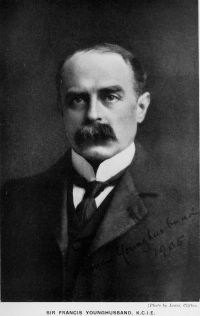 Sir Francis Edward Younghusband,
The Heart of Nature; or, The Quest for Natural Beauty
“ And the Organising Activity is not only upward-reaching, but forward-looking. It looks to the future. We have remarked how the individuals strive and compete with one another in order to get food and air and light with which to nourish and maintain themselves. But self-maintenance is not their only object. They seek to propagate themselves—to perpetuate their kind. They even make provision for their offspring. They go further still and sacrifice themselves that their offspring may flourish. ”
Homer Heath Nugent, A Book of Exposition
“ If, namely, we wish our trains of ideation and volition to be copious and varied and effective, we must form the habit of freeing them from the inhibitive influence of reflection upon them, of egoistic pre-occupation about their results. Such a habit, like other habits, can be formed. Prudence and duty and self-regard, emotions of ambition and emotions of anxiety, have, of course, a needful part to play in our lives. ”
 Rebecca West,
The Return of the Soldier
“ The mental life that can be controlled by effort isn't the mental life that matters. You've been stuffed up when you were young with talk about a thing called self-control, a sort of barmaid of the soul that says, 'Time's up, gentlemen,' and 'Here, you've had enough.' There's no such thing. There's a deep self in one, the essential self, that has its wishes. ”
 William George Jordan,
Self-Control, Its Kingship and Majesty
“ This view of the growth of character should be a mighty stimulus to the man who sincerely desires and determines to live nearer to the limit of his possibilities.Self-control may be developed in precisely the same manner as we tone up a weak muscle,—by little exercises day by day. Let us each day do, as mere exercises of discipline in moral gymnastics, a few acts that are disagreeable to us, the doing of which will help us in instant action in our hour of need. ”
Durant Drake, Problems of Conduct: An Introductory Survey of Ethics
“ But it gives no guidance. Observation can teach us, slowly, what conduct makes for happiness; but what conduct makes for "self-development"? The fact is, the cultivation of any impulse will develop us in its direction and preclude our development in other directions; along which path shall we let ourselves develop? Every choice involves rejection; infinite possibilities diverge before us; which among the myriad impulses that call upon us shall we follow? While still young and plastic, we may develop ourselves into poets or philosophers or lawyers or businessmen. ”
W. T. Stace, A critical history of Greek philosophy
“ How then is reason to gain control over the appetites? Only by practice. It is only by continual effort, by the constant exercise of self-control, that the unruly passions can be tamed. Once brought under the yoke, their control becomes habit. ”
Irwin Edman, Human Traits and their Social Significance
“ The self exists, then, as a well-defined, systematic trend of behavior. Impulses to action attain a certain order of priority Page 153 in an individual's conduct, and it is by the momentum of these primary drives to action that his life is controlled. What is commonly known as "will" is simply another name for the power and momentum of a man's "personal self." ”
 Ellen Key,
The Century of the Child
“ It is much easier to say what one shall not do than what one must do to change self-will into strength of character, slyness into prudence, the desire to please into amiability, restlessness into personal initiative. ”
William Hazlitt, The Collected Works of William Hazlitt…
“ As to a paramount universal abstract notion of personal identity, impelling and overruling all my actions, thoughts, feelings, etc. to one sole object, and centre of self-interest, there is no such thing in nature. It requires almost as much pains and discipline, to make us attentive to our own real and permanent happiness, as to that of others. Is it not the constant theme of moralists and divines, that man is the sport of impulse, and the creature of habit? ”
William James, The Principles of Psychology, Volume 1…
“ So with the man who has [Pg 127] daily inured himself to habits of concentrated attention, energetic volition, and self-denial in unnecessary things. He will stand like a tower when everything rocks around him, and when his softer fellow-mortals are winnowed like chaff in the blast. ”
 Joseph Droz,
The Art of Being Happy
“ If we may change our temperament both of body and mind for evil, as innumerable examples prove that we may, why not as easily for good? Our habits certainly are under our control; and our modes of thinking, however little the process may have been explained, are, in some way, shaped by our voluntary discipline. We have high powers of self-command, as every one who has made [7] the effort to exercise them, must be conscious. ”
swámi A. P. Mukerji, The Doctrine and Practice of Yoga
“ Yes, you must work constantly, train your intellect, develop your personality but do not do all this for your own personal self but for the Higher Self, The BRAHMAN, Eternal—to manifest through. As soon as you lose this view-point your personal strivings end in Pain and Disappointment. Work as hard as the ambitious man and the lover of pleasures but remember your actions are inspired by different motives. ”
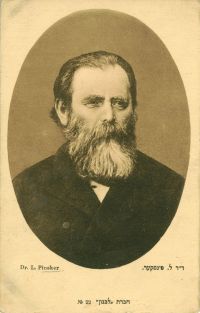 Judah Leib Pinsker,
Auto-Emancipation
(1916)
“ And if we seriously desire that, we must first of all extricate ourselves from the old yoke, and rise manfully to our full height. We must first of all desire to help ourselves and then the help of others is sure to follow.But the time in which we live is adapted for decisive action not merely because of our own inner experience, not merely in consequence of our newly-aroused self-consciousness. ”
swámi A. P. Mukerji, The Doctrine and Practice of Yoga
“ You must not give yourself such hard tasks of Self-Development as might be too heavy and beyond the present strength of your Will. In denying yourself you develop self-control. In forcing yourself to do certain things you develop powers of Self-Expression. ”
swámi A. P. Mukerji, The Doctrine and Practice of Yoga
“ You must set yourself such tasks as might seem like 'work' to your attention. Remember, the effort required to concentrate attention voluntarily on uninteresting, dry and monotonous works strengthens and develops Will-Power and gives you 'mental muscle.' You will thereby acquire firm control over mind and body and be 'Master' over your lower impulses. Power over self will express outwardly as power over others. If you can control yourself, you will find no difficulty in impressing your will on others. ”
William James, Psychology: Briefer Course
“ I have observed with such persons that it requires a considerable time to wind themselves up to the pitch of complete self-control, that the effort is a painful tension of the mind.... When thrown off their guard by any accidental remark or worn out by the length of the examination, they let themselves go, and cannot gather themselves up again without preparation. ”
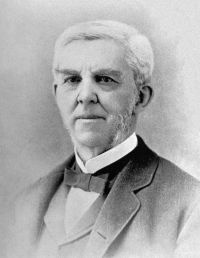 Oliver Wendell Holmes Sr.,
The Autocrat of the Breakfast-Table…
“ It is a confession of failure in the highest function of being, which involves a perpetual self-determination, in full view of all existing circumstances. But habit, you see, is an action in present circumstances from past motives. It is substituting a vis a tergo for the evolution of living force. ”
swámi A. P. Mukerji, The Doctrine and Practice of Yoga
“ The absolute mastery of 'self' ought to be your aim. I have given you the real secrets. You must exercise your own ingenuity and intelligence in utilising them towards your Self-development. I leave you to finish the fight for yourself. Get up and start in to work at your task from to-day and not to-morrow. Back of all efforts, always have this positive incentive and auto-suggestion:"THIS IS TO DEVELOP MY WILL-POWER AND NO TEMPORARY PAIN CAN EQUAL THE POWER AND HAPPINESS ARISING OUT OF SELF-CONTROL." Get firm control over your emotions. ”
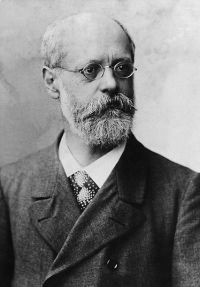 Karl Johann Kautsky,
Ethics and the Materialist Conception of History
(1907)
“ But self-movement and knowledge by no means form by themselves a sufficient weapon in the struggle. What use are to me in this struggle the strongest muscles, the most agile joints, the sharpest senses, the greatest understanding, if I do not feel in me the impulse to employ them to my preservation ”
Harry A. Lewis, Hidden Treasures; Or, Why Some Succeed While Others Fail
“ The abolition of these vices tends toward concentration; bad habits, of no matter what nature lead to failure and tend to draw the attention from one's calling. Then let the young man who would succeed join his heart, his sympathies, his desires, with the right; let him live a consistent life; let him lead a strictly temperate life; let him give his whole influence to temperance, resting assured that if he puts his purposes into action that he will succeed in more ways than one. Self-reliance. ”
 Josiah Royce,
The Conception of God
(1897)
“ Our social habits get formed: we have our range, our private life, our round of friends, our daily tasks. These involve relatively constant repetitions of similar states of self-consciousness. From repetition springs inner constancy. And, so far, we in the end find our level, and take ourselves to be whatever the world has made of us. ”
Various, Graham's Magazine, Vol. XXXIV, No…
“ The habit of self-control which I had early acquired, enabled me, however, to struggle against such feelings of sorrowful, hopeless despondency, and I would rouse myself, seeking constant, unceasing occupation in my daily duties, that I might strengthen my fainting spirit. ”
John Dewey,
Human Nature and Conduct: An introduction to social psychology
“ There is no one ready-made self behind activities. There are complex, unstable, opposing attitudes, habits, impulses which gradually come to terms with one another, and assume a certain consistency of configuration, even though only by means of a distribution of inconsistencies which keeps them in water-tight compartments, giving them separate turns or tricks in action.Many good words get spoiled when the word self is prefixed to them: Words like pity, confidence, sacrifice, control, love. ”
Theron Q. Dumont, The Power of Concentration
“ If he has a weakness, desire and command that it be strengthened; think of his shortcomings which belong to his negative nature as being replaced by positive qualities. Take a certain part of the day to send him thoughts of an up-building nature. You can in this way arouse his mental powers into activity, and once aroused, they will assert themselves and claim their own. ”
Related terms
Authors who wrote about “self-activity”
John DeweyJ. Macbride SterrettWilliam Jamesswámi A. P. MukerjiArnold TompkinsF. H. BradleyNicolas August Ludwig Jacob JohannsenTheron Q. DumontWilliam George JordanWilliam Torrey HarrisIrwin EdmanGiovanni GentileRobert Sessions Woodworth Hermann Hesse
 Johann Friedrich Herbart
 G. Stanley HallJ. D. BuckMosiah HallVariousU. G. Krishnamurti
