Silver oxide

Definition and stakes

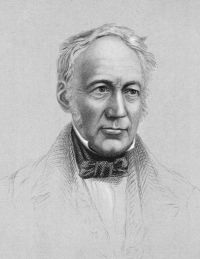
Dmitry Ivanovich Mendeleyev,  The Principles of Chemistry, Volume II

“ Water in which silver oxide is shaken up has a distinctly alkaline reaction. The oxide is distinguished by its great instability when heated, so that it loses all its oxygen when slightly heated. Hydrogen reduces it at about 80°. [20 bis] The feebleness of the affinity of silver for oxygen is shown by the fact that silver oxide decomposes under the action of light, so that it must be kept in opaque vessels. The silver salts are colourless and decompose when heated, leaving metallic silver if the elements of the acid are volatile. ”

Source: Gutenberg

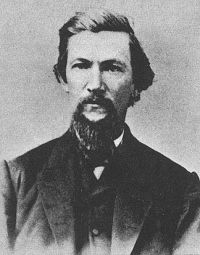
Sir William de Wiveleslie Abney,  The Art and Practice of Silver Printing

“ The silver oxide thus formed is added, little by little, till the blue or greenish colour has entirely disappeared. This will precipitate the copper oxide from the copper nitrate, setting free the nitric acid, which, in its turn, will combine with the silver oxide. The copper will fall as a black powder mixed with any excess of silver oxide there may be. Take one or two drops of the solution in a measure, and add a drachm of water, and then add ammonia to it till the precipitate first formed is re-dissolved. ”
Source: Gutenberg

Dmitry Ivanovich Mendeleyev,  The Principles of Chemistry, Volume II

“ The silvering of glass is based on the fact that silver which is reduced from certain solutions deposits itself uniformly in a perfectly homogeneous and continuous but very thin layer, forming a bright reflecting surface. Certain organic substances have the property of reducing silver in this form. The best known among these are certain aldehydes—for instance, ordinary acetaldehyde, C2H4O, which easily oxidises in the air and forms acetic acid, C2H4O2. This oxidation also easily takes place at the expense of silver oxide, when a certain amount of ammonia is added to the mixture. ”
Source: Gutenberg

Get perspective with Kwize: daily news enlightened by great literature