Sound recording

Definition and stakes

Office of Public Sector Information,  Copyright Act, 1956 (1956)

“ In this Act “sound recording” means the aggregate of the sounds embodied in, and capable of being reproduced by means of, a record of any description, other than a sound-track associated with a cinematography film; and “publication”, in relation to a sound recording, means the issue to the public of records embodying the recording or any part thereof. ”
Source: Wikisource

Library of Congress. Copyright Office,  Copyright Basics

“ Form of Notice for Phonorecords of Sound Recordings*
* Sound recordings are defined in the law as "works that result from the fixation of a series of musical, spoken, or other sounds, but not including the sounds accompanying a motion picture or other audiovisual work." Common examples include recordings of music, drama, or lectures. A sound recording is not the same as a phonorecord. A phonorecord is the physical object in which works of authorship are embodied.
”
Source: Gutenberg

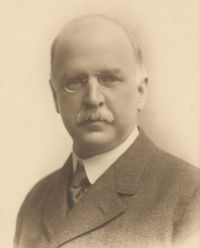
Portrait of Ernest Cushing Richardson Ernest Cushing Richardson,  The Beginnings of Libraries

“ Even phonetic writing, so called, is not sound record but a record of sounds translated into gestures; writing is a gesture sign which stands for a sound, not a record of sound. It is only within our own generation that, through the invention of the phonograph, oral or other sound utterance has been recorded in permanent material and libraries of sound records made possible.
The written recording of even signs for sounds did, however, in the evolution of record keeping mark a very decided advance over all previous methods.
”
Source: Gutenberg

Get perspective with Kwize: daily news enlightened by great literature