Tension (mechanics)

Definition and stakes

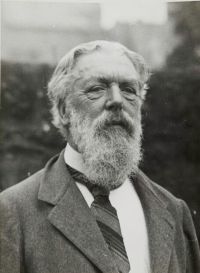
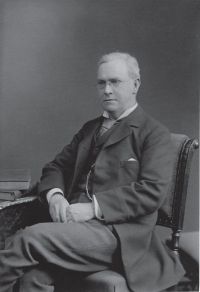
Portrait of Horace Lamb Horace Lamb,  1911 Encyclopædia Britannica, Volume 17… (1911)

“ When extraneous forces act on the bars themselves the stress in each bar no longer consists of a simple longitudinal tension or thrust. To find the reactions at the joints we may proceed as follows. Each extraneous force W acting on a bar may be replaced (in an infinite number of ways) by two components P, Q in lines through the centres of the pins at the extremities. In practice the forces W are usually vertical, and the components P, Q are then conveniently taken to be vertical also. We first alter the problem by transferring the forces P, Q to the pins. ”
Source: Wikisource

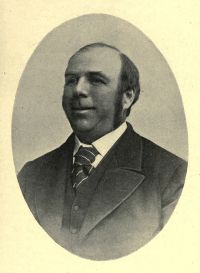
Portrait of Robert S. Ball Robert S. Ball,  Experimental Mechanics

“ Suppose a weight of 20 lbs. be suspended from the hook w, it endeavours to pull the top of the jib downwards; but the tie holds [Pg 30] it back, consequently the tie is put into a state of tension, as indeed its name signifies, and the magnitude of that tension is shown to be 60 lbs. by the spring balance. Here we find again what we have already so often referred to; namely, one force developing another force that is greater than itself, for the strain along the tie is three times as great as the strain in the vertical wire by which it was produced. ”
Source: Gutenberg

Henry Kater,  A Treatise on Mechanics

“ The second class of simple machines includes all those cases in which force is transmitted by means of flexible threads, ropes, or chains. The principle, by which the effects of these machines are estimated, is, that the tension throughout the whole length of the same cord, provided it be perfectly flexible, and free from the effects of friction, must be the same. ”
Source: Gutenberg

Get perspective with Kwize: daily news enlightened by great literature