 Henry David Thoreau,
Yankee in Canada
(1866)
“ If there is any hell more unprincipled than our rulers, and we, the ruled, I feel curious to see it. ”
Henry David Thoreau,
Yankee in Canada
(1866)
“ If there is any hell more unprincipled than our rulers, and we, the ruled, I feel curious to see it. ”
 Henry Box Brown,
Narrative of Henry Box Brown
(1849)
“ A great and an important end truly, which is nothing less, than the establishment of a new government, right in the midst of our present pro-slavery one. A government, is a system of authority sustained by either the rulers, or the ruled, or by both conjointly. ”
 Herbert Spencer,
Popular Science Monthly
(1881)
“ How does permanent political headship arise? Such political headship as results from bodily power, or courage, or sagacity, even when strengthened by supposed supernatural aid, ends with the life of any savage who gains it. The principle of efficiency, physical or mental, while it tends to produce a temporary differentiation into ruler and ruled, does not suffice to produce a permanent differentiation. ”
 Niccolò Machiavelli,
The Annotated Prince — Chapter I: Of the Various Kinds of Princedom…
(1513)
“ All the States and Governments by which men are or ever have been ruled, have been and are either Republics or Princedoms. ”
Arthur Cayley, John Purser, and Frederick Purser, 1911 Encyclopædia Britannica (1911)
“ As distinct particular cases of the first figure we have the plane curve and the cone, and as a particular case of the second figure the ruled surface, regulus or singly infinite system of lines; we have, besides, the congruence or doubly infinite system of lines and the complex or triply infinite system of lines. And thus crowds of theories arise which have hardly any analogues in plane geometry ”
Geneva Armstrong, Woman in Art (1900)
“ You have this day to declare yourself head of a nation. 'And now, O Lord, my God, thou hast made thy servant ruler over the people. Give unto him an understanding heart, that he may know how to go out and come in before this great people; that he may discern between good and bad. For who is able to judge this thy so great people?' were the words of a royal sovereign; and not less applicable to him who is invested with the chief magistracy of a nation, though he wear not a crown, nor the robes of royalty. ”
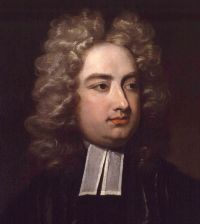 Jonathan Swift,
The Works of the Rev. Jonathan Swift
(1801)
“ I was curious to know how this prince, to whose dominions there is no access from any other country, came to think of armies, or to teach his people the practice of military discipline. But I was soon informed, both by conversation, and reading their histories; for, in the course of many ages, they have been troubled with the same disease, to which the whole race of mankind is subject; the nobility often contending for power, the people for liberty, and the king for absolute dominion. ”
by John Adams, A Dissertation on the Canon and Feudal Law (1765)
“ Do you consider yourself as a missionary of loyalty or of rebellion? Are you not representing your king, his ministry, and parliament, as tyrants,—-imperious, unrelenting tyrants,—-by such reasoning as this? ”
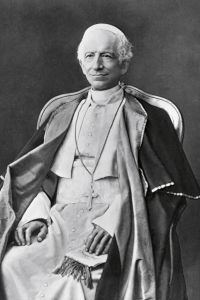 Leo XIII,
The Great Encyclical Letters of Pope Leo XIII
(1903)
“ We beg of princes and rulers of States, appealing to their statesmanship and earnest solicitude for the people, to weigh Our counsels in the balance of truth and second them with their authority and favor. ”
Colonel House, Philip Dru: Administrator — Chapter I: Graduation Day (1912)
“ The divinity of kings, the God-given right to rule, was shattered for all time. The giant at last knew his strength, and with head erect, and the light of freedom in his eyes, he dared to assert the liberty, equality and fraternity of man. ”
Various, The International Magazine, Volume 2…
“ Monarch or People, we will submit ourselves to the power she herself shall organize. Is it possible that so moderate and rational a proposition should be the object of such false interpretations, in a country which reveres the idea of right and of self-government? Is it possible that its leaders should be the object of so much calumny? ”
 Robert Green Ingersoll,
Hell: Warm Words on the Cheerful and Comforting Doctrine of Eternal Damnation
“ I deny that rulers are crowned by the Most High; the rulers are the people, and the presidents and others are but the servants of the people. All authority comes from the people, and not from the aristocracy of the air. ”
 H. G. Wells,
The Sleeper Awakes
“ Our masses—the word comes from your days—you know, of course, that we still have masses—regard you as our actual ruler. Just as a great number of people in your days regarded the Crown as the ruler. They are discontented—the masses all over the earth—with the rule of your Trustees. For the most part it is the old discontent, the old quarrel of the common man with his commonness—the misery of work and discipline and unfitness. ”
Herbert Spencer,
Popular Science Monthly
(1884)
“ The dictates of the ruler, sanctified by ascription of them to his divine ancestor, are unrestrained by any conception of individual liberty; and they specify men's actions to an unlimited extent—down to kinds of food eaten, modes of preparing them, shaping of beards, fringing of dresses, sowing of grain, etc. ”
 Mercy Otis Warren,
History of the Rise, Progress, and Termination of the American Revolution
(1805)
“ Such a sovereign without a crown, or the title of king, with his favorites and his instigators about him, may not be a less dangerous animal, than the monarch whose brow is decorated by the splendor of a diadem. ”
The Cavalier Songs and Ballads of England from 1642 to 1684
“ What victories we saints obtain, The like ne’er seen before: How often we Prince Rupert kill’d, And bravely won the day, The wicked Cavaliers did run The clean contrary way.The true religion we maintain, The kingdom’s peace and plenty; The privilege of Parliament Not known to one and twenty; The ancient fundamental laws, And teach men to obey Their lawful sovereign, and all these The clean contrary way.We subjects’ liberties preserve By imprisonment and plunder, And do enrich ourselves and state By keeping th’ wicked under. ”
Matthew Henry, Commentary on the Whole Bible… (1700s)
“ Where the word of a king is, giving orders to seize a man, there is power; there are many that will execute his orders, which makes the wrath of a king, or supreme government, like the roaring of a lion and like messengers of death. ”
 Theodore Parker,
The Collected Works of Theodore Parker
(1863)
“ It was a great effort—mainly unconscious—in favour of the direct government of each State by itself, of the whole people by the whole people; a national protest against Theocracy, the subordination of man in religious affairs to the accident of his history; Monarchy, the subordination of the mass of men to a single man; Aristocracy, the subordination of the many to the few, of the weak to the strong; yes, in part also against Despotocracy, the subordination of the slave who toils to the master that enjoys,—in their rights they were equal. ”
John Lord, Beacon Lights of History, Volume 03…
“ The only men to whom rulers listened, or by whom they were controlled, were those whom they chose as counsellors and ministers, who were supposed to advise with a view to the sovereign's benefit, and that of the empire generally. ”
 Orson Pratt,
Journal of Discourses — Volume 7…
“ Hence the various nations, both before and after the flood, instituted governments according to human wisdom, some making choice of one form, and some of another; some giving the whole authority into the hands of a ruler, called a king, an emperor, or monarch; others reserving a portion of the power in the hands of various individuals, termed nobles or princes; others leaving the form of government more or less in the hands of the people at large, something resembling a republic. ”
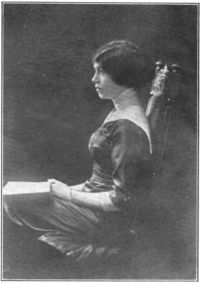 Ruth Cranston,
The Meccas of the World
(1913)
“ The extraordinary oath with which they accept each king, on his accession, is luminous: “We who are as good as you, and who are more powerful than you, elect you king, that you may protect our rights and liberties.” ”
 John Cassell,
Cassell's Illustrated History of England
(1865)
“ In division and controversy moved betwixt princes upon the high sovereign power royal, more evident proof or declaration of truth, right, and God's will, may not be had than by the means of reason, authority, and victory in battles. ”
 Anthony Trollope,
The Struggles of Brown, Jones, and Robinson
“ Who can restrain thee and forbid thy further progress? Kings are but as infants in thy hands, and emperors, despotic in all else, are bound to obey thee! Thou civilizest, hast civilized, and wilt civilize. ”
P. A. S. van Limburg Brouwer, Akbar: An Eastern Romance
“ Because you wish to govern at once, and cannot wait until the death of your father leaves the throne vacant for you. See, then, what you ask for yourself is what I ask for myself—to govern. And while you, to-day, may be said to be ruler over nothing, I reign already, though I ever strive for a more extensive power. Hundreds who, if need were, would become an army against the great of the earth, obey unconditionally my slightest sign without question or hesitation. ”
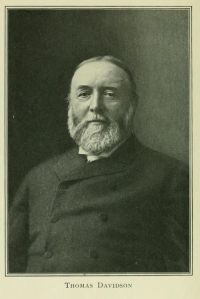 Thomas Davidson,
Aristotle and Ancient Educational Ideals
“ There is no question of bond or free, ruler or ruled, now. In the Kingdom of Heaven there are no such relations. The only greatness recognized there is greatness in service; the only law, the Law of Love. ”
Roger L'Estrange, Fables of Æsop and Other Eminent Mythologists (1692)
“ As Loyalty, for the purpose, shall be call'd Rebellion, and the Exercise of the most Necessary Powers of Government, shall pass for Tyranny and Oppression. Decency of Religious Worship shall be made Superstition ”
Margaret Ellen Henry-Ruffin, The North Star (1904)
“ Thy word in the pulpit, and when thou shrivest me, is my law, but now the king must mete out justice. My kingdom shall not be poisoned by such treachery as this. Away with him!” He called to the attendants. ”
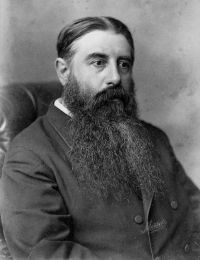 Sir Julius Vogel,
Anno Domini 2000; or, Woman's Destiny
“ You know, I do not take much interest in public affairs, and I fear it has grieved you [Pg 323] that my inclinations have been so alien to what my position as heir to the throne required. But I am not unacquainted with the principles of the constitution of the Empire. I will not pretend that I have studied them from a statesman's point of view. They have absorbed my attention in the course of my favourite study of human character. ”
James Anson Farrer, Books Condemned to be Burnt (1892)
“ The king bears the relation of a political servant or vassal to that state, kingdom, or people over which he is set to govern." But the commonplaces of to-day were rank heresy in a chaplain to Cromwell. ”
Thomas Roscoe Rede Stebbing, Essays on Darwinism
“ A line of rulers is evoked, forced by the circumstances of their tenure to acquire, as their leading qualities, cunning, prudence, self-control, fertility of resource, promptitude of action, till at length the hour and the man coincide, and a handful of barbarians give their name to a great empire. ”
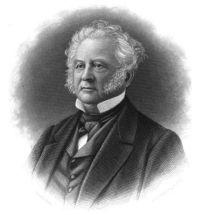 Charles Wentworth Upham,
Salem Witchcraft, Volumes I and II
“ For there is a chain of government that runs down from God, the Supreme Monarch, whose bright and piercing eyes look through all that he has made, to the lowest degree of the creation; and there are presidential angels of empires and kingdoms, and such as under them have the tutelage of private families; and, lastly, every man's particular guardian genius. ”
 Percy Bysshe Shelley,
Poetical Essay on the Existing State of Things
(1811)
“ Kings are but men, &c.—By Kings here the Author must be understood to mean, not merely those men who are invested with the regal authority, but also all who are entrusted with the executive part of legislation, to whom more advantages result from the station which they fill, than the consciousness of having discharged their duty for the welfare of their fellow creatures. ”
 George Crabbe,
George Crabbe: Poems, Volume 2…
“ Is it not known, agreed, confirm’d, confess’d, That of all people, we are govern’d best? We have the force of monarchies; are free, As the most proud republicans can be; And have those prudent counsels that arise In grave and cautious aristocracies ”
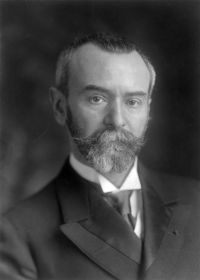 J. J. Jusserand,
English Wayfaring Life in the Middle Ages…
“ Many a wandering workman, accustomed to an active life and the open air, came thus, thanks to the incessant {272} ordinances of king and Parliament, to repent in the dark for his boldness, and during days and nights all alike, to regret his liberty, his family, and his “nest.” ”
The Growth of Parliament and the War with Scotland…
“ We declare and ordain, also, that the said King shall have full power to govern freely in his kingdom and its dependencies, and shall be in the state and in the enjoyment of plenary power, in and through everything, even as he was before the aforesaid time. ”
 Rafael Sabatini,
Scaramouche
(1921)
“ You dare to say that the nobles have made the revolution, when scores of them, following the example of M. le Duc d'Aiguillon, have flung their privileges, even their title-deeds, into the lap of the people! ”
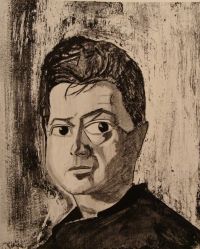 Francis Bacon,
Of the Proficience and Advancement of Learning…
(1605)
“ So unto princes and states, and specially towards wise senates and councils, the natures and dispositions of the people, their conditions and necessities, their factions and combinations, their animosities and discontents, ought to be, in regard of the variety of their intelligences, the wisdom of their observations, and the height of their station where they keep sentinel, in great part clear and transparent. ”
J. Ross, A History of the Coldstream Guards…
“ The Emperor, in abdicating, has offered himself a sacrifice. The members of the Government devote themselves to the due execution of the authority with which they have been invested by your representatives. ”
Matthew Henry, Commentary on the Whole Bible… (1700s)
“ That they seemed to rule over the Gentiles, that have the name and title of rulers, they exercise lordship over them, that is all they study and aim at, not so much to protect them, and provide for their welfare, as to exercise authority upon them; they will be obeyed, aim to be arbitrary, and to have their will in every thing. Sic volo, sic jubeo, stat pro ratione voluntas—Thus I will, thus I command; my good pleasure is my law. Their care is, what they shall get by their subjects to support their own pomp and grandeur, not what they shall do for them. ”
 Mathilde Blind,
Madame Roland
(1886)
“ Glancing backwards, we find that the feudal order of the Middle Ages, with its graduated authority—vested in the hands of successive orders of agricultural and military chiefs, subordinated in their turn to one supreme chief, the Sovereign of the realm—had gradually become absorbed in an absolute monarchy. ”
 Johann Gottlieb Fichte,
Characteristics of the Present Age
(1806)
“ The Rulers, as well as all other Individuals, with all their individual powers, are taken into account in order to direct the powers of the governed,—who no more than they constitute the State,—towards the common purpose, so far as they understand it, and to enforce this purpose on all who are opposed to it. ”
 John Emerich Edward Dalberg Acton,
Lectures on the French revolution
(1910)
“ Kings had become the first of public servants, executing, for the good of the people, what the people were unable to do for themselves; and there was a reforming movement on foot which led to many instances of prosperous and intelligent administration. ”
Various, Continental Monthly , Vol. 6, No…
“ The opinions of the Ruling Power give tone to human thought and action. While Kings and Oligarchies were in the ascendency, the Standard of Right—the King's or the Oligarchs' will—were based on his or their ideas of right. ”
Theodore Martin, Once a Week (1860)
“ The same principle shall be maintained mutually among the subjects of the three sovereigns, who will thus be taught to recognise that the only ruler is He to whom alone belongs power, and in whom are all the treasures of love and wisdom. ”
Herbert Spencer,
Popular Science Monthly
(1881)
“ Where, in virtue of supposed supernatural origin or authority, the king has become absolute, and, owning both subjects and territory, exercises all powers, he is obliged by the multiplicity of his affairs to depute his powers. ”
 James George Frazer,
The Golden Bough
(1922)
“ The change, by whatever causes produced, and whatever the character of the early rulers, was on the whole very beneficial. For the rise of monarchy appears to be an essential condition of the emergence of mankind from savagery. ”
