Toolmaking

Definition and stakes

Robert Routledge,  Discoveries and Inventions of the Nineteenth Century

“ The brickmaker’s mould, the joiner’s plane, the stonemason’s chisel, the potter’s wheel, are examples of simple tools. More elaborate are the coining press, the machine for planing iron, the drilling machine, the turning lathe, the rolling mill, the Jacquard loom. But all such tools and machines have one principle in common—a principle which casual observers may easily overlook, but one which is of the highest importance, as its application constitutes the very essence of the modern process of manufacture as distinguished from the slow and laborious mode of making things by hand. ”
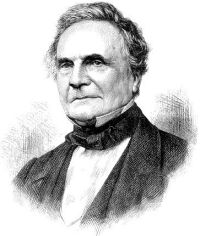
Source: Gutenberg

J. A. Hobson,  The Evolution of Modern Capitalism…

“ Although the development of modern machinery is largely concerned with motor and transmitting mechanisms, it is to the working machine we must look in order to get a clear idea of the differences between machines and tools. A tool may be quite simple in form and action as a knife, a needle, a saw, a roller, a hammer, or it may embody more complex thought in its construction, more variety in its movement, and call for the play of higher human [46] skill. Such tools or implements are the hand-loom, the lathe, the potter's-wheel. To these tools man stands in a double relation. ”
Source: Gutenberg

Samuel Smiles,  Industrial Biography: Iron Workers and Tool Makers

“ Such are among the triumphs of modern mechanical engineering, due in a great measure to the perfection of the tools by means of which all works in metal are now fashioned. These tools are themselves among the most striking results of the mechanical invention of the day. They are automata of the most perfect kind, rendering the engine and machine-maker in a great measure independent of inferior workmen. For the machine tools have no unsteady hand, are not careless nor clumsy, do not work by rule of thumb, and cannot make mistakes. ”
Source: Gutenberg

Get perspective with Kwize: daily news enlightened by great literature