“ A toothbrush should not be too wide, and should be used on one row of teeth at a time. A very wide brush, used on both rows at a time, never reaches the edges of the gum—the points where the tartar [27] always begins to accumulate. ”
Toothbrush
Definition and stakes
The toothbrush, an essential tool for oral hygiene, has been explored in various contexts, ranging from dental care to forensic science. Authors such as Alfred Ayres highlighted its ergonomic design, while James Inglis discussed primitive techniques involving sticks and wood ash. R.
Austin Freeman connected its state to overall health, and the FBI outlined its surprising application in fingerprint analysis. Frank Overton promoted its use beyond teeth, focusing on the tongue and throat. These viewpoints emphasize the toothbrush’s dual function as a household necessity and a representation of health practices, illustrating both practical value and cultural importance.
Quotes about “toothbrush”
James Inglis, Sport and Work on the Nepaul Frontier
“ They clean their teeth with the end of a stick, which they chew at one extremity, till they loosen the fibres, and with this improvised toothbrush and some wood ashes for paste, they make them look as white and clean as ivory. ”
R. Austin Freeman, The Blue Scarab — A Fisher of Men (1924)
“ It takes a good many years to wear a Washita hone hollow or to wear away the blade of a Swedish razor until the maker's mark is encroached on. The state of health, and to some extent the age, are suggested by the toothbrush and the dental-brush. ”
United States. Federal Bureau of Investigation, The Science of Fingerprints: Classification and Uses
“ So is xylene, a chemical which will readily clean grease and fatty matter from the fingers. Good results can be achieved by utilizing a child's soft-bristled toothbrush in cases where the skin is fairly firm. The brushing should be done lightly and the strokes should follow the ridge design in order to clean not only the ridges but the depressions as well. In the event that the skin is not firm enough to use the toothbrush, a cotton swab may be used. The fingers should be wiped very lightly with either soap and water or xylene, always following the ridge contours. ”
Frank Overton, Applied Physiology, Including the Effects of Alcohol and Narcotics
“ We should also rub the toothbrush over the tongue and around the back part of the throat so as to clean the germs from every part of the mouth. Each child should have a toothbrush of his own, and should use it every day. ”
Lady Judith Cohen Montefiore, The Jewish Manual
“ Toothbrushes should not be too hard, and should be used, not only to the teeth, but to the gums, as friction is highly salutary to them. To polish the front teeth, it is better to use a piece of flannel than a brush. ”
 Walter Bradford Woodgate,
Boating
Walter Bradford Woodgate,
Boating
“ It is a good thing for an oarsman to keep a toothbrush in his dressing-room. He will find it a great relief against thirst to wash his mouth out with it when dressing, more especially so if he also uses a little tincture of myrrh. ”
“ Armenian children, who prize and covet beautiful teeth, are taught to clean their teeth always after eating, if only an apple or a piece of bread between meals, and while probably our American customs would hardly make this possible, there is no question but that a persistent and frequent use of the toothbrush will help much in reducing dentist bills. ”
Nancy Casteel Vogel, Four and Twenty Beds
“ He put some coins into her hand and said loudly, "Don't bother to wrap it up, I'm going to get her home and make her use this toothbrush right away. Did you ever hear of anyone going three years without brushing their teeth? Why, the Board of Health ought to get after people like that!" ”
“ Mouth breathers cannot get one breath of uncontaminated air, and dental clinics, organized and conducted in the interests of the health of school children, have been altogether too little inaugurated. The use of a toothbrush should be encouraged in children as soon as they are four years old, and its habitual use twice a day is most desirable for every one. ”
Thomas Dyer Tuttle, Principles of Public Health
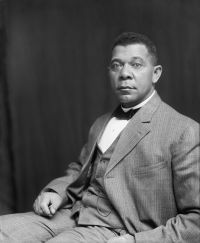
“ You cannot make them clean by picking them. Every morning and night brush your teeth with a stiff toothbrush and a little tooth powder. Brush them both crosswise and up and down, to get out everything from between them. ”
 Booker T. Washington,
Up From Slavery
(1901)
Booker T. Washington,
Up From Slavery
(1901)
“ Another thing that has been insisted upon at the school is the use of the tooth-brush. "The gospel of the tooth-brush," as General Armstrong used to call it, is a part of our creed at Tuskegee. No student is permitted to remain who does not keep and use a tooth-brush. Several times, in recent years, students have come to us who brought with them almost no other article except a tooth-brush. They had heard from the lips of older students about our insisting upon the use of this, and so, to make a good impression, they brought at least a tooth-brush with them. ”
 Bernarr Macfadden,
Vitality Supreme
Bernarr Macfadden,
Vitality Supreme
“ When brushing the teeth, avoid using a brush with the bristles too hard. A medium- or even a soft-bristle brush is preferable. The lateral action of the tooth brush, commonly used, is of limited value. One should use a vertical or up-and-down movement, so that the bristles will reach the crevices between the teeth. It is the spaces between the teeth that particularly need cleaning and the brush should be used in such a way as to reach these. It is here that decay usually begins. ”
Arnold James Cooley, Cooley's Cyclopædia of Practical Receipts and Collateral Information in the Arts…
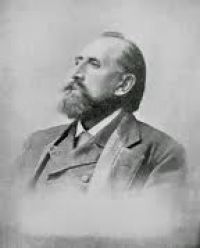
“ Dirty teeth also often cause the breath to smell; and hence the use of the tooth-brush should be a daily habit. Occasionally rinsing out the mouth with a little clean water to which a few drops of solution of chloride of lime, or of chloride of soda, has been added, is often an effective method. Mouth-washes of Condy’s fluid, and also of carbolic acid, both very greatly diluted, form useful remedies; as do also chlorate of potash and tannic acid in the form of mouth-washes. As a tooth-powder, fresh-burnt charcoal, and particularly areca-nut charcoal, is without comparison the best. ”
 Felix Leopold Oswald,
Popular Science Monthly
(1882)
Felix Leopold Oswald,
Popular Science Monthly
(1882)
“ An artificial dentifrice will certainly keep the teeth white, but that does not prevent their premature decay; disuse gradually softens their substance, till one fine day the hash-eater snaps his best incisor upon an unexpected piece of bone. Every old dentist knows hundreds of city customers whom the daily use of a tooth-brush did not save from the necessity of applying, before the end of the fortieth year, for a complete "celluloid set." ”
Friedrich Rathgen, The Preservation of Antiquities…
“ The brown coating of rust which may possibly follow the steeping can be removed by the use of steel-wire brushes, which can now be made of such fine wire that their softness almost equals that of a moderately soft tooth-brush. Brass-wire brushes should not be used, on account of the yellow colour which they give to the iron. I always put the objects directly after steeping into clean fat heated to 250°F. [120°C.] , for brushing over with fat and warming in a stove often caused a slight tarnish to cover the surface. I have also used paraffin wax instead of fat. ”
 Horace Fletcher,
The A.B.-Z. of our own nutrition
Horace Fletcher,
The A.B.-Z. of our own nutrition
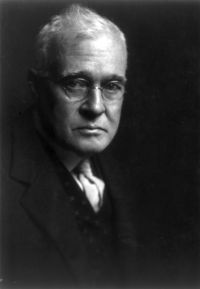
“ The tooth-brush.—Probably the ideal method of cleaning the teeth is that adopted by many primitive and not a few semi-civilised peoples—viz., rubbing them with a twig of wood which has been teased out at one end so as to form a sort of brush by means of which the teeth can be burnished and food dislodged from them. ”
“ A tooth-pick will sometimes be found necessary in the removal of particles of food that are inaccessible to the brush. Metallic tooth-picks injure the enamel, and should not be used. Those made of ivory, or the common goose-quill, are unobjectionable. The brush should be used, not only after each meal, but the last thing at night and the first thing in the morning. This will prevent the accumulation of tartar, which so commonly incrusts neglected teeth. If suffered to remain, it gradually accumulates, presses upon the gums, and destroys their health. ”
Maud Wilder Goodwin, The Colonial Cavalier; or, Southern Life before the Revolution
“ Tooth-brushes are a modern luxury. In the old times, the most genteel were content to rub the teeth with a rag covered with chalk or snuff, and there was more than a suspicion of effeminacy in a man’s cleaning his teeth at all. ”
Anonymous, The Ladies Book of Useful Information
“ As to tooth powders or pastes to be used with the brush, the simplest are the best. Plain camphorated chalk, with or without a little finely powdered pumice stone or burnt hartshorn, is a popular and excellent tooth powder. It is capable of exerting sufficient friction under the brush to ensure pearly whiteness of the teeth without injuring the enamel, whilst the camphor in it tends to destroy the animalcula in the secretions of the mouth, whose skeletons or remains constitute, as we shall presently see, the incrassation popularly called “tartar.” ”
 Garrick Mallery,
Picture-Writing of the American Indians
Garrick Mallery,
Picture-Writing of the American Indians
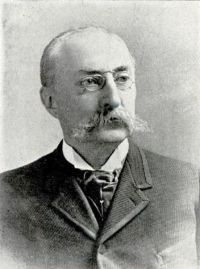
“ It is a well-known fact that the Africans in general can boast of a finer and whiter set of teeth than most other nations. And those Europeans who lived long among them know from constant observation how much attention they pay to their teeth, not only every morning, but often during the day. The tooth brush made use of is simply a piece of wood about 6 to 9 inches long, and of the thickness of a finger. One end of the stick, wetted with the saliva, is rubbed to and fro against the teeth, which end after awhile becomes soft. ”
Various, The Strand Magazine (1891)
“ Having sold out all his hop-bitters, he would then bring on the scene, utterly and defiantly regardless of any copyright of the title, his famous tooth-powder "Cherry Blossom," which was to "purify the breath, cleanse the teeth, harden the gums, renovate the teeth, stop decay, beautify the complexion," &c., and in general make life a paradise, all for the small sum of one penny a box. Occasionally a boy is had up from the crowd, and his teeth cleaned for him with a small piece of wadding, though generally a fairly good specimen dentally is selected. ”
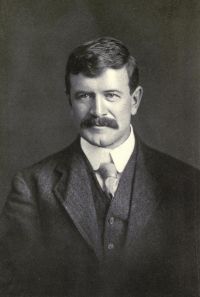 Stephen Leacock,
Moonbeams From the Larger Lunacy
(May, 2003 [Etext #4064])
Stephen Leacock,
Moonbeams From the Larger Lunacy
(May, 2003 [Etext #4064])
“ I noticed now as he said this how frail he looked as he bent over his counter wrapping up the tooth brush. “I’ve no sealing wax,” he said, “or not handy.” “That doesn’t matter,” I answered, “just put it in the paper.” Over the way of course the tooth brush would have been done up almost instantaneously, in white enamel paper, sealed at the end and stamped with a label, as fast as the money paid for it went rattling along an automatic carrier to a cashier. ”
 Judith Cohen Montefiore,
The Jewish Manual
(1846)
Judith Cohen Montefiore,
The Jewish Manual
(1846)
“ A most excellent dentifrice, which cleans and preserves the teeth, is made by mixing together two ounces of brown rappee snuff, one of powder of bark, and one ounce and a half of powder of myrrh. When the gums are inclined to shrink from the teeth, cold water should be used frequently to rinse the mouth; a little alum, dissolved in a pint of water, a tea-cup full of sherry wine, and a little tincture of myrrh or bark, will be found extremely beneficial in restoring the gums to a firm and healthy state. This receipt was given verbally by one of our first dentists. ”
Ethel R. Peyser, Cheating the Junk-Pile: The Purchase and Maintenance of Household Equipments (1922)
“ A brush that gouges and does a chisel’s work is a poor brush, no matter what quality the fiber or brush mark. The brush you buy for your wall or your hardwood floor must not scratch, and must have nothing in its construction that can scratch. Likewise, the brush you buy for your toilet bowl must not scratch or wear the enamel and the bristles must be bristles, for if of fiber you will have your brush acting like a blotter. Your brush must clean and brush, it must not become a bacteria nestling haven. ”
Ethel R. Peyser, Cheating the Junk-Pile: The Purchase and Maintenance of Household Equipments (1922)
“ If it is of fiber, this brush will mat and become of no avail in short order. Such a brush can be used as a [260] bath-tub cleaning brush and will not break the back when functioning.Baldness is the worst disease of bad brushes. Bristles and fiber must be stitched and anchored so as not to shed. The frosting brush would be a danger if a bristle were swallowed with a bite of cake. You probably know the agony of a clothes brush that sheds bristles. The backless twisted-in-wire brushes give brush area on all sides, and are so secured that the bristle is fixed indefinitely. ”
Felix Leopold Oswald,
Popular Science Monthly
(1882)
“ A hard crust is the best possible dentifrice. I never could get myself to believe in the natural necessity of a tooth-brush. The African nations, the Hindoos, the natives of Southern Europe, the South-Sea Islanders, the Arabs, the South American vegetarians, in short, three fourths of our fellow-men, besides our next relatives, the frugivorous animals, have splendid teeth without sozodont. I really believe that ours decay from sheer disuse; the boarding-house homo lives chiefly on pap—wants all his meats soft boiled, and growls at cold biscuit or an underdone potato ”
Robert Kerr, A General History and Collection of Voyages and Travels…
“ When the teeth are already tolerably clean, and not encrusted with what is called tartar, a soft brush is always to be preferred, as risking the enamel less. Hard brushes and gritty powders ruin more teeth than all the sugar and lime in the world. Charcoal is undoubtedly a good substitute for a tooth-powder; but it is to be objected to as leaving black furrows in the gums, which even much washing fails to remove in any reasonable time. ”
Joseph Triemens, The Handy Cyclopedia of Things Worth Knowing
“ The habit of caring for the teeth daily, and if possible after each meal, should be established early in life. Those who have neglected to do so should lose no time in consulting a reputable dentist, and then persistently caring for their teeth day by day. Children especially should be taught to use the tooth-brush and some reliable dentifrice. The more pleasant the preparation the easier it will be to teach them its daily use. A fragrant, refreshing liquid is recommended, as it is a mouth wash as well as a tooth cleanser. ”
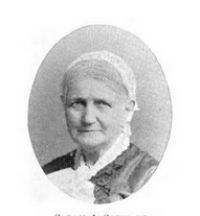 Mrs. H. W. Beecher,
Motherly talks with young housekeepers
(1873)
Mrs. H. W. Beecher,
Motherly talks with young housekeepers
(1873)
“ No one should be without a finger-brush, and to none is it more indispensable than to those who have the most of the family work to do. Wet the brush and rub soap on it; then brush the nails and inside of the hands with it before you finish washing them. Nothing more effectually removes the stains and dirt, which will of course settle on the inside of the hands when handling pots and kettles or working over the stove; and even if your hands are roughened by no such labor, the nail-brush is of great service. ”
Helen Follett Jameson, The Woman Beautiful; or, The Art of Beauty Culture
“ I have heard it said that too much brushing will injure the teeth, but don't you believe it! The sooner you become accustomed to a moderately stiff brush, that will do its work well and thoroughly, the better. All foreign matter must be constantly removed, else decay will come as sure as fate. A perfect state of cleanliness cannot be unless the teeth have proper and constant attention. By this I do not mean that you must cease all other occupations and take up that of eternal scrubbing. Simply keep your teeth clean. ”
Edwin Tenney Brewster, Natural Wonders
“ The tooth pushes thru the gum; and as it goes by, the cells at the sides of the pocket and on top plaster it with a coating of enamel. Therefore, as most of us find out to our cost, this enamel once destroyed, can never grow again. Once clear of the pocket where it was formed, it has to last us the rest of our lives; and little boys and girls who don’t keep their teeth clean when they are young, have to put up with something not nearly so good when they are grown up. ”
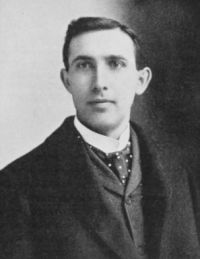 Alvin Davison,
Health Lessons, Book 1
Alvin Davison,
Health Lessons, Book 1
“ Never pick the teeth with a pin or needle. The biting off of thread, finger nails, and other hard material may crack the enamel. It may also be softened and eaten away by acid formed where food remains about a tooth. For this reason a quill or wooden pick or piece of tough thread, called dental floss, should be used to clear the teeth of food after each meal. Slimy matter collects over the whole surface of the teeth, and is likely to cause decay in spots unless it is cleaned off night and morning with brush and water. ”
Boy Scouts of America, Boy Scouts Handbook
“ Every boy should own his own tooth brush. The teeth should be scrubbed at least twice a day. At night they should receive most careful cleansing, using a good tooth paste or powder. Then again in the morning they should be rinsed at which time simply clean water is sufficient. Time should be taken in the cleansing of the teeth. The gums should be included in the scrubbing, as this acts as a good stimulant to the circulation of the blood to the teeth. ”
Mrs. John Lane, The Champagne Standard
“ Tooth-brushes make for health, health makes for intelligence, and it is the intelligent man the world wants and pays for; which proves the incalculable importance of tooth-brushes in the progress of the world. ”
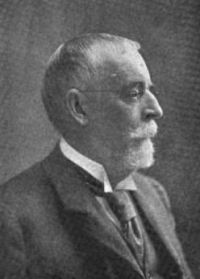 Thomas Curtis Clarke,
American Pocket Library of Useful Knowledge…
(1841)
Thomas Curtis Clarke,
American Pocket Library of Useful Knowledge…
(1841)
“ The most effectual, and indeed the only means of keeping the teeth and gums in a firm and healthy state, is by using the brush daily. Those who possess good teeth should be careful to preserve them. When they are in good order, and free from tartar, the use of a soft brush once a day, with a little dentifrice occasionally, will be quite sufficient to keep them so ”
