
“ Coming out of the lane along the darkness, with the dark space spreading down to the wind, and the twinkling lights of the station below, the far-off windy chuff of a shunting train, the tiny clink-clink-clink of the wagons blown between the wind, the light of Beldover-edge twinkling upon the blackness of the hill opposite, the glow of the furnaces along the railway to the right, their steps began to falter. ”
Train (railway)
Definition and stakes
The theme of “train (railway)” has been addressed by authors such as George Findlay, A. K. Astbury, Sir Cusack P. Roney, Thomas Curtis Clarke and Arthur H. Beavan. It is often associated with terms like locomotive, railroad, track, rail and canteen.
Quotes about “train (railway)”
 George Bernard Shaw,
Cashel Byron's Profession
(1882)
“ If every holiday recollection of my youth, every escape from town to country, be associated with the railway, I must feel towards it otherwise than did my father, upon whose middle age it came as a monstrous iron innovation. The locomotive is one of the wonders of modern childhood. Children crowd upon a bridge to see the train pass beneath. Little boys strut along the streets puffing and whistling in imitation of the engine. All that romance, silly as it looks, becomes sacred in afterlife. Besides, when it is not underground in a foul London tunnel, a train is a beautiful thing. ”
 Ambrose Bierce,
The Collected Works of Ambrose Bierce…
“ Is any spectacle really more interesting than a railway train in motion? Why, even the stolidest laborer in the field, or the most blasé switchman off duty, takes a moment off to stare at it. By night, with its dazzling headlight, its engine eating fire and breathing steam and smoke, its flashes of red light upon the trees as its furnace doors are opened and closed, its long line of gleaming windows, the roar and clang of its progress—not in the world is anything more fascinating, more artistic nor, but for its familiarity, more picturesque. ”
 E. Nesbit,
The Railway Children
“ The railway carriage suddenly grows like night—with lamps, of course, unless you are in a slow local train, in which case lamps are not always provided. Then by and by the darkness outside the carriage window is touched by puffs of cloudy whiteness, then you see a blue light on the walls of the tunnel, then the sound of the moving train changes once more, and you are out in the good open air again, and grown-ups let the straps go. ”
 Ernest Ingersoll,
The Crest of the Continent: A Summer's Ramble in the Rocky Mountains and Beyond
“ Think of swinging a train round a curve of only thirty degrees, on a very stiff grade, and with a bridge directly in the center of the turn! That is what this audacious railway does every few hours in the “toe” of the Muleshoe. From our lonely night-gripped dot of a house on the wild hill side, we could see squarely facing us both the Cyclopean blaze of the fierce headlight, and the two watchful red eyes glaring scornfully from the rear platform; by that we knew that the train had doubled on its own length of only six cars. ”
 Sir Francis Bond Head,
Stokers and pokers
“ The out-train having been despatched, we must now beg our readers to be so good as to walk, or rather to scramble, with us from the scene of its departure across five sets of rails, on which are lying, like vessels at anchor in a harbour, crowds of railway-carriages preparing to depart, to the opposite platform, in order to witness the arrival of an incoming train. ”
Anton Pavlovich Chekhov, Project Gutenberg Compilation of Short Stories by Chekhov
“ AT HOME I THE Don railway. A quiet, cheerless station, white and solitary in the steppe, with its walls baking in the sun, without a speck of shade, and, it seems, without a human being. The train goes on after leaving one here; the sound of it is scarcely audible and dies away at last. ”

“ Well, you run up it as fast as ever you can, and when you get to the top you will see the railway station right in front of you, and all you have to do is to ask if the train is in. There's only one train in and one train out at a little railway station like ours, so you can't miss your way. You will have to ask a porter, or any man you see, to show you the platform where the trains come in, and there you are. ”
Joseph Wardle, From the Thames to the Tiber
“ The railway has a central rail which is cogged, and into this endless cog fits a wheel underneath the engine. This is really the driving wheel by which it slowly moves up the steep gradient. We passed farms, orchards and plantations, up and up. It is a curious sensation to find yourself steadily moving up without any effort of your own, but still up we went until we landed on a lovely plateau, with a charming hotel. The view from this mountain height was beyond description. We left the train and wandered into the woods and viewed our surroundings. ”
A. K. Astbury, British Railways (1951)
“ The results of these tests will help in designing the dozen or so standard locomotives I have already told you about. Passenger trains are usually thought of as the spectacular part of railway working. But goods trains too are not without romance. Many who love trains would just as soon be travelling through the Scottish Highlands in the guard’s van of this train as they would be going off on the Golden Arrow for a week in Paris. ”
Arthur H. Beavan, Tube, Train, Tram, and Car; or…
“ Also, for the security of the workmen employed in maintaining the track as on an ordinary railway—the system of “packing” the sleepers and inspecting the various parts being common to all railways—a clear space of three feet is left between the passing trains, and strong posts, ten feet apart, are fixed along the centre of the space for the labourers to hold on by when an express rushes by. ”
 Thomas Curtis Clarke,
The American Railway: Its Construction…
“ In descending steep grades, only the most constant and skilful care prevents the train from rushing at breakneck speed to the foot of the incline, or to a curve, where it would be precipitated over an embankment and crushed into splinters. ”
 Burton Willis Potter,
The Road and the Roadside
“ Don't ever approach a railway crossing without looking out for the engine while the bell rings, and listening to see if the train is coming; for there is good sense as well as good law in the suggestion of Chief Baron Pollock, that a railway track per se is a warning of danger to those about to go upon it, and cautions them to see if a train is coming. ”
George A. Kyle, The Morning Glory Club
“ Her own quick wits, aided by those of a gallant fellow passenger, give the two officers an unlooked-for and exciting "run for their money." One hardly realizes till now the dramatic possibilities of a railway train, and what an opportunity for excitement may be afforded by a joint railway station for two or more roads. ”
Arthur H. Beavan, Tube, Train, Tram, and Car; or…
“ For this class, wishing to get about quickly—going to and from their daily toil, paying visits to their sporting pals, attending dog shows, football matches, etc., taking their wives and children shopping, and on holidays going some distance afield—a local railway, even if close by, is of little use, with its rigid time-table, its fixed stopping-places, its high fares, and its general formality. ”
Alfred Charles William Harmsworth, Motors and Motor-Driving (1902)
“ Things as seen from the railway are for the most part set on wrong, face the wrong way, and as it were 'grate on the sensitive ear with a slightly mercantile accent.' The coalshed or the chimney of the heating apparatus is turned towards us in the train, and not the best line of gables or the old lych gate. ”
William Hemingway Mills, Railway Construction
“ Where there are only two lines of rails to serve for the UP and DOWN service of a heavy passenger and goods traffic, it is imperative to restrict those lines as much as possible to the actual transit of trains, and not to block them by unnecessary occupation for shunting purposes. A goods train running a long distance collects waggons from many roadside stations, and at some of them several waggons will be taken on, to be forwarded to various and widely distant destinations. ”
Archibald Williams, The Romance of Modern Invention
“ To-day, though our express speed is many times greater than that of the lumbering coaches, our carriages comparatively luxurious, the risk practically nil, the same wish lurks in the breast of ninety-nine out of a hundred railway passengers—to spend the shortest time in the train that the time-table permits of. ”
Railway Adventures and Anecdotes…
“ The ingenuity with which two narrow rods of iron are made to bear whole trains of wagons, laden with many hundred tons of commerce, and bounding across a wide, semi-fluid morass, previously impassable by man or beast, is beyond all praise and deserving of eternal record. p. 63Only conceive a slender bridge of two minute iron rails, several miles in length, level as Waterloo, elastic as whalebone, yet firm as adamant! Along this splendid triumph of human genius—this veritable via triumphalis—the train of carriages bounds with the velocity of the stricken deer ”
Arthur H. Beavan, Tube, Train, Tram, and Car; or…
“ MONO-RAILWAYS A ONE-RAIL railway! What kind of novelty can that be, emanating no doubt from the prolific brain of some enthusiastic engineer possessed with an idea, a fad, a craze—call it what you will! We are accustomed to highly respectable trains running in an orthodox manner on double rails. A projected, many-railed track we have also heard of to carry ships bodily across the Isthmus of Panama. ”
Joseph Husband, The Story of the Pullman Car
“ To follow further the rapid development of the railroad in America would require many volumes. As the canal building fever had seized the fancy of the American public in preceding years, so a similar enthusiasm was instantly kindled in the new railroad, and railroad travel became immediately the most popular diversion. In a relatively few years a web of track carried the smoking locomotive and its rumbling train of cars throughout the country. Crude, and lacking almost every convenience of the passenger coach of the present day, the early railway carriage served fully its new-born function. ”
William Hemingway Mills, Railway Construction
“ It is evident that the rail which would last for very many years under the small traffic, would have a very short life under the frequent traffic. Hence the reason why it is found expedient to give a large increase of material in the heads of rails carrying the heavy, constant train service of many of our main lines. ”
 Charles DeLano Hine,
Letters from an old railway official…
(1904)
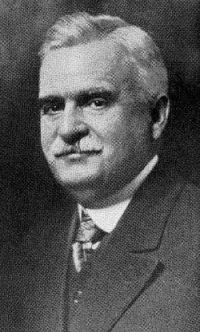
“ Railroads are run to make money. A motion to manage them like golf links is never in order. The track is built for running trains. To the man with too much ton mile on the brain the running of a train, the very object of the road’s existence, becomes a bugaboo. ”
 George Findlay,
The Working and Management of an English Railway
(1889)
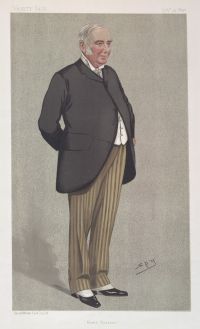
“ Such lines are, therefore, in proportion to the traffic carried over them, more expensive to work and maintain, but as the weight of the train, the class of locomotive used, and all the other arrangements for conducting the business are specially adapted to the circumstances, such a line as this probably involves less trouble and anxiety in working than a railway which is generally level, but which has one or more long and steep gradients in its course. ”
Thomas Curtis Clarke,
The American Railway: Its Construction…
“ On most railroads the freight trainmen—engineers, conductors, brakemen, and firemen—are the most numerous and prominent class, as the number of freight trains is generally larger than that of passenger trains; and among these men there are more brakemen than anything else, because there are two or more on every train, while there is but one of each of the other classes. ”
Katharine Duncan Morse, The Uncensored Letters of a Canteen Girl
“ Already the little railway has shot ahead at an amazing rate; though whether track laid in such a hurry is really going to make for speed in the long run is a question on which the trainmen, sipping their pink lemonade at the canteen counter, have their own opinions. For no train, it seems, can make the run at present without leaving the track at least once during the journey. ”
Charles DeLano Hine,
Letters from an old railway official…
(1904)
“ Every once in a while we are appalled by a terrible collision in a terminal, the result perhaps of some poor devil of an employe not appreciating fully the meaning of “all trains.” To the innocent bystander the switch engine and cars are just as much a train as the Pullman flyer with its two little green markers on the last car. ”
 Charles De Lano Hine,
Letters from an Old Railway Official to His Son…
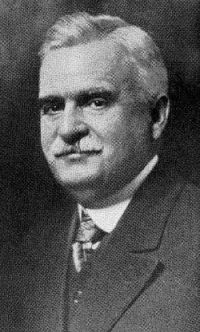
“ On most of the roads in the country passenger trains of whatever nature or importance are all shown in one class, the first. As a result every limited train in the inferior direction on single track has to be given right by train order over opposing local passenger trains in the superior direction. ”
William Hemingway Mills, Railway Construction
“ An arriving goods train is first drawn out of the main-traffic lines into one of the shunting lines, and then handed over to the staff of men in charge of the sorting operations, who at once mark the waggons according to the number or designation of the particular siding into which they have to be placed. A suitable engine is generally set apart for this work, and in a very short time the entire train is divided out by one or more waggons at a time, and distributed into the various sidings, representing different sections of the line, or groups to be handed over to neighbouring railways. ”
George Findlay,
The Working and Management of an English Railway
(1889)
“ When a through train is standing at a station or junction, where it is required to stop, it is met by an examiner, whose duty it is to pass along each side of it and examine every wheel, not only by means of the tapping hammer, but by personal inspection. ”
William Hemingway Mills, Railway Construction
“ Signals.—Railway tradition alleges that on one of the early lines opened for passenger traffic, the precautions for public safety were considered to have been fulfilled by providing a man on horseback to ride along the track between the rails in the front of the locomotive engine, to give warning to persons strolling on the line, and to check the advance of the train when necessary. ”
Railway Adventures and Anecdotes…
“ A train of carriages was attached to a locomotive engine of the most improved construction, and built by Mr. George Stephenson, in the following order:— (1) Locomotive engine, with the engineer and assistants; (2) tender with coals and water; next six wagons loaded with coals and flour; then an elegant covered coach, with the committee and other proprietors of the railway; then 21 wagons fitted up on the occasion for passengers; and, last of all, six wagons loaded with coals, making altogether a train of 38 carriages, exclusive of the engine and tender. ”
Thomas Curtis Clarke,
The American Railway: Its Construction…
“ As often as the yardmaster gets together a sufficient number of cars for a common destination to make up a train, he gathers them together, orders a road engine and crew to be ready, and despatches them. In the make up of "through" trains, care has to be exercised to put together cars going to the same point, and to "group" the trains so that as little shifting as possible may be required at any succeeding yard or terminal, where the trains may pass. ”
Howard Elliott, The Truth About The Railroads (1913)
“ The railways of the country, in their present form, have been built since the close of the Civil War, or in less than fifty years, and are the wonder and admiration of students of the transportation problem who come here from other countries. There are 234,182 miles of railway, and more than 340,000 miles of track in this country, as compared with a trifle less than 300,000 miles of railway in all the other countries of the world combined. There are nearly 58,000 locomotives; more than 45,000 passenger-train cars; nearly 2,200,000 freight- and service-cars. ”
William Hemingway Mills, Railway Construction
“ The fact that our own home lines, the principal Continental lines, and nearly all that vast network of railways in the United States of America, have been laid to the 4 feet 81⁄2 inch gauge, testifies to the general opinion of its utility and efficiency; and we know that included in that list are the railways which carry the largest, heaviest, and fastest train service in the world. ”
Thomas Curtis Clarke,
The American Railway: Its Construction…
“ The vestibuled limited trains contain several sleeping-cars, a dining-car, and a car fitted up with a smoking saloon, a library with books, desks, and writing materials, a bath-room, and a barber-shop. With a free circulation of air throughout the train, the cars opening into each other, the electric light, the many other increased comforts and conveniences introduced, the steam-heating apparatus avoiding the necessity of using fires, the great speed, and absence of stops at meal-stations, this train is the acme of safe and luxurious travel. ”
Related terms
Authors who wrote about “train (railway)”
George FindlayA. K. AstburySir Cusack P. RoneyThomas Curtis ClarkeArthur H. BeavanWilliam Hemingway MillsCharles DeLano HineCharles De Lano HineMary EltingSir Francis Bond HeadMilton M. Shaw Edwin A. Pratt
 W. Douglas NewtonSamuel SidneyJoseph WardleR. C. RichardsCharles Francis AdamsHoward ElliottSamuel SmilesGeorge B. Thayer
