Unities (drama)

Definition and stakes

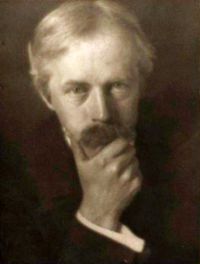
Portrait of George Saintsbury George Saintsbury,  A history of criticism and literary taste in Europe from the earliest texts to the present day… (1902)

“ The two great artificial conceptions of the elaborate “Unities” drama, with Acts and Scenes taking the place of the choric divisions, and of the still more artificial “Heroic Poem,” with its Fable, its Epic Unity, its Machines, and so forth, acquire in theory—if luckily, as, for instance, in England, by no means in practice—greater and greater dignity. It becomes a sort of truism that the drama is the most beautiful and ingenious, the heroic poem the noblest, thing on which the human mind can exercise itself. ”
Source: Gutenberg

Richard Burton,  How to See a Play

“ Neither one nor the other should ever forget that the one and only fundamental unity in drama, past, present and to come, is unity of idea, and the unity of action which gathers about that idea as surely as iron filings around the magnetized center. The unities of time and place are conditional upon the kind of drama aimed at, and the temporal and physical characteristic of the theater ”
Source: Gutenberg

Roy C. Flickinger,  The Greek theater and its drama (1918)

“ The dramatic unities, three principles governing the structure of drama and supposedly derived from Aristotle’s Poetics, are a subject of perennial interest. They are known as the unities of time, place, and action, respectively, and require that “the action of a play should be represented as occurring in one place, within one day, and with nothing irrelevant to the plot.” ”
Source: Gutenberg

Get perspective with Kwize: daily news enlightened by great literature