Violin sonata

Definition and stakes

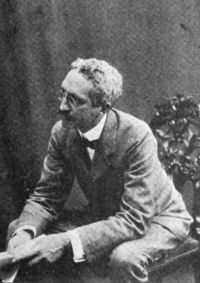
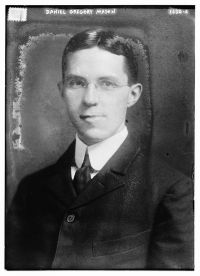
Portrait of Rupert Hughes Rupert Hughes,  Contemporary American Composers

“ In the Violin Sonata the piano, while granting precedence to the violin, approaches almost to the dignity of a duet. The finale 85 is captivating and brilliant, and develops some big climaxes. The work as a whole is really superb, and ought to be much played. There are, besides, a "Lyric Finale" to a sonata not yet written, and several songs for violin, voice, and piano. ”
Source: Gutenberg

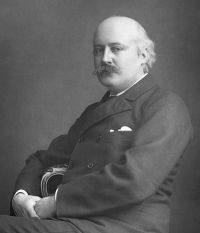
Portrait of Hubert Parry Hubert Parry,  A Dictionary of Music and Musicians (1900)

“ In fact the old Violin Sonata is in many respects a distinct genus, which maintained its individuality alongside the gradually stereotyped Clavier Sonata, and only ceased when that type obtained possession of the field, and the violin was reintroduced, at first as it were furtively, as an accompaniment to the pianoforte. The general characteristics of this school of writers for the violin, were nobility of style and richness of feeling, an astonishing mastery of the instrument, and a rapidly-growing facility in dealing with structure in respect of subject, key, modulation and development ”
Source: Wikisource

Paul Rosenfeld,  Musical Portraits : Interpretations of Twenty Modern Composers

“ Harmony with him is something different than it is with any other composer. Piano colors of a violence and garishness are hurled against each other. The lowest and highest registers of the instrument clash in "Improvisata." Rhythms battle, convulsively, almost. In portions of the "Sinfonietta," five rhythms are to be found warring against each other. Melodic curves, lines, sing ecstatically over turbulent, mottled counterpoint in the piano and violin sonatas. The violin sonata is something of an attempt to exhaust all the possibilities of color-contrast contained in the little brown box. ”
Source: Gutenberg

Get perspective with Kwize: daily news enlightened by great literature