Zero degree Celsius

Definition and stakes

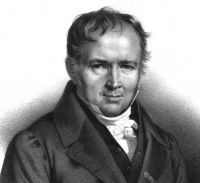
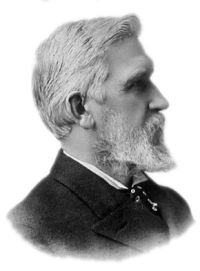
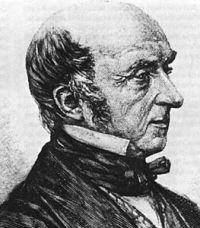
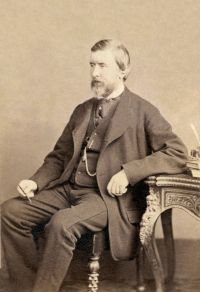
Portrait of Gaston Tissandier Gaston Tissandier,  Popular Scientific Recreations

“ If mercury and glass expanded equally there would be no rise in the latter. Extreme delicacy of the thermometer can be arrived at by using a very fine tube, particularly if it be also flat.
The freezing point in Fahrenheit’s scale is 32°; in the Centigrade it is 0°, and the boiling point 100°. This was the scale adopted by Celsius, a Swede, and is much used. Réaumur called the freezing point 0°, and the boiling point 80°. There is another scale, almost obsolete,—that of Delisle, who called boiling point zero, and freezing point 150°.
”
Source: Gutenberg

Thomas D. Cope,  Physics

“ For example, a piece of ice out of doors is at 10°F. when the air is at this temperature. It follows then, that when ice has been cooled below the freezing [Pg 165] temperature that heat is required to warm the ice up to its melting point; or in other words that ice at its melting temperature possesses some heat. The temperature at which absolutely no heat exists is called absolute zero. There has been devised an absolute scale of temperature. This scale is based upon the centigrade scale, i.e., with 100° between the two fixed points ”
Source: Gutenberg

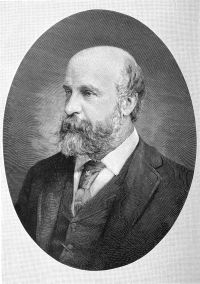
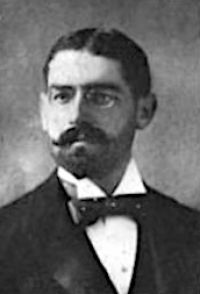
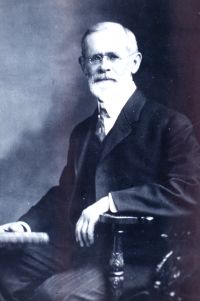
Portrait of Alfred Russel Wallace Alfred Russel Wallace,  Is Mars Habitable? (1907)

“ The only way to compare the proportional temperatures of bodies, whether on the earth or in space, is therefore by means of a scale beginning at this natural zero, instead of those scales founded on the artificial zero of the freezing point of water, or, as in Fahrenheit's, 32° below it. Only by using the natural zero and measuring continuously from it can we estimate temperatures in relative proportion to the amount of heat received. ”
Source: Wikisource

Get perspective with Kwize: daily news enlightened by great literature