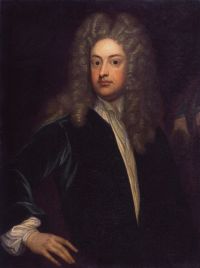
Bernard Le Bouyer de La Bruyère

Definition and stakes

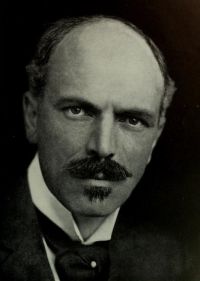
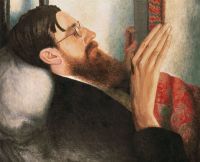
Portrait of Lytton Strachey Lytton Strachey Landmarks in French Literature

What La Bruyère saw with the spiritual gaze of a moralist rushed upon the vision of Saint-Simon in all the colour, the detail, the intensity, the frenzy, of actual fact. He makes no comments, no reflections—or, if he does, they are ridiculous; he only sees and feels. Thus, though in the profundity of his judgement he falls so infinitely below La Bruyère, in his character-drawing he soars as high above him. His innumerable portraits are unsurpassed in literature. They spring into his pages bursting with life—individual, convincing, complete, and as various as humanity itself.
Source: Gutenberg

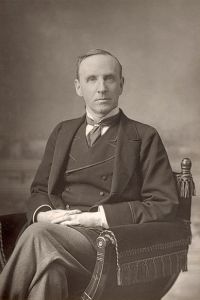
Portrait of Edmund Gosse Edmund Gosse Three French Moralists and The Gallantry of France

It is only of late years that this fact has been discovered, and there are still immense blanks in the life of La Bruyère during which he disappears from us altogether, engulfed in the lanes of the Cité, not because of any adventurous mystery, but simply because of his total lack of adventure. There has scarcely lived a great man of letters in comparatively recent times about whose life there is so little to relate as about that of La Bruyère.
Source: Gutenberg

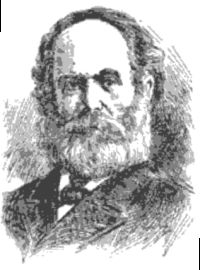
Portrait of George Saintsbury George Saintsbury 1911 Encyclopædia Britannica, Volume 16… (1911)

Beside the sculpturesque precision, the Roman brevity, the profoundness of ethical intuition “piercing to the accepted hells beneath,” of the great Frondeur, La Bruyère has the air of a literary petit-maître dressing up superficial observation in the finery of esprit. It is indeed only by comparison that he loses, but then it is by comparison that he is usually praised. His abundant wit and his personal “malice” have done much to give him his rank in French literature, but much must also be allowed to his purely literary merits.
Source: Wikisource

Get perspective with Kwize: daily news enlightened by great literature