“ In an hour's time we all sat down to a feast of carne con cuero, or meat roasted in the hide, juicy, tender, and exquisitely flavoured. I must tell the English reader who is accustomed to eat meat and game which has been kept till it is tender, that before the tender stage is reached it has been permitted to get tough. Meat, game included, is never so tender or deliciously flavoured as when cooked and eaten immediately after it is killed. ”
Quotes about “Carne”
“ Carne inquired."Fast asleep," said Belton, "and snoring like a pig, sir.""That is right," said Carne. "The man inside should be the same, or that powder has failed me for the first time in my experience. We'll give them half-an-hour longer, however, and then get to work. You had better dress yourself."While Belton was making himself up to resemble his master, Carne sat in an easy chair by his dressing-table, reading Ruskin's Stones of Venice. ”
“ All the same, I have the greatest and most glorious news for you. It isn't every day a man finds Providence taking up his case and entering into judgment against his enemies for him. That is my position. Haven't you heard the news?""What news?" asked Carne innocently."The greatest of all possible news," answered Kelmare, "and one which concerns you, my dear fellow. You may not believe it, but it was discovered last evening that the Kilbenham-Greenthorpe wedding presents have all been stolen, including the fifty thousand sovereigns presented to the bride in the now famous jeweled casket. ”
“ He was placed on the right hand of his hostess and next to the Duchess of Wiltshire. To the latter he paid particular attention, and to such good purpose that when the ladies returned to the drawing-room afterwards, Her Grace was full of his praises. They had discussed china of all sorts, Carne had promised her a specimen which she had longed for all her life, but had never been able to obtain, and in return she had promised to show him the quaintly carved Indian casket in which the famous necklace, of which he had, of course heard, spent most of its time. ”
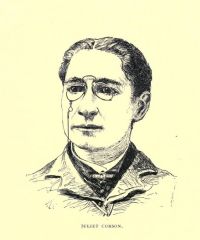 Juliet Corson,
The Cooking Manual of Practical Directions for Economical Every-Day Cookery
Juliet Corson,
The Cooking Manual of Practical Directions for Economical Every-Day Cookery
“ Meats.—While meats are in season all the year, they are better at stated times; for instance, pork is prime in late autumn and winter; veal should be avoided in summer for sanitary reasons; and even our staples, beef and mutton, vary in quality. The flesh of healthy animals is hard and fresh colored, the fat next the skin is firm and thick, and the suet or kidney-fat clear white and abundant; if this fat is soft, scant and stringy, the animal has been poorly fed or overworked. ”
 Nellie Van de Grift Sanchez,
The Life of Mrs. Robert Louis Stevenson
Nellie Van de Grift Sanchez,
The Life of Mrs. Robert Louis Stevenson
“ I have only the most primitive facilities for cooking, and the butcher is twelve miles away over a mountain road. He is anything but dependable, and when I send for a piece of roast beef I may get a soup bone of veal, or a small bit of liver, or a side of breakfast bacon, which I keep hung in a tree. ”
 Alexis Soyer,
The Modern Housewife or, Ménagère
Alexis Soyer,
The Modern Housewife or, Ménagère
“ Cut Beef, Veal, Ham, Tongue, and Breasts of Poultry, with a sharp knife, very thin; Mutton, Lamb, and Pork rather thicker.Never rise from your seat to carve; never cut across the grain of the meat, that is, not across the ribs of beef, as I have seen some persons do, and Mr. B. tells me is often done at clubs, but it is only those do so who do not know how to carve or appreciate the true flavor of the meat. ”
 Henry Shakespear Stephens Salt,
A Plea for Vegetarianism and Other Essays
(1886)
Henry Shakespear Stephens Salt,
A Plea for Vegetarianism and Other Essays
(1886)
“ However artistic the arrangement of the dinner-table, however immaculate the table-cloth and faultless the dinner-service, the disagreeable thought must surely sometimes occur to the artistic mind that the beef was once an ox, the mutton was once a sheep, the veal was once a calf, and the pork was once a pig. We may scrupulously make clean the outside of the cup and platter, but the recollection of the state of their interior will nevertheless cause some disquietude to our aesthetic repose. ”
 Charles Dudley Warner,
The People for Whom Shakespeare Wrote
Charles Dudley Warner,
The People for Whom Shakespeare Wrote
“ Every day at dinner there is beef, mutton, veal, lamb, kid, pork, conie, capon, pig, or as many of these as the season yielded, besides deer and wildfowl, and fish, and sundry delicacies "wherein the sweet hand of the seafaring Portingale is not wanting." ”
J. F. C. Hecker, The Black Death, and The Dancing Mania
“ Poultry and water-fowl, young pork, old beef, and fat meat in general, should not be eaten; but, on the contrary, meat of a proper age, of a warm and dry, but on no account of a heating and exciting nature. ”
Alexis Soyer,
The Modern Housewife or, Ménagère
“ To prove to you that my argument is correct, look carefully over the inclosed list, which contains all the joints that are cut from beef, veal, mutton, lamb, pork, and you will find that ten of the prime are in daily use to one of the other, and principally for a want of the knowledge of cookery; leaving the science of cooking our food to a fierce or slow fire, or plunging our expensive provisions into an ocean of boiling water, which is thrown away, after having absorbed a great portion of the succulence of the meat. ”
 Walter Besant,
The Orange Girl
Walter Besant,
The Orange Girl
“ As the food principally in favour consists of bloaters, red herrings, sprats, mackerel, pig's fry, pork, fat bacon, beefsteak and onions, liver and lights and other coarse but savoury dishes, the mingled fragrance makes the air delightful and refreshing. ”
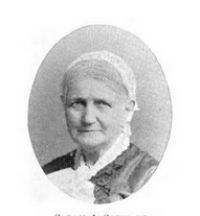 Mrs. H. W. Beecher,
Motherly talks with young housekeepers
(1873)
Mrs. H. W. Beecher,
Motherly talks with young housekeepers
(1873)
“ In much less time than we need to cook a pig in our convenient kitchens, the dweller under the cocoa-nut trees was beautifully browned, crisp, and tender. In cooking, much of the fat from the pork filtered through, and having given juice and relish to the meat, had, with a good deal of fat from the pig, fallen into the ashes around the bed of coals, leaving the meat rich and of peculiar sweetness and delicacy, without being too greasy. ”
Various, Popular Science Monthly (1893)
“ Such a one should avoid afternoon tea as he would poison, and at six or seven have his dinner, which should consist of plainly cooked fish, mutton, venison, chicken, grouse, partridge, hare, pheasant, tripe boiled in milk, sweetbread, lamb, roast beef, and stale bread. ”
Henry Thompson, Popular Science Monthly (1885)
“ Such appetite at all events as has rarely offered itself during years preceding, when the choice of food was conventionally limited to the unvarying progression and array of mutton and beef, in joint, chop, and steak, arriving after a strong meat soup, with a possible interlude of fish, and followed by puddings of which the ingredients are chiefly derived from animal sources. ”
Mrs. S.T. Rorer, Made-Over Dishes — Preface (1908)
“ Save for stock, every bone, whether beef, mutton, poultry or game, as well as all the juices that are left in the meat carving dishes on the table, and the water in which meats are boiled and in which certain vegetables are boiled. ”
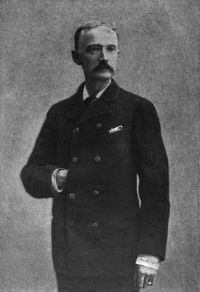 Edward Noyes Westcott,
David Harum
Edward Noyes Westcott,
David Harum
“ When we had meat at all it was pork—boiled pork, fried pork, pigs' liver, an' all that, enough to make you 'shamed to look a pig in the face—an' fer the rest, potatoes, an' duff, an' johnny-cake, an' meal mush, an' milk emptins bread that you c'd smell a mile after it got cold. ”
Catherine Owen, Culture and Cooking; Or, Art in the Kitchen
“ Made very hot, and spread on toast, with pepper and salt, it will be a relish for some one's tea or breakfast.In this country there is a prejudice against sheep's liver; while in England, where beef liver is looked upon as too coarse to eat (and falls to the lot of the "cats-meat man," or cat butcher) , sheep's is esteemed next to calf's, and it is, in fact, more delicate than beef liver. The nicest way to cook it is in very thin slices (not the inch-thick pieces one often sees) , each slice dipped in flour and fried in pork or bacon fat, and pork or bacon served with it. ”
 Lydia Maria Child,
The American Frugal Housewife
Lydia Maria Child,
The American Frugal Housewife
“ BEEF.—Good beef has an open grain, and a tender, oily smoothness; a pleasant carnation color, and clear white suet, betoken good meat; yellow suet is not so good.PORK.—If young, the lean will break in pinching, and if you nip the skin with your nails, it will make a dent; the fat will be soft and pulpy, like lard. If the lean be tough, and the fat flabby and spongy, feeling rough, it is old, especially if the rind be stubborn, and you cannot nip it with your nails. Little kernels, like nail-shot, in the fat, are a sign that it is measly, and dangerous to be eaten. ”
 William Kitchiner,
The Cook's Oracle; and Housekeeper's Manual
William Kitchiner,
The Cook's Oracle; and Housekeeper's Manual
“ Legs and loins of pork, legs of mutton, fillets of veal, and many other joints, will bake to great advantage, if the meat be good; I mean well-fed, rather inclined to be fat: if the meat be poor, no baker can give satisfaction. ”
Jean Prescott Adams, The Business of Being a Housewife
“ Prepare soup stock in a kettle which will retain heat. Fit with a tight cover, for the vapors must be held in to add to the flavor of the stock. Shank and neck of beef, pork or lamb, left-over morsels of meat, bones from steaks, roasts, chops and the carcasses of poultry, are good materials from which to make meat stock. ”
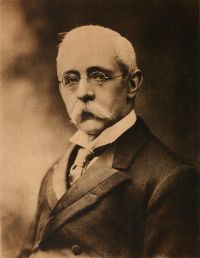 Herbert Allen Giles,
A History of Chinese Literature
Herbert Allen Giles,
A History of Chinese Literature
“ I have known people mix grated lobster with birds’-nests, and mint with chicken or pork!“The cooks of to-day think nothing of mixing in one soup the meat of chicken, duck, pig, and goose. But these chickens, ducks, pigs, and geese have doubtless [410] souls. And these souls will most certainly file plaints in the next world on the way they have been treated in this. A good cook will use plenty of different dishes. Each article of food will be made to exhibit its own characteristics, while each made dish will be characterised by one dominant flavour. ”
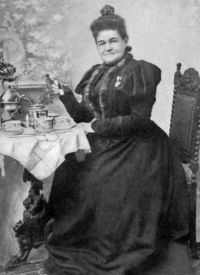 Marion Harland,
The Secret of a Happy Home (1896…
Marion Harland,
The Secret of a Happy Home (1896…
“ Salt pork, salt beef, salt fish, relieve one another in an endless chain upon her board. She averts scurvy by means of cabbage and potatoes. I know well-to-do farmers' wives who do not cook what they call "butcher's meat," three times a month, or poultry above twice a year. ”
Various, The Continental Monthly, Vol 6…
“ The families of many farmers far in among the mountains rarely taste fresh meat, but subsist chiefly upon salt pork, fish, fresh or salted, as the season will permit, potatoes, wheat, rye, and Indian meal, with berries, dried apples, perhaps a few garden vegetables, plenty of good milk, and excellent butter. ”
A. W. Fulton, Home Pork Making
“ The various chapters treat successively of the following, among other branches of the art of pork [Pg vi] making: Possibilities of profit in home curing and marketing pork; finishing off hogs for bacon; class of rations best adapted, flesh and fat forming foods; best methods of slaughtering hogs, with necessary adjuncts for this preliminary work; scalding and scraping; the construction of vats; dressing the carcass; cooling and cutting up the meat; best disposition of the offal; the making of sausage and scrapple; success in producing a fine quality of lard and the proper care of it. ”
Frederick Albert Cook, Through the First Antarctic Night 1898-1899 (1900)
“ Articles which in the canning retain a natural appearance usually remain, especially if cooked a little, friendly to the palate. This is particularly true of meat retaining hard fibers, such as ham, bacon, dried meats, and corned beef. ”
Jean Prescott Adams, The Business of Being a Housewife
“ HOW TO SELECT MEATWhen buying beef, see that it is bright red in color, streaked with fat—and firm. The streaks of fat add to the food value and make a more flavory steak or roast. Veal is pink in color, but less firm. Mutton flesh is firm and dull red in color, the fat hard and white or slightly yellow. Pork is dark pink in color and the fat is less firm than beef or mutton. ”
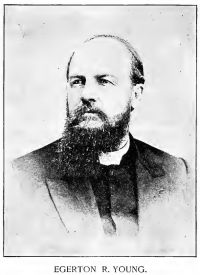 Egerton Ryerson Young,
By Canoe and Dog Train Among The Cree and Salteaux Indians
Egerton Ryerson Young,
By Canoe and Dog Train Among The Cree and Salteaux Indians
“ If we are fortunate enough to have some bread, which was far from being always the case, we thaw it out and eat it with our meat. Vegetables were unknown on these trips. Our great staple was fat meat, and the fatter the better; morning, noon, and night, and often between times did we stop and eat fat meat. If we did vary the menu, it would be by making a raid on the dogs’ supply, and in the evening camp cooking ourselves a good kettle of fish. ”
Thomas Williamson, The East India Vade-Mecum, Volume 1…
“ The ample supply of poultry, of all descriptions, fed in coops on the poop, and a small flock of sheep, perhaps from twenty-five to forty in number, maintained there on hay, &c. enable the captain, for the most part, to exhibit fresh meat, of some sort, every day; which added to abundance of prime beef and pork for his use, together with tongues, pickles, sauces of all kinds, potatoes, rice, pastry, olives, &c. &c. form a tout ensemble, where even the most dainty may find something acceptable to the palate. ”
W. Delisle Hay, Brighter Britain! (Volume 1 of 2…
“ Pork—fresh and salted, bacon and ham—is the natural and invariable food of the settler. Beef and mutton are too valuable as marketable steers, dairy cattle, and wool-growers, and are not so conveniently prepared into keeping forms; hence the pigs he breeds on his clearings are looked upon by the bush-farmer as the regular source whence to draw his household provision in the meat way. ”
Anne Cobbett, The English Housekeeper (1851)
“ It is convenient, occasionally, to send the dinner out to be cooked, and the meat which suffers least from such cookery ought to be selected; veal is good baked, so is pork, a sucking pig, a goose, and a duck ”
A Genuine New England Boiled Dinner (1903)
“ For the meat, three or four pounds of your favorite cut of corned beef, which has not been in the brine too long, and the same amount of fresh pork, the foot and lower part of the leg. This piece of pork you will find a great improvement, and the vegetables need the fat, as no butter is used in their preparation for the table. For vegetables, you need cabbage, turnips, carrots, parsnips, beets, and potatoes. ”
William Harrison, Elizabethan England
“ Their food also consisteth principally in beef, and such meat as the butcher selleth—that is to say, mutton, veal, lamb, pork, etc., whereof he findeth great store in the markets adjoining, beside sows, brawn, bacon, fruit, pies of fruit, fowls of sundry sorts, cheese, butter, eggs, etc., as the other wanteth it not at home, by his own provision which is at the best hand, and commonly least charge. ”
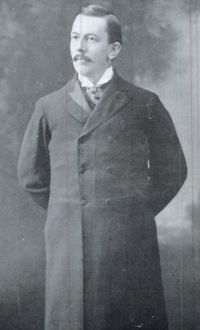 Warren King Moorehead,
The American Indian in the United States…
Warren King Moorehead,
The American Indian in the United States…
“ Make your dairy amply large and of such kind that there will be plenty of milk, cream and butter. Feed the skim-milk to the hogs and grow your pork meat. Where practicable cure your own bacon and ham, make your own sausage and dry and corn your own beef. ”
Charles de Coster, The Legend of Ulenspiegel, Volume 2…
“ Aye! they have everything for the comfort of their stomachs: biscuit, rye bread, beer, butter, smoked meat, yea, all, dried fish, cheese, mustard seed, salt, beans, peas, barley, vinegar, oil, tallow, wood, and coal. We, we have just been forbidden to take the cattle of any so-ever, be he citizen, abbot, or gentleman. We eat herrings and drink small beer. ”
A. S. Forrest, A Tour Through South America
“ Sheep are handled in the same way. The dipping corrals are situated on different parts of the estancia in selected positions, and when these are at a long distance from the farmhouse the men, when employed there, cook their meals of great lumps of beef over a blaze of crackling sticks. The meat is hooked on to a long iron bar which is stuck upright in the ground, and the savoury smell of the roasting, crackling meat fills the air. ”
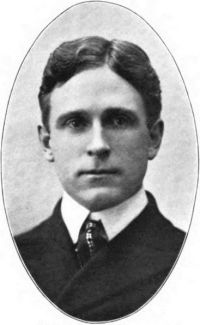 Archer Butler Hulbert,
Braddock's Road
(1902)
Archer Butler Hulbert,
Braddock's Road
(1902)
“ We are happy if we can get some rusty salt Pork, or Beef, which hath been carried without Pickle; for as we cannot carry Barrels on Horses, we are forced to take out the Meat and put it in Packs on Horses Backs; sometimes we get a few live Cattle from the Cow-Pens, but they are so lean that they are Carion and unwholesome. ”
“ Spareribs and ham hocks. Pork liver and heart. Thick pork chops or ham slices or shoulder steaks. Lamb shoulder, neck, breast, shanks, heart, and liver. Veal round, rump, shoulder, and heart.For stews, soups, or to cook before creaming or frying.—Beef, lamb, or veal neck. Beef plate and brisket (fresh or corned) . Tongue (fresh or smoked) . Veal or lamb shanks, kidneys, brains. Pork kidneys and brains. Veal, lamb, or beef sweetbreads.To Make Meat TenderGood cooking can help make any cut of meat a favorite main dish with the family. ”
Various, The Irish Penny Journal, Vol. 1 No…
“ Never as long as you live put meat, either fresh or salt, near your milk-vessels; if you do, you will surely spoil your milk and lose your butter.” “This may account for my loss, but what have you to say to its coming back?” “Why, what’s to hinder it, when your bacon is in the chimney and your cow at grass?” ”
