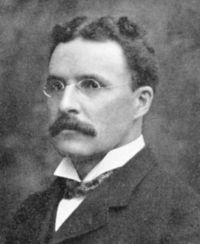
 J. B. Bury,
The Idea of Progress: An Inquiry into Its Origin and Growth
J. B. Bury,
The Idea of Progress: An Inquiry into Its Origin and Growth
“ Cartesianism affirmed the two positive axioms of the supremacy of reason, and the invariability of the laws of nature; and its instrument was a new rigorous analytical method, which was applicable to history as well as to physical knowledge. The axioms had destructive corollaries. The immutability of the processes of nature collided with the theory of an active Providence. The supremacy of reason shook the thrones from which authority and tradition had tyrannised over the brains of men. Cartesianism was equivalent to a declaration of the Independence of Man. ”