Clara Schumann

Definition and stakes

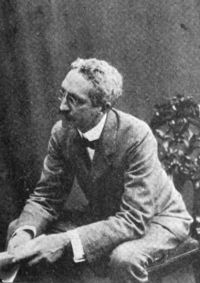
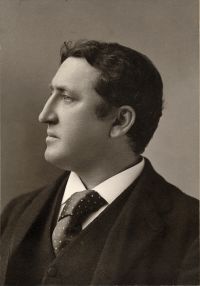
Portrait of Rupert Hughes Rupert Hughes,  The Love Affairs of Great Musicians…

“ Clara was torn betwixt filial piety toward a father who could be ursine to a miserable degree, and a lover who was not only eating his heart out in loneliness, but who needed her personality to complete his creative powers in music. While Schumann had no such problem to meet, he lacked Clara's elastic and buoyant nature, and it must never be forgotten that when he was sad, he was dismal to the point of absolute madness. ”
Source: Gutenberg

Portrait of Rupert Hughes Rupert Hughes,  The Love Affairs of Great Musicians…

“ Clara, who had found small satisfaction in her fame out-of-doors, since she was defeated in her love in her home, had the joy of seeing the gradual growth in Schumann's heart of a tenderness that kept increasing almost to idolatry. Her increasing beauty was partly to blame for it, but chiefly it was the nobility yet exuberant joy of her soul, and her absolute sympathy with his ideals in music, criticism, literature, and life.
To both of them, art was always a religion; there was no philistinism or charlatanism in the soul or the career of either.
”
Source: Gutenberg

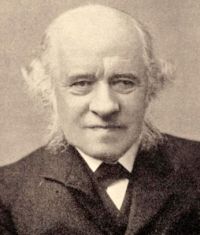
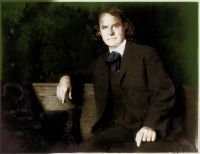
Portrait of Elbert Hubbard Elbert Hubbard,  Little Journeys to the Homes of the Great - Volume 14

“ Most descriptions of women begin by telling how the individual looked and what she wore. No pen-portraits of Clara Schumann have come down to us, for the reason that she was too great, too elusive in spirit, for any snapshot artist to attempt her. She never looked twice the same. In feature she was commonplace, her form lacked the classic touch, and her raiment was as plain as the plumage of a brown thrush in an autumn hedgerow. She was as homely as George Eliot, Mary Wollstonecraft, Rosa Bonheur, George Sand, or Madame De Stael. ”
Source: Gutenberg

Get perspective with Kwize: daily news enlightened by great literature