
“ She did so, and we hopped off the train just at daybreak, perfectly delighted at doing something we had not planned. A more lovely sight than the Cologne cathedral, with the rising sun gilding its numerous pinnacles and spires, would be difficult to imagine. The narrow streets were still comparatively dark, and when we arrived we heard the majestic notes of the organ in a Bach fugue, and found ourselves at early mass, with rows of humble worshippers kneeling before the high altar, and the twinkle of many candles in the soft gloom. ”
Cologne Cathedral
Definition and stakes
Cologne Cathedral, a Roman Catholic cathedral in Germany, stands as a monumental symbol of Gothic architecture and Christian faith, declared a World Heritage Site in 1996. Reaching 157 meters in height, it is the tallest twin-spired church in the world and a representation of enduring cultural and spiritual heritage. Authors like Lilian Bell were captivated by its grandeur bathed in morning light, while Harriet Beecher Stowe commended its preservation as an example for Europe’s cathedrals.
James Joseph McCarthy emphasized its completion as a revival of medieval craftsmanship, and Catharine Maria Sedgwick observed its unfinished condition as a reflection of human ambition. These viewpoints highlight the cathedral’s dual function as an architectural wonder and a spiritual center, embodying both historical continuity and the aspirations of those who shaped it over the centuries.
Quotes about “Cologne Cathedral”
 Harriet Beecher Stowe,
Sunny Memories of Foreign Lands
(1854)
Harriet Beecher Stowe,
Sunny Memories of Foreign Lands
(1854)
“ However, Notre Dame is a beautiful church; but I wish it was under as good care as Cologne Cathedral, and that instead of building Madeleines and Pantheons, France would restore and preserve her cathedrals—those grand memorials of the past. I consider the King of Prussia as not only a national benefactor, but the benefactor of the world. Cologne, when finished, will be the great epic of architecture, and belong, like all great epics, to all mankind. ”
James Joseph McCarthy, Ecclesiastical Architecture: Part I
“ For happily, after a lapse of three woful centuries, the spirit of ancient times is reappearing, and we need only refer to the completion of Cologne Cathedral, and the zeal with which it is carried forward, as a proof that Christian art was not dead during that long space of time, but in a slumber, from which, perhaps, in our generation, it may completely arise, and adapting itself, with that plasticity peculiarly its genius, to the necessities of the age, exhibit more glorious developments that the world has yet seen. ”




Related terms
Authors who wrote about “Cologne Cathedral”
M. F. MansfieldW. W. CollinsViolet R. MarkhamElizabeth Boyle O'ReillyMary Tout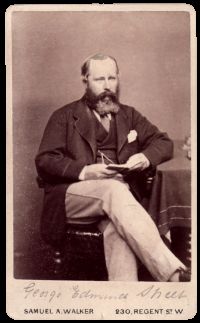 George Edmund StreetRichard P. Spiers, John Bilson…Montgomery SchuylerCurtis GuildT. Roger Smith
 Walter M. GallichanLouise B. Robinson
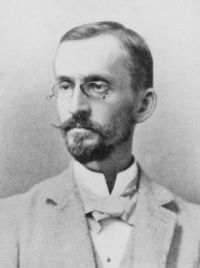 A. D. F. HamlinCharles M. TaylorLeader ScottP. Austin NuttallRussell SturgisVariousGeorge H. HeffnerJohn Lord
George Edmund StreetRichard P. Spiers, John Bilson…Montgomery SchuylerCurtis GuildT. Roger SmithWalter M. GallichanLouise B. RobinsonA. D. F. HamlinCharles M. TaylorLeader ScottP. Austin NuttallRussell SturgisVariousGeorge H. HeffnerJohn Lord