“ The Elizabethan Poetry, as it is rather vaguely termed, forms the substance of this Book, which contains pieces from Wyat under Henry VIII to Shakespeare midway through the reign of James I, and Drummond who carried on the early manner to a still later period. There is here a wide range of style;—from simplicity expressed in a language hardly yet broken-in to verse,—through the pastoral fancies and Italian conceits of the strictly Elizabethan time,—to the passionate reality of Shakespeare: yet a general uniformity of tone prevails. ”
Elizabethan poetry
Definition and stakes
The theme of “Elizabethan poetry” has been addressed by authors such as Charles Edwyn Vaughan, George Saintsbury, William J. Long, Bliss Perry and Anne C. Lynch Botta. It is often associated with terms like England, Elizabeth, literature, poet and William.
Quotes about “Elizabethan poetry”
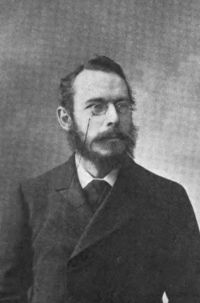 Brander Matthews,
Parts of Speech: Essays on English
(1901)
Brander Matthews,
Parts of Speech: Essays on English
(1901)
“ In that greatest period of the race we do not know which is the greater, the daring energy, the enthusiastic impetuosity, the ability to govern, that the English then displayed, or the mighty sweep and range of the imagination as nobly revealed in their poetry. The works of the Elizabethan writers are with us, like the memory of the deeds of the Elizabethan adventurers, as evidence, if any was needful, that the peoples that speak English are of a truth poetic, that they are not prosaic. ”
“ The pitch and timbre of modern poetry are somewhat altered, to be sure. There is less personality, less freedom,—shall I say a certain naïve grace and spontaneous virility are wanting in existent verse as compared with Elizabethan song? though in general the latter-day lyrist is the superior craftsman in rhyme. The most marked variation between the two periods is that the so-called Elizabethan poets for the most part wrote their songs to be sung,—“music married to immortal verse.” ”
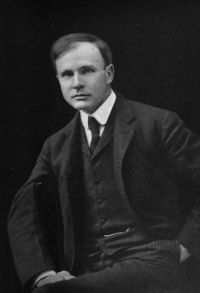 Bliss Perry,
A Study of Poetry
Bliss Perry,
A Study of Poetry
“ It is not that the spirit of Elizabethan lyric verse is always care-free, even when written by prodigals such as Peele and Greene and Marlowe. Its childlike grasping after sensuous pleasure is often shadowed by the sword, and by quick-coming thoughts of the brevity of mortal things. Yet it is always spontaneous, swift, alive. Its individual voices caught the tempo and cadence of the race and epoch, so that men as unlike personally as Spenser, Marlowe and Donne are each truly "Elizabethan." ”
Robert Huntington Fletcher, A History of English Literature
“ The qualities which especially distinguish the Elizabethan lyrics are fluency, sweetness, melody, and an enthusiastic joy in life, all spontaneous, direct, and exquisite. Uniting the genuineness of the popular ballad with the finer sense of conscious artistic poetry, these poems possess a charm different, though in an only half definable way, from that of any other lyrics. In subjects they display the usual lyric variety. There are songs of delight in Nature ”
“ Indeed, the more we study those 50 or 60 years which embrace the so-called Elizabethan period, the more are we struck by the fact that, ever since, we have been simply making variations upon the themes, which the men of those times gave us. Modern science, [65] modern poetry, modern drama, sat like pages at the feet of the Great Queen. Among these the novel cut but an insignificant figure, although it was the novel which had perhaps the longest future before it. We need not wonder therefore that our first English novelist has been treated by many with neglect. ”
 Darrell Figgis,
A vision of life
(1909)
Darrell Figgis,
A vision of life
(1909)
“ BY G. K. CHESTERTON There are signs of a certain stirring in English poetry, a minor Renaissance of which Francis Thompson may be regarded as the chief ensign and example. It is partly the Elizabethan spirit, that permanent English thing working its way again to the surface; but, of course, like every Renaissance, it is in many ways unlike its origin and model. It is as true in art as it is in religion, that when a man is born again, he is born different. And the latest Elizabethanism has differed not only from the actual Elizabethan work, but from other revivals of it. ”
 William J. Long,
Outlines of English and American Literature
William J. Long,
Outlines of English and American Literature
“ SUMMARY. The literary period just studied covers the last three quarters of the seventeenth century. Its limits are very indefinite, merging into Elizabethan romance on the one side, and into eighteenth century formalism on the other. Historically, the period was one of bitter conflict between two main political and religious parties, the Royalists, or Cavaliers, and the Puritans. The literature of the age is extremely diverse in character, and is sadly lacking in the unity, the joyousness, the splendid enthusiasm of Elizabethan prose and poetry. ”
Reuben Post Halleck, Halleck's New English Literature
“ As the Elizabethans felt that real life meant activity in exploring a new and interesting world, both physical and mental, they demanded that their literature should present this life of action. Hence, all their greatest poets, with the exception of Spenser, were dramatists. Even Spenser's Faerie Queene, with its abstractions, is a poem of action, for the virtues fight with the vices.ELIZABETHAN PROSE LITERATURE Variety in the Prose.—The imaginative spirit of the Elizabethans craved poetry, and all the greatest authors of this age, with the exception of Francis Bacon, were poets. ”
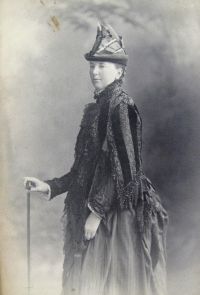 Emily Lawless,
The inalienable heritage, and other poems
(1914)
Emily Lawless,
The inalienable heritage, and other poems
(1914)
“ There are words, fragments, that run in our heads and make us wonder from which great poet they come, until we remember they are hers. They generally recall the Elizabethans, and the verse of the Elizabethans it was whose poetry most affected and most influenced her. [Pg ix] In one way these last poems have an especial distinction. They bear the marks of her struggle with bodily misery and marks of the victory she won. They are scarred, but they prove the final dominance of her mind. ”
 George Saintsbury,
A History of Elizabethan Literature
George Saintsbury,
A History of Elizabethan Literature
“ In passing, moreover, from the group of miscellaneous poets to these two schools, if we lose not a little of the harmony and lyrical sweetness which characterise the best work of the Elizabethan singer proper, we gain greatly in bulk and dignity of work and in intrinsic value. ”
J. N. Larned, History for ready reference, Volume 2…
“ Even as the Elizabethan lived with all his might and was not troubled about many things, his art was intense and round, but restricted; and as the Victorian commonly views life by the light of a patent reading-lamp, and so, sitting apart, sees much to perplex, the novel gives a more complex treatment of life, with rarer success in harmony. ”
J. N. Larned, History for ready reference, Volume 2…
“ These circumstances sufficiently account for the richness and variety of Elizabethan literature. They also help to explain two points which must strike every student of that literature--its native freshness, and its marked unity of style. Elizabethan literature was fresh and native, because it was the utterance of a youthful race, aroused to vigorous self-consciousness under conditions which did not depress or exhaust its energies. The English opened frank eyes upon the discovery of the world and man, which had been effected by the Renaissance. ”
 Donald Grant Mitchell,
English Lands, Letters and Kings…
Donald Grant Mitchell,
English Lands, Letters and Kings…
“ He was saturated through and through with learning and with piety; and they gurgled from him together in a great tide of mellifluous language. The ardors and fervors of Elizabethan days seem to have lapped over upon him in that welter of the Commonwealth wars. He has been called the Shakespeare of the pulpit; I should rather say the Spenser—there is such unchecked, and uncheckable, affluence of language and illustration; thought and speech struggling together [140] for precedence, and stretching on and on, in ever so sweet and harmonious jangle of silvery sounds.A Royalist and a Puritan. ”
Charles Edwyn Vaughan, English literary criticism
“ There can be little doubt that, consciously or no, the Elizabethans, with their quick eye for beauty of every kind, were swayed, as men in all ages have been swayed, by the finely chiselled forms of classical art. The besetting sin of their imagination was the tendency to run riot; and it may well be that, save for the restraining influence of ancient poetry, they would have sinned in this matter still more boldly than they did. ”
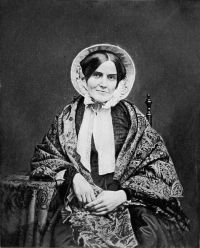 Delia Salter Bacon,
The Philosophy of the Plays of Shakspere Unfolded
Delia Salter Bacon,
The Philosophy of the Plays of Shakspere Unfolded
“ But the difficulty of unlocking the great Elizabethan poems with any such theory of Art, arises from the fact that it is not the theory of Art, which the great Elizabethan Poets adopted, and whether we approve of theirs or not, we must take it, such as it was, for our torch in this exploration. ”
Chautauqua Institution, The Chautauquan, Vol. 05, January 1885…
“ For a long time the poetry of England had been prosy in the extreme, metaphysical, monotonous, remorseful, dark and somber, and the appearance of a poet light, graceful and sentimental, was an event calculated to arouse the nation into joyous enthusiasm. ”
Anne C. Lynch Botta, Handbook of Universal Literature…
“ The prose writers of this time are represented by Bishop Hall and Jeremy Taylor, among the clergy, and Selden and Camden among the laymen. The roughness of speech and manners of Elizabeth's time, followed, in the next reign, by a real coarseness and lowness of sentiment, grew rapidly worse under Charles, whose reign was especially prolific in poetry, the tone of which varied from grave to gay, from devotion to licentiousness, from severe solemnity to indecent levity; but no great poet appeared in the crowd. ”
Dr. Doran, "Their Majesties' Servants." Annals of the English Stage…
“ If it be true, as we are told on high authority, that the greatest glory of England is her literature, and the greatest glory of English literature is its poetry, it is not less true that the greatest glory of English poetry lies rather in its dramatic than its epic or its lyric triumphs. ”
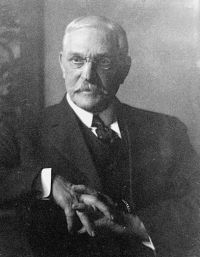 John W. Beatty,
The Relation of Art to Nature
John W. Beatty,
The Relation of Art to Nature
“ The closer personal acquaintance which we can form with the English of the age of Elizabeth, the more we are satisfied that Shakespeare’s great poetry is no more than the rhythmic echo of the life which it depicts. ”
Nathan Drake, Shakspeare and His Times [Vol. 1 of 2…
“ Here are the openings of those reflections on the imagery of nature, in which subsequent poets have so much dealt. They show us to what occasional excellence, both in turn of thought and polish of language, the literature of Queen Elizabeth had arrived; and how little the artificial and incumbered prose of mere scholars of that time exhibits a just specimen of either the sentiment or phrase of the court or people! ”
Nathan Drake, Shakspeare and His Times [Vol. 1 of 2…
“ We can ascribe, however, to the poets of Elizabeth's reign the greater merit of excelling in energy and truth of sentiment, in simplicity of diction, in that artless language of nature which irresistibly makes its way to the heart. To excite the emotions of sublimity, of terror, of pity, an appeal to the artificial graces of modern growth will not be found successful ”
Henry Thew Stephenson, The Elizabethan People (1910)
“ This Is a delightful characteristic. It is a noble characteristic. It is because of this that we forget and forgive the disagreeable and the savage, and, for we sometimes meet them, the foolish characteristics of the Elizabethan. We forget and forgive all this and express our idealisation of the country of Queen Elizabeth by the phrase "In Merry England." ”
Bliss Perry,
The American Mind
“ They are evidence furnished by a single art, as to a certain mode and coloring of human existence; but every corroboration of that evidence heightens our admiration for the artistic sincerity and insight of the poet. To draw an illustration from a more splendid epoch, let us remind ourselves that the literature of the "spacious times of great Elizabeth"—a period of strong national excitement, and one deeply representative of the very noblest and most permanent traits of English national character—was produced within startlingly few years and in a local territory extremely limited. ”
The Palace of Pleasure, Volume 1
“ However we may explain the fact, it remains true that outside Shakespeare none of the Elizabethans has really reached the heart of the nation. There is not a single Elizabethan drama, always of course with the exception of Shakespeare’s, which belongs to English literature in the sense in which Samson Agonistes, Absalom and Achitophel, Gulliver’s Travels, The Rape of the Lock, Tom Jones, She Stoops to Conquer, The School for Scandal, belong to it. ”
Mary Sturgeon, Studies of Contemporary Poets
“ And coming thence to the narrower but firmer ground of historical fact, one saw how shiningly he represented the Elizabethan Age, with its eager, inquisitive, and adventurous spirit; its craving to fulfil to the uttermost a gift of glorious and abundant life. ”
Various, The Pansy Magazine, August 1886
“ What a pity she did not realize that beauty of mind, kindness of heart, nobleness of character, and above all, the true Christian spirit, were much more to be desired than anything so frail and perishable as human beauty. Never, in any reign, has England known such pomp and splendor as in Elizabeth’s time. ”
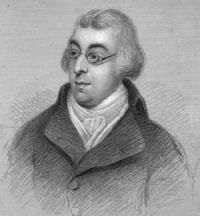 Isaac Disraeli,
Amenities of Literature
Isaac Disraeli,
Amenities of Literature
“ The nephew of Milton, in the preface to his “Theatrum Poetarum,” where the critical touch of the great master so frequently betrays itself, pleads for our ancient poets, who are not the less poetical because their style is antiquated. Writing in the reign of Charles II., in 1675, he says: “From Queen Elizabeth’s reign, the language hath not been so unpolished as to render the poetry of that time ungrateful to such as at this day will take the pains to examine it well. ”
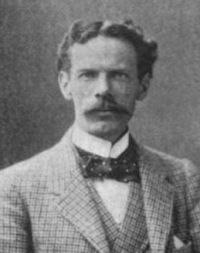 T. G. Tucker,
Platform Monologues
T. G. Tucker,
Platform Monologues
“ And who will maintain, that in force of imagination, in truth of vision, in grasp of the ideal side of things, in beautiful expression of elusive thoughts, in lyric rapture, the Elizabethans are equal to the Georgian and Victorian poets? ”
John Lord, Beacon Lights of History, Volume 08…
“ The Elizabethan era is justly regarded as the brightest in English history; not for the number of its great men, or the magnificence of its great enterprises, or the triumphs of its great discoveries and inventions, but because there were then born the great ideas which constitute the strength and beauty of our proud civilization, and because then the grandest questions which pertain to religion, government, literature, and social life were first agitated, with the freshness and earnestness of a revolutionary age. The men of that period were a constellation of original thinkers. ”
Henry Thew Stephenson, The Elizabethan People (1910)
“ In the following pages I have continued an attempt, already begun, to lay before the modern reader a wide view, not too much hampered by encyclopædic detail, of how the Elizabethans lived and what they thought about things in general, hoping that this knowledge will help to set the scenes of Shakespeare and his fellow playwrights before the modern audience in a more consistent and rational simplicity. It may be true that human nature changes but little in its fundamental characteristics from generation to generation, from century to century ”
Delia Salter Bacon,
The Philosophy of the Plays of Shakspere Unfolded
“ The Elizabethan Men of Letters are men who found in those new and dazzling stores of art and literature which the movements of their age brought in all their freshly restored perfection to them, only the summons to their own slumbering intellectual activities,—fed with fires that old Eastern and Southern civilizations never knew, nurtured in the depths of a nature whose depths the northern antiquity had made; they were men who found in the learning of the South and the East—in the art and speculation that had satisfied the classic antiquity—only the definition of their own nobler want. ”
Baron Thomas Babington Macaulay Macaulay, Critical, Historical, and Miscellaneous Essays…
“ Ninety-nine persons out of a hundred would answer that the poetry of the last century was correct, but cold and mechanical, and that the poetry of our time, though wild and irregular, presented far more vivid images, and excited the passions far more strongly than that of Parnell, of Addison, or of Pope. In the same manner we constantly hear it said, that the poets of the age of Elizabeth had far more genius, but far less correctness, than those of the age of Anne. It seems to be taken for granted, that there is some incompatibility, some antithesis between correctness and creative power. ”
Various, The Atlantic Monthly, Volume 03…
“ The genius of the poet will tell him what word to use (else what use in his being poet at all?) ; and even then, unless the proportion and form, whether of parts or whole, be all that Art requires and the most sensitive taste finds satisfaction in, he will have failed to make what shall vibrate through all its parts with a silvery unison,—in other words, a poem.We think the component parts of English were in the latter years of Elizabeth thus exquisitely proportioned one to the other. ”
Related terms
Authors who wrote about “Elizabethan poetry”
Charles Edwyn VaughanGeorge SaintsburyWilliam J. LongBliss PerryAnne C. Lynch BottaNathan DrakeRobert Huntington Fletcher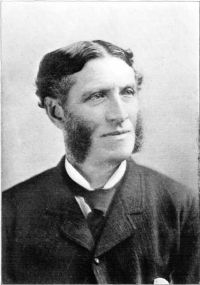 Matthew ArnoldMary Sturgeon
 Percy Bysshe ShelleyWilliam HazlittReuben Post Halleck
 Oscar WildeHenry Thew StephensonIsaac DisraeliDelia Salter BaconJ. N. LarnedChautauqua InstitutionDonald Grant MitchellEmily Lawless
George SaintsburyWilliam J. LongBliss PerryAnne C. Lynch BottaNathan DrakeRobert Huntington FletcherMatthew ArnoldMary SturgeonPercy Bysshe ShelleyWilliam HazlittReuben Post HalleckOscar WildeHenry Thew StephensonIsaac DisraeliDelia Salter BaconJ. N. LarnedChautauqua InstitutionDonald Grant MitchellEmily Lawless