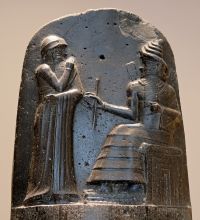
“ Hammurabi's code, the most ancient known, says "Anna and Bel called me, Hammurabi the exalted prince, the worshiper of the gods; to cause justice to prevail in the land, to destroy the wicked, to prevent the strong from oppressing the weak, to go forth like the sun over the black-head race, to enlighten the land, and to further the welfare of the people." ”
Hammurabi
Definition and stakes
Hammurabi, the sixth ruler of the First Babylonian Dynasty, is renowned for his codified legal system, one of the earliest known written laws. His code, inscribed on a stele, emphasized justice, the safeguarding of the vulnerable, and a divine mandate, reflecting both practical governance and religious ideology. Scholars such as W. E. B. Du Bois highlight its egalitarian aspirations, while Donald A.
Mackenzie underscores Hammurabi’s political legacy and the eventual decline of his dynasty. Hutton Webster notes its structural rigor, and L. W. King connects it to Sumerian legal traditions, emphasizing its influence on later legal systems. These perspectives collectively reveal Hammurabi’s laws as a cornerstone of ancient legal thought, blending divine authority with societal order.
Quotes about “Hammurabi”
Donald A. Mackenzie, Myths of Babylonia and Assyria
“ For about twenty years afterwards that subdued monarch lived in comparative obscurity; then he led a force of allies against Hammurabi's son and successor, Samsu-iluna, who defeated him and put him to death, capturing, in the course of his campaign, the revolting cities of Emutbalum, Erech, and Isin. So was the last smouldering ember of Elamite power stamped out in Babylonia.Hammurabi, statesman and general, is one of the great personalities of the ancient world. No more celebrated monarch ever held sway in Western Asia. ”
Hutton Webster, Early European History
“ They were no more than the long-established customs of the community. As civilization advanced, the usages that generally prevailed were written out and made into legal codes. A recent discovery has given to us the almost complete text of the laws which Hammurabi, the Babylonian king, ordered to be engraved on stone monuments and set up in all the chief cities of his realm. [11] SUBJECT MATTER OF HAMMURABI'S CODE The code of Hammurabi shows, in general, a high sense of justice. A man who tries to bribe a witness or a judge is to be severely punished. ”