“ All on earth is irksome to man.And we see how the winsome meadows of the land of the Phœnix must by their contrast have delighted the souls of men who were harassed on every side as our ancestors were.All of these distinguishing features of Old English poetry—the regular alliterative meter, the frequent parallelisms, the “kennings,” and the general dark outlook on life will be found illustrated in the poems selected in this book. They cover the entire period of Old English literature and embrace every “school.” ”
Old English literature
Definition and stakes
The theme of “Old English literature” has been addressed by authors such as William J. Long, Grolier Club, Henry A. Beers, G. H. Mair and George Saintsbury. It is often associated with terms like poetry, prose, middle, history and England.
Quotes about “Old English literature”
 Edward Albert,
A history of English literature
(1923)
“ The great bulk of Old English prose consists of translation; and in its various shapes English prose adopts the methods of its originals. We have many homilies, some history, and a few pastoral letters, all based strictly upon Latin works. There are very few passages of real originality, and they are short and disjointed. Of historical writing we have the rudiments in the Anglo-Saxon Chronicle. On the whole, the development is very small, for the prose is bound by the curse of imitativeness. ”
“ Especially in the rapid survey of English literature given in most of our colleges, a collection of translations covering the Anglo-Saxon period and reflecting the form and spirit of the original poems should add much to a fuller appreciation of the varied and rich, though uneven, literary output of our earliest singers.In subject-matter these Old English poems are full of the keenest interest to students of history, of customs, of legend, of folk-lore, and of art. They form a truly national literature ”
“ They took their poetry seriously, as they did everything about them, and often in spite of crudity of expression, of narrow vision, and of conventionalized modes of speech, this very “high seriousness” raises an otherwise mediocre poem to the level of real literature. Whatever may [6] be said of the limitations of Old English poetry, of its lack of humor, of the narrow range of its sentiments, of the imitativeness of many of its most representative specimens, it cannot be denied the name of real literature ”
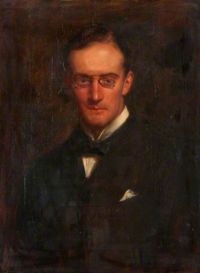 W. P. Ker,
Medieval English Literature
“ Students of history have to learn the languages of the nations with whose history they are concerned, and to read the chief books in those languages, if they wish to understand rightly the ideas, purposes and temper of the past ages. Sometimes the study of early literature has been instigated by religious or controversial motives, as when the Anglo-Saxon homilies were taken up and edited and interpreted in support of the Reformation. Sometimes it is mere curiosity that leads to investigation of old literature—a wish to find out the meaning of what looks at first difficult and mysterious. ”
Various, The Southern Literary Messenger… (1836)
“ Such are the books which have displaced the writings of the masters of antiquity and the old household books of the English tongue. You may not take up a review or periodical now-a-days, but it shall teach you the folly of bestowing your time upon the study of the ancients, now that their writings afford so much that is more worthy of attention. Alas! that such should be the priesthood who administer the rites in the temple of English literature—the money changer has indeed entered the temple, when those who write for money come in to expel all who have written for fame. ”
W. P. Ker,
Medieval English Literature
“ What is the explanation of this revival, and this sudden great vogue of alliterative poetry? It cannot have been a new invention, or a reconstruction; it would not in that case have copied, as it sometimes does, the rhythm of the old English verse in a way which is unlike the ordinary rhythms of the fourteenth century. The only reasonable explanation is that somewhere in England there was a tradition of alliterative verse, keeping in the main to the old rules of rhythm as it kept something of the old vocabulary, and escaping the disease which affected the old verse elsewhere. ”
 Arlo Bates,
Talks on the study of literature
“ There is abundant evidence that the Anglo-Saxon and Norman ancestors from whom sprang the English-speaking peoples were in this respect richly endowed, and that they early went far in the development of this power. The old ballads of our language are so rich and so enduringly beautiful that we are proved to come from a stock endowed with a rich susceptibility to poetry. ”
 Owen Barfield,
History in English words
(1926)
“ And along with the influx of Anglo-French words further semantic changes were, of course, taking place in the more important Old English words. If there are occasions when a single word seems to throw more light on the workings of men’s minds than a whole volume of history or a whole page of contemporary literature, the Middle English love-longing is certainly one of them. ”
 William J. Long,
English Literature
“ The romantic revival had done its work, and England entered upon a new free period, in which every form of literature, from pure romance to gross realism, struggled for expression. At this day it is obviously impossible to judge the age as a whole ”
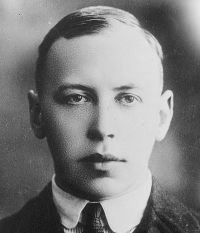 Alfred Noyes,
The Flower of Old Japan, and Other Poems
“ VOLUME V. The Constitutional Compromise of the Eighteenth Century—Effects of the Classical Renaissance—Its Zenith and Decline—The Early Romantic Renaissance.“It is his privilege to have made a contribution of great value and signal importance to the history of English Literature.”—Pall Mall Gazette. ”
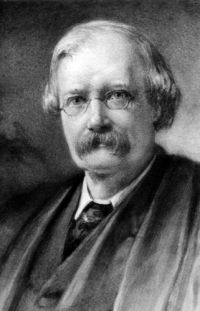 John Churton Collins,
Ephemera Critica; Or, Plain Truths About Current Literature
“ Would any competent scholar deny that the history of English Literature, in its mature expression, is little less than the history of the modifications of native genius and characteristics by classical influence, that the development and peculiarities of our epic, dramatic, elegiac, didactic, pastoral, much of our lyric, of our satire and of other species of [59] our poetry is, historically speaking, unintelligible without reference to ancient classical literature? ”
William J. Long,
English Literature
“ There are three chief causes to account for this: (1) the long war with France and the civil Wars of the Roses distracted attention from books and poetry, and destroyed of ruined many noble English families who had been friends and patrons of literature; (2) the Reformation in the latter part of the period filled men's minds with religious questions; (3) the Revival of Learning set scholars and literary men to an eager study of the classics, rather than to the creation of native literature. ”
David Masson, The Three Devils: Luther's, Milton's…
“ After all, however, it remains true that the period of English literature now in question, whatever admirable characteristics it may possess, exhibits a remarkable deficiency of what, with recollections of former periods to guide us in our use of epithets, we should call great or sublime. ”
Characters from the Histories & Memoirs of the Seventeenth Century
“ But he enriched English literature with a 'just history', as distinct from annals and chronicles. [5] 'I am not altogether ignorant', he said, 'in the Lawes of Historie, and of the Kindes.' When we read his lives and commendations of the great men of antiquity as he pictured them, we cannot but regret that the same talents, the same overmastering interest in the eternal human problems, had not been employed in depicting men whom he had actually known. ”
William J. Long,
English Literature
“ Greek ideas and Greek culture came to England in the Renaissance, and man's spiritual freedom was proclaimed in the Reformation. The great names of the period are numerous and significant, but literature is strangely silent. Probably the very turmoil of the age prevented any literary development, for literature is one of the arts of peace; it requires quiet and meditation rather than activity, and the stirring life of the Renaissance had first to be lived before it could express itself in the new literature of the Elizabethan period. ”
Dr. Doran, "Their Majesties' Servants." Annals of the English Stage…
“ If it be true, as we are told on high authority, that the greatest glory of England is her literature, and the greatest glory of English literature is its poetry, it is not less true that the greatest glory of English poetry lies rather in its dramatic than its epic or its lyric triumphs. ”
Dr. Doran, "Their Majesties' Servants." Annals of the English Stage…
“ There is such an overflowing life, such a superb exuberance of abounding and exulting strength, in the dramatic poetry of the half century extending from 1590 to 1640, that all other epochs of English literature seem as it were but half awake and half alive by comparison with this generation of giants and of gods. ”
G. H. Mair, English Literature: Modern
“ The literary influence of the revival of letters in England, apart from its moral influence, took two contradictory and opposing forms. In the curricula of schools, logic, which in the Middle Ages had been the groundwork of thought and letters, gave place to rhetoric. The reading of the ancients awakened new delight in the melody and beauty of language: men became intoxicated with words. The practice of rhetoric was universal and it quickly coloured all literature. ”
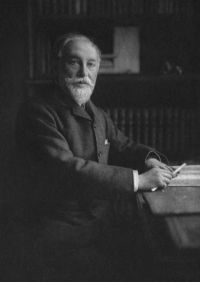 Frederic Harrison,
Studies in Early Victorian Literature
“ Much less do I permit myself to speak of those living lights of literature from whom we may yet receive work even surpassing that of those who are gone. My aim has been not so much to weigh each writer in the delicate balance of mere literary merit, but rather, from the point of view of the historian of ideas and of manners, to record the successive influences which, in the last fifty years or so, have moulded or reflected English opinion through printed books, be they of the dogmatic or of the imaginative order. ”
John Erskine, The Moral Obligation To Be Intelligent (1915)
“ The disposition to consider intelligence a peril is an old Anglo-Saxon inheritance. Our ancestors have celebrated this disposition in verse and prose. Splendid as our literature is, it has not voiced all the aspirations of humanity, nor could it be expected to voice an aspiration that has not characteristically belonged to the English race; the praise of intelligence is not one of its characteristic glories. "Be good, sweet maid, and let who will be clever." Here is the startling alternative which to the English, alone among great nations, has been not startling but a matter of course. ”
Grolier Club, One Hundred Books Famous in English Literature
“ Culture after culture, epoch by epoch, are laid bare as in [pg xxix] geologic strata,—mediæval tale and history, humanistic form, the Shakespearian age, Puritan, Cavalier, man scientific, reforming, reborn into a new natural, political, artistic world, man modern; and in every layer of imagination and learning lies, whole and entire, a buried English age. It is by virtue of its copiousness that English literature is so representative, both of man's individual spirit in its restless forms of apprehension and embodiment, and of its historic formulation in English progress as national power. ”
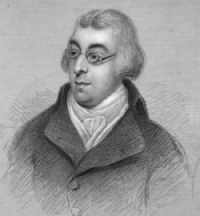 Isaac Disraeli,
Amenities of Literature
“ Let us, however, be reminded, that he who wholly neglects the study of our ancient poets must submit to the loss of knowledge which a philosopher would value; the manners of the age, the modes of feeling, the stream of thought, the virgin fancies, and that position which the human character takes in distant ages—these will imbue his memory with the genius of his country and the eternal truth of authentic nature. No English poet should wholly resign these masses of vernacular poetry to the lone closet of the antiquary ”
Charles A. McMurry, Special Method in the Reading of Complete English Classics
“ I said that the ages of history were analogous to the ages of man, and that each age of literature was the truest picture of the history of its day, and for this very reason English literature is the best, perhaps the only, teacher of English history, to women especially. ”
William J. Long,
Outlines of English and American Literature
“ One may easily challenge such a definition, which, like most others, is far from faultless. It is difficult, for example, to draw the line sharply between instructive and pleasure-giving works; for many an instructive book of history gives us pleasure, and there may be more instruction on important matters in a pleasurable poem than in a treatise on ethics. Again, there are historians who allege that English literature must include not simply the works of Britain but everything written in the English language. ”
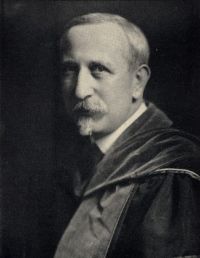 William Allan Neilson,
The Harvard Classics Vol. 51
(1914)
“ WHEN the literary historian seeks to assign to each age its favorite form of literature, he finds no difficulty in dealing with our own time. As the Middle Ages delighted in long romantic narrative poems, the Elizabethans in drama, the Englishman of the reigns of Anne and the early Georges in didactic and satirical verse, so the public of our day is enamored of the novel. ”
William J. Long,
Outlines of English and American Literature
“ SUMMARY. The literary period just studied covers the last three quarters of the seventeenth century. Its limits are very indefinite, merging into Elizabethan romance on the one side, and into eighteenth century formalism on the other. Historically, the period was one of bitter conflict between two main political and religious parties, the Royalists, or Cavaliers, and the Puritans. The literature of the age is extremely diverse in character, and is sadly lacking in the unity, the joyousness, the splendid enthusiasm of Elizabethan prose and poetry. ”
W. P. Ker,
Medieval English Literature
“ The two forms of the English language, Anglo-Saxon and Middle English, and the two periods of medieval English literature, correspond to the two historical periods of which one ends and the other begins about 1100, at the date of the First Crusade. Anglo-Saxon literature belongs to the older world; Anglo-Saxon poetry goes back to very early times and keeps a tradition which had come down from ancient days when the English were still a Continental German tribe. ”
John Wilson, Recreations of Christopher North…
“ It is satisfactory to know that the good sense, and good feeling, and good taste of the people of England, will not submit to be belaboured by editors and critics into unqualified admiration of such enormities. The Old English Drama lies buried in the dust with all its tragedies. Never more will they move across the stage. Scholars read them, and often with delight, admiration, and wonder; for genius is a strange spirit, and has begotten strange children on the body of the Tragic Muse. ”
James Croston, Nooks and Corners of Lancashire and Cheshire
“ The place belongs so entirely to the past, and there seems such a remoteness between the hoar antiquity of a scene so thoroughly old English and the busy world from which we have just emerged, that we almost hesitate to advance. ”
John Richard Green, History of the English People, Volume VIII
“ It was then that the moral, the philanthropic, the religious ideas which have moulded English society into its present shape first broke the spiritual torpor of the eighteenth century. It was then that with the wider diffusion of intelligence our literature woke to a nobler and larger life which fitted it to become the mouthpiece of every national emotion. ”
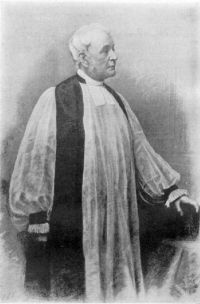 A. Cleveland Coxe,
Impressions of England; or, Sketches of English Scenery and Society
“ The rise of a Christian literature, and that the purest which the world has ever possessed, is dated from the age of which he was the bright peculiar star; and the whole Anglo-Saxon race must ever recognize in him the original master of many of its forms of thought, a rich contributor to its idiom and language, and the constructor of some of its strongest sentiments of civilization, of morals, and of religion. ”
William J. Long,
English Literature
“ For a parallel we must go back to the Age of Pericles in Athens, or of Augustus in Rome, or go forward a little to the magnificent court of Louis XIV, when Corneille, Racine, and Molière brought the drama in France to the point where Marlowe, Shakespeare, and Jonson had left it in England half a century earlier. Such an age of great thought and great action, appealing to the eyes as well as to the imagination and intellect, finds but one adequate literary expression; neither poetry nor the story can express the whole man,--his thought, feeling, action, and the resulting character ”
Grolier Club, One Hundred Books Famous in English Literature
“ It is natural to inquire, after dwelling so much on the practical power of English literature in society and life, what is its value in the world of art, in that sphere where questions of perfection in the form, of permanence in the matter, and the like, arise. If the standards of an academic classicism be applied, English literature will fall below both Latin and Greek, and the Italian and French, and take a lower place with German and Spanish, to which it is most akin. ”
Related terms
Authors who wrote about “Old English literature”
William J. LongGrolier Club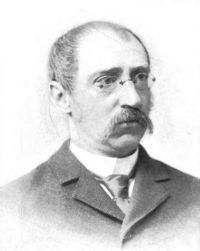 Henry A. BeersG. H. Mair
 George SaintsburyRobert Huntington FletcherEdward Albert
 Gidugu Venkata RamamoortyW. P. KerJohn Dover Wilson
 Ralph Waldo Emerson
 Arthur MachenThomas Laurence Kington-OliphantFrederic Harrison
 William Dean HowellsJohn Richard Green
 William ArcherWilliam Allan NeilsonFrederik Winkel Horn
 J. J. Jusserand
