Oscan language

Definition and stakes

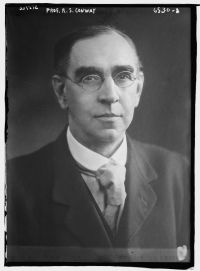
Augustus S. Wilkins and Robert S. Conway,  1911 Encyclopædia Britannica (1911)

“ R. von Planta (Osk.-Umbr. Grammatik, 1893, i. p. 594) pointed out that in Oscan also, by the 3rd century B.C., this first-syllable-accent had probably given way to a system which limited the word-accent in some such way as in classical Latin. But it remained for C. Exon, in a brilliant article (Hermathena (1906) , xiv. 117, seq.) , to deduce from the more precise stages of the change (which had been gradually noted, see e.g. F. Skutsch in Kroll’s Altertumswissenschaft im letzten Vierteljahrhundert, 1905) their actual effect on the language. ”

Source: Wikisource

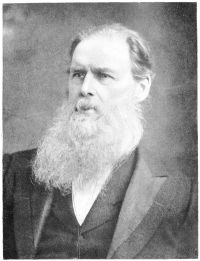
Portrait of F. Max Müller F. Max Müller,  Chips from a German Workshop, Volume 4

“ To the student of language, the dialect of a savage tribe is as valuable as Sanskrit or Hebrew, nay, for the solution of certain problems, more so; every one of these languages is the growth of thousands and thousands of years, the workmanship of millions and millions of human beings. If they were now preserved, they might hereafter fill the most critical gaps in the history of the human race. At Rome at the time of the Scipios, hundreds of people might have written down a grammar and dictionary of the Etruscan language, of Oscan, or Umbrian ”
Source: Gutenberg

R. W. Browne,  A History of Roman Classical Literature

“ The conquering Oscans were a nation of warriors and hunters, and consequently, as Niebuhr remarked, in the language of this district the terms belonging to war and hunting are Oscan, whilst those which relate to peace and the occupations of rural life are Pelasgian. As, therefore, the language of Etruria was Pelasgian, corrupted by Umbrian, so Pelasgian + Oscan is the formula which presents the language of Latium.
But the Roman or Latin language is still more composite in its nature, and consists of more than these two elements.
”
Source: Gutenberg

Get perspective with Kwize: daily news enlightened by great literature