Oxford English Dictionary

Definition and stakes

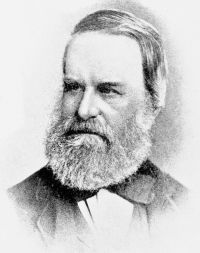
James Augustus Henry Murray,  The Evolution of English Lexicography (1900)

“ The consequences of the Renascence and of the New Learning of the sixteenth century appear in the need for the Dictionaries of Hard Words at the beginning of the seventeenth; the literary polish of the age of Anne begat the yearning for a standard dictionary, and inspired the work of Johnson; the scientific and historical spirit of the nineteenth century has at once called for and rendered possible the Oxford English Dictionary. Thus the evolution of English Lexicography has followed with no faltering steps the evolution of English History and the development of English Literature. ”
Source: Wikisource

James Augustus Henry Murray,  The Evolution of English Lexicography (1900)

“ It is never possible to forecast the needs and notions of those who shall come after us; but with our present knowledge it is not easy to conceive what new feature can now be added to English Lexicography. At any rate, it can be maintained that in the Oxford Dictionary, permeated as it is through and through with the scientific method of the century, Lexicography has for the present reached its supreme development. ”
Source: Wikisource

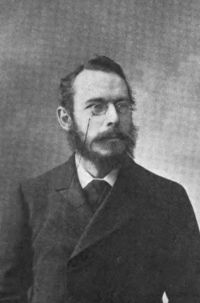
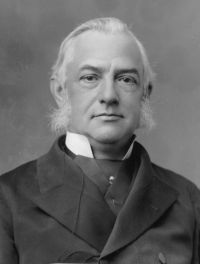
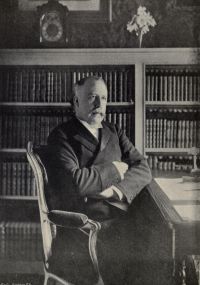
Portrait of James Ford Rhodes James Ford Rhodes,  Historical Essays

“ When I began writing I used the Imperial Dictionary, an improvement over Webster in this respect. Soon the Century Dictionary began to appear, and best of all the New English Dictionary on historical principles edited by Murray and Bradley and published by the Clarendon Press at Oxford. A study of the mass of quotations in these two dictionaries undoubtedly does much to atone for the lack of linguistic knowledge; and the tracing of the history of words, as it is done in the Oxford dictionary, makes any inquiry as to the meaning of a word fascinating work for the historian. ”
Source: Gutenberg

Get perspective with Kwize: daily news enlightened by great literature