“ DRAMATIS PERSONAE Strepsiades Phidippides Servant of Strepsiades Disciples of Socrates Socrates Chorus of Clouds Just Cause Unjust Cause Pasias Amynias Witness Chaerephon Scene: The interior of a sleeping-apartment: Strepsiades, Phidippides, and two servants are in their beds; a small house is seen at a distance. Time: midnight. Strepsiades (sitting up in his bed) . Ah me! Ah me! O King Jupiter, of what a terrible length the nights are! Will it never be day? ”
Strepsiades
Definition and stakes
The theme of “Strepsiades” has been addressed by authors such as Aristophanes. It is often associated with terms like fly, Trichinella, Trypanosoma, parasite and infection.
Quotes about “Strepsiades”
 Aristophanes,
Aristophanes: The Eleven Comedies…
(1912)
Aristophanes,
Aristophanes: The Eleven Comedies…
(1912)
“ Being eager to carry off these deposits, they have them paid in a day too soon.STREPSIADES Splendid! Ah! poor brutes, [98] who serve for food to us clever folk! You are only down here to swell the number, true blockheads, sheep for shearing, heap of empty pots! Hence I will sound the note of victory for my son and myself. "Oh! happy, Strepsiades! what cleverness is thine! and what a son thou hast here!" Thus my friends and my neighbours will say, jealous at seeing me gain all my suits. But come in, I wish to regale you first.PASIAS (to his witness) A man should never lend a single obolus. ”
Aristophanes,
Aristophanes: The Eleven Comedies…
(1912)
“ Strepsiades, a wealthy country gentleman, has been brought to penury and deeply involved in debt by the extravagance and horsy tastes of his son Phidippides. Having heard of the wonderful new art of argument, the royal road to success in litigation, discovered by the Sophists, he hopes that, if only he can enter the 'Phrontisterion,' or Thinking-Shop, of Socrates, he will learn how to turn the tables on his creditors and avoid paying the debts which are dragging him down. He joins the school accordingly, but is found too old and stupid to profit by the lessons. ”
“ Strep. I like your gods amazingly; and Jupiter, sworn by, is ridiculous to the knowing ones. Pas. You will assuredly suffer punishment, some time or other, for this. But answer and dismiss me, whether you are going to repay me my money or not. Strep. Keep quiet now, for I will presently answer you distinctly. [Runs into the house.] Pas. (to his summons-witness) . What do you think he will do? Witness. I think he will pay you. [Re-enter Strepsiades with a kneading-trough] Strep. Where is this man who asks me for his money? Tell me what is this? Pas. What is this? A kardopos. Strep. ”
“ Teach him, and chastise him: and remember that you train him properly; on the one side able for petty suits; but train his other jaw able for the more important causes. Soc. Make yourself easy; you shall receive him back a clever sophist. Strep. Nay, rather, pale and wretched. [Exeunt Socrates, Strepsiades, and Phidippides.] Cho. Go ye, then: but I think that you will repent of these proceedings. We wish to speak about the judges, what they will gain, if at all they justly assist this Chorus. For in the first place, if you wish to plough up your fields in spring, we will rain for you first ”
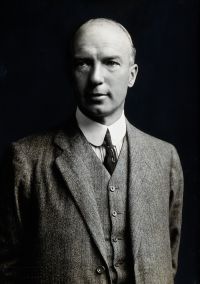 Alexis Thomson,
Manual of Surgery, Sixth Edition…
(1921)
Alexis Thomson,
Manual of Surgery, Sixth Edition…
(1921)
“ Erysipelas, popularly known as "rose," is an acute spreading infective disease of the skin or of a mucous membrane due to the action of a streptococcus. Infection invariably takes place through an abrasion of the surface, although this may be so slight that it escapes observation even when sought for. The streptococci are found most abundantly in the lymph spaces just beyond the swollen margin of the inflammatory area, and in the serous blebs which sometimes form on the surface. ”
 John Masefield,
Multitude and Solitude
John Masefield,
Multitude and Solitude
“ The tsetse fly sucks them out of an infected fish or mammal, and develops them, inside his body probably for some time, during which the organism probably changes a good deal. When the tsetse bites a man, the developed trypanosome gets down the proboscis into the blood. About a week after the bite, when the bite itself is cured, the man gets the ordinary trypanosome fever, which makes you pretty wretched, by the way. ”
Max Braun, The Animal Parasites of Man
“ Fig. 272.—Strongyloides stercoralis, female; free-living generation, × 170. (After Looss.) As Askanazy has shown, the parasitic form bores deeply into the mucous membrane of the intestine, and frequently into the epithelium of Lieberkühn’s glands, both for nourishment and oviposition. The eggs then develop in the intestinal wall. The eggs which are found in scrapings from the mucosa occur, at least in the case of Strongyloides of the sheep, in chains enclosed in a thin tube or sheath, the origin of which is doubtful; possibly it is the uterus. ”
 German Sims Woodhead,
1911 Encyclopædia Britannica
(1911)
German Sims Woodhead,
1911 Encyclopædia Britannica
(1911)
“ The accurate determination of the aetiology of erysipelas has led to the adoption of a scientific method of treatment of the disease. The Streptococcus erysipdatis is found, not speciaUy in the zone in which inflammation has become evident, but in the tissues outside this zone: in fact, the streptococci appear to be most numerous in the lymphatics of the tissues in which there is little change. Before the appearance of any redness there is a dilatation of the lymph spaces with fluid, and the tissues become slightly oedematous. ”
David Sharp, The Cambridge Natural History, Vol… (1899)
“ Von Siebold speaks of the phenomena of Strepsipterous reproduction as paedogenesis, or pseudo-paedogenesis, but we must agree with Meinert that they cannot be so classed.The males of Strepsiptera live for only a very short time, and are very difficult of observation. According to Hubbard the males of Xenos dash about so rapidly that the eye cannot see them, and they create great agitation amongst the wasps in the colonies of which they are bred. Apparently they are produced in great numbers, and their life consists of only fifteen or twenty minutes of fiery energy. ”
1911 Encyclopædia Britannica (1911)
“ For a further account of these parasites see the articles on Bacteriology and on Parasitic Diseases. Pathological Anatomy.—The naked-eye appearance of the different organs affected by Streptothrix infection varies according to the duration and acuteness of the disease. In some tissues the appearance is that of simple inflammation, whereas in others it may be characteristic. The liver when affected shows scattered foci of suppuration, which may become aggregated into spheroidal masses, surrounded by a zone of inflammation. ”
David Sharp, The Cambridge Natural History, Vol… (1899)
“ No doubt a larger knowledge of development, coupled with the advance of comparative anatomy, will ultimately bring about a better state of affairs. The Strepsiptera, with one family Stylopidae, are only provisionally included among the Coleoptera. These six series are fairly equal as regards extent. Though the Polymorpha includes the larger number of forms, yet a large part of them belong to four great families (Staphylinidae, Buprestidae, Elateridae, Malacodermidae) , which are easily recognisable, so that the number of unmanageable forms is not really great. ”
Various, Popular Science Monthly (1911)
“ Other forms, like the Strepsiptera, which permit their hosts to reach the adult stage, nevertheless destroy their gonads and thus decrease the reproductivity of the host species. In some cases, indeed, it is impossible to decide whether we are dealing with parasitism or predatism. The Sphex, that lays her eggs on caterpillars which she has carefully paralyzed, is commonly regarded as a predatory insect, but she is from another point of view, an even more specialized parasite than the Ichneumon. ”
E. R. Stitt, The diagnostics and treatment of tropical diseases (1922)
“ When the tsetse fly, Glossina palpalis, feeds on a man in whose peripheral circulation there are normal type trypanosomes we have an accumulation of such forms in the middle and posterior portions of the gut. From the eighth to the eighteenth day long, slender forms develop and pass forward into the proventriculus. None of the intestinal forms can cause infection when injected into animals. ”
A. H. Cooke, The Cambridge natural history, Vol… (1895)
“ Carnivorous land Mollusca are, so far as Central America is concerned, more highly developed than in any other quarter of the world, particularly in the genera Glandina and Streptostyla. These genera also penetrate the northern portions of the continent, Glandina reaching as far as Ecuador, and Streptostyla as far as Peru. The Greater Antilles have also characteristic forms of these genera. Streptaxis is tolerably abundant all over tropical South America, and is the one pulmonate genus which shows any affinity with the African fauna. ”
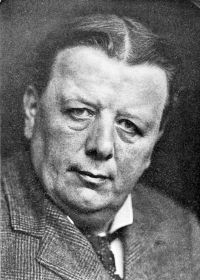 Sir E. Ray Lankester,
The Kingdom of Man
Sir E. Ray Lankester,
The Kingdom of Man
“ It may, however, be considered as practically certain that the sleeping sickness is due to the presence in the cerebro-spinal fluid of quantities of a minute parasite, the Trypanosoma Gambiense, which is carried from man to man by the palpalis tsetze fly, which sucks it up from the blood of an infected individual and conveys it to previously uninfected individuals. The natives in Uganda lie about and sleep under the shade of trees where the tsetze flies are especially abundant; and they are quite indifferent to the bites of flies of one kind and another. ”
Edward Adams, Surgery, with Special Reference to Podiatry
“ It is easily killed by boiling, and can be destroyed by carbolic acid and by corrosive sublimate. The streptococcus of erysipelas is thought to be identical with the streptococcus pyogenes, but their difference in action is believed to be due to difference in virulence induced by external conditions and by the state of the tissues of the host. The coccus of erysipelas is larger than the ordinary form of streptococcus pyogenes, and infection takes place through a wound, often a very trivial one, or through a mucous membrane. The organism multiplies in the small lymph channels. ”
Frank E. Beddard, The Cambridge natural history, Vol… (1901)
“ The chief interest of this genus is that, at any rate in T. crassicauda Bel., which infests the rat, the dwarf males live two, three, or four at a time within the uterus of the female, a condition of things which recalls the similar arrangement found in the Gephyrean Bonellia.Trichina spiralis is the cause of the well-known disease trichinosis, which appears in two forms, intestinal and muscular, according to the habitat of the parasite. The mature forms of {146}both sexes are found in the intestine of man and many other mammals. ”
Various, Popular Science Monthly (1911)
“ The few exceptions among insects, such as the female Strepsiptera, in which the food taken by the larval parasite from its host is soon turned over to the gonads and used for reproduction, leads to a permanent parasitism resembling that of the tapeworms or the adult Sacculina. The larva is at once arrested in its development and begins to reproduce by pasdogenesis. We may conclude, therefore, that the existence of parasites of the Ichneumon type, with free, active and highly developed adults is rendered possible by an inhibition of gonadic growth during larval life ”
J. N. Larned, History For Ready Reference, Volume 7 (1895)
“ The most formidable enemy of both man and beast in tropical Africa is the tsetse, species Glossina, a genus of blood-sucking fly peculiar to that land, which carries a minute parasite, the trypanosome, from the infected to the healthy, resulting in the production of sleeping sickness, or trypanosomiasis. ”
Marcus Hartog, The Cambridge natural history, Vol… (1906)
“ Other Trypanosomic diseases of animals are, in Algeria and the Punjab, "dourine," infecting horses and dogs; in South America, Mal de Caderas (falling-sickness) , an epidemic paralysis of cattle. During the printing of this book, much additional knowledge has been gained on this genus and the diseases it engenders. The Trypanosomic {120}fever recently recognised on the West Coast has been found to be the early stage of the sleeping-sickness, that well-known and most deadly epidemic of Tropical Africa. ”
German Sims Woodhead,
1911 Encyclopædia Britannica
(1911)
“ He then found that the tsetse-fly can produce, the disease in a healthy animal only when it has first charged itself with blood from a diseased animal, and he produced evidence that Clossina morsitans is not capable of producing the disease except by carrying the parasites from one animal to another in the blood that it takes through its proboscis into its stomach. ”
E. R. Stitt, The diagnostics and treatment of tropical diseases (1922)
“ Again, it has been shown that where the wild animals on which tsetse flies feed may show an infection of from 16 to 50% yet not more than 2 out of every 1000 tsetse flies, caught and tried out on susceptible animals, show themselves infective.Both of the human trypanosomes of Africa have been cultured by using the N.N.N. medium in which rat’s blood was substituted for that of the rabbit. Human blood will also serve as a substitute. Growth however is not constant.Epidemiology.—Practically the only method of transmission of the disease is by the bite of infected tsetse flies. ”
John Masefield,
Multitude and Solitude
“ In the course of time, when they migrate before the advance of sportsmen, or in search of pasture into tsetse country as yet uninfected with trypanosome, the tsetses attacking them suck the infected blood and receive the organisms into their bodies. ”
David Sharp, The Cambridge Natural History, Vol… (1899)
“ They can be active, and have great powers of leaping, so that it is perhaps in this way possible for them to attach themselves to a healthy female bee. Fig. 155.—Portion of early stages of Xenos rossii. (After von Siebold.) A, Small male larva; B, small female larva; C, full-grown male larva; D, full-grown female larva; E, the so-called "cephalothorax" and adjacent segment of adult female. (The newly-hatched larva is very much like that of Stylops shown in Fig. 154.) We have still only very imperfect knowledge as to the structure and development of Strepsiptera. ”
A. H. Cooke, The Cambridge natural history, Vol… (1895)
“ Besides these external elements, the region is rich in indigenous genera. Central America is remarkable for an immense number of large carnivorous Mollusca possessing shells. There are 49 species of Glandina, the bulk of which occur in eastern and southern Mexico; 36 of Streptostyla (S.E. Mexico and Guatemala, only 1 species reaching Venezuela and another Peru) ; 5 of Salasiella, 2 of Petenia, and 1 of Strebelia; the last three genera being peculiar. Streptaxis, fairly common in S. America, does not occur. ”
 W. S. Gilbert,
Thespis
(1871)
W. S. Gilbert,
Thespis
(1871)
“ They splutter and splash like a pig in a puddle And dickens a one of 'em's earning his salt. For Thespis as Jove is a terrible blunder, Too nervous and timid – too easy and weak – Whenever he's called on to lightning or thunder, The thought of it keeps him awake for a week. Then mighty Mars hasn't the pluck of a parrot. When left in the dark he will quiver and quail; And Vulcan has arms that would snap like a carrot, Before he could drive in a tenpenny nail. Then Venus' freckles are very repelling, And Venus should not have a quint in her eyes ”
 Ernst Haeckel,
Report on the Radiolaria Collected by H.M.S. Challenger During the Years 1873-1876…
Ernst Haeckel,
Report on the Radiolaria Collected by H.M.S. Challenger During the Years 1873-1876…
“ Definition.—Streblonida with simple, spherical, subspherical, or lentelliptical primordial chamber, beginning the screw-like series of spirally ascending chambers. Surface smooth or thorny, without radial spines.The genus Streblonia contains those Streblonida in which a variable number of roundish, subspherical, or longish chambers form a screw-like aggregate, beginning with a quite simple primordial chamber. The special order of the complex spiral offers interesting resemblances to different genera of the calcareous Foraminifera, from which I have taken the corresponding name of the species. ”
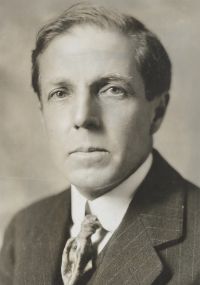 Vernon L. Kellogg,
Elementary Zoology, Second Edition
Vernon L. Kellogg,
Elementary Zoology, Second Edition
“ Such infested muscle or flesh is said to be "trichinosed," and the flesh of a trichinosed human subject has been estimated to contain 100,000,000 encysted worms. To complete the development of the encysted and sexless Trichinæ the infested flesh of the host must be eaten by another animal in which the worm can live, e.g. the flesh of man by a pig or rat, and that of a pig by man. In such a case the cysts are dissolved by the digestive juices, the worms escape, develop reproductive organs and produce young, which then migrate into the muscles and induce trichinosis as before. ”
 Louis Figuier,
The Insect World
Louis Figuier,
The Insect World
“ The eyes, the facettes of which are few in number, are placed on a footstalk, whence the name of the genus Stylops. The parts of the mouth connect the Strepsiptera with the mandibulated insects, although by some supposed to bear analogy by their functions to those parts in the Diptera. The male only is winged; the female is very like an apodal larva, the larva being an active hexapod. ”
