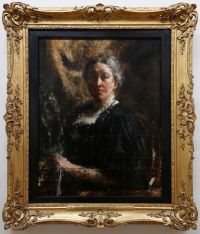
Thomas Harvey

Definition and stakes

Portrait of William Allen White William Allen White,  In the Heart of a Fool

“ If ever the world was an oyster for a youth the world of Harvey and the fullness thereof was an oyster to Thomas Van Dorn. He had all that the crude western community cherished: the prestige of money, family, education, and that indefinable grace and courtesy of body and soul that we call charm. And Harvey people seemed to be made for him. He liked their candor, their strength, their crass materialism, their bray and bluster, their vain protests of democracy and their unconscious regard for his caste and culture. ”
Source: Gutenberg

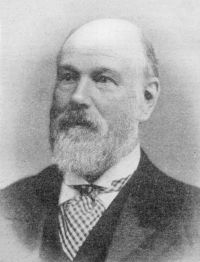
Portrait of Philip Henry Pye-Smith Philip Henry Pye-Smith,  Encyclopædia Britannica, Ninth Edition (1880)

“ HARVEY, William (1578–1657) , the discoverer of the circulation of the blood, was the eldest son of Thomas Harvey, a prosperous Kentish yeoman, and was born at Folkestone on April 1, 1578. After passing through the grammar school of Canterbury, on the 31st of May 1593, having just entered his sixteenth year, he became a pensioner of Caius College, Cambridge; at nineteen he took his B.A. degree, and soon after, having chosen the profession of medicine, he went to study at Padua under Fabricius and Casserius (see Anatomy, vol. i. pp) . ”
Source: Wikisource

Portrait of Sir D'Arcy Power Sir D'Arcy Power,  William Harvey

“ He had lived frugally in Shropshire until shortly before his death, when he was brought to London by Thomas Howard, Earl of Arundel, who showed him to the King. Harvey examined the body on the 16th of November, 1635, the birthday—as he is careful to note—of Her Serene Highness Henrietta Maria, Queen of Great Britain, France, and Ireland. The notes of the autopsy came into the possession of Harvey’s nephew Michael, who presented them to Dr. Bett, and they were not printed until 1669, when they were [112] published in Dr. Bett’s work “On the Source and Quality of the Blood.” ”
Source: Gutenberg

Get perspective with Kwize: daily news enlightened by great literature