Alternating current

Definition and stakes

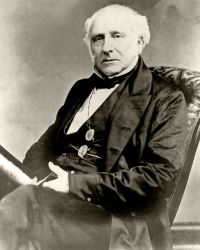
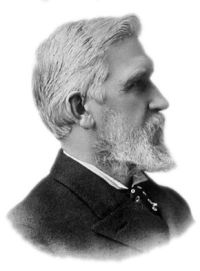
Portrait of Elisha Gray Elisha Gray,  Electricity and Magnetism

“ This transformer, as heretofore explained, does not change the voltage of the current, but simply transforms what was an alternating into a direct current. By alternating current we mean one that is made up of impulses of alternating polarity—first a positive and then a negative. The direct current is one whose impulses are all of one polarity. The direct current is required for all purposes where electrolysis (chemical decomposition by electricity, as of silver for silver-plating, etc.) is a part of the process. ”
Source: Gutenberg

N. Hawkins,  Hawkins Electrical Guide v. 07…

“ Alternating Current Systems.—The saving in the cost of transmission obtained by using alternating instead of direct current is not due to any difference in the characteristics of the currents themselves, but to the fact that in the case of alternating current very high pressures may be employed, thus permitting a given amount of energy to be transmitted with a relatively small current. ”
Source: Gutenberg

Sir J. A. Fleming,  Waves and ripples in water, air… (1912)

“ You have already seen that an alternating current in one electric circuit can produce another alternating current in a secondary circuit placed parallel with the first. It is not difficult to show, either experimentally or from theory, that when the primary current is an electrical oscillation—that is, a very rapid alternating current—the current in the secondary circuit is also an electrical oscillation of the same frequency or rapidity, but that the currents in the two circuits, primary and secondary, are always moving in opposite directions at the same moment. ”
Source: Gutenberg

Get perspective with Kwize: daily news enlightened by great literature