“ The creation of contrived "accidents," on which much of the illusion of artlessness depends, is particularly difficult. Everywhere there are scars, contaminants, spotty glaze—all as deliberate as the decoration on a Dresden plate; connoisseurship consists in admiring how the artist managed to make it seem so natural and unavoidable. ”
Quotes about “artlessness”
 Mrs. Jameson,
The Diary of an Ennuyée
Mrs. Jameson,
The Diary of an Ennuyée
“ Were I to judge from the specimens I have seen here and elsewhere, I should say that a cold, glaring, hard tea-tray style prevails in painting, and a still worse taste, if possible, in sculpture. No soul, no grandeur, no simplicity; a meagre insipidity in the conception, a nicety of finish in the detail; affectation instead of grace, distortion instead of power, and prettiness instead of beauty. Yet the artists who execute these works, and those who buy them, have free access to the marvels of the gallery, and the treasures of the Pitti Palace. ”
William Hazlitt, The Collected Works of William Hazlitt…
“ The fault, then, that I should find with this Collection of Pictures is, that it is equally defective in the imitation of nature, which belongs to painting in general; or in giving the soul of nature-expression, which belongs more particularly to history-painting. Their style of art is false from beginning to end, nor is it redeemed even by the vices of genius, originality, and splendour of appearance. It is at once tame and extravagant, laboured and without effect, repulsive to the senses and cold to the heart. ”
Baron Edward Bulwer Lytton Lytton, Zanoni
“ And you, who would be a painter, is not there a magic also in that art you would advance? Must you not, after long study of the Beautiful that has been, seize upon new and airy combinations of a beauty that is to be? See you not that the grander art, whether of poet or of painter, ever seeking for the TRUE, abhors the REAL; that you must seize Nature as her master, not lackey her as her slave? ”
 Ludwig Tieck,
The Pictures; The Betrothing: Novels
Ludwig Tieck,
The Pictures; The Betrothing: Novels
“ Now come the ignoramuses, and bawl and rave: 'The painter fellow has no talent, he has not properly understood the antique, he has produced a daub instead of an ideal,' and more such crude judgments. So is justice refused to the susceptible heart of the artist, because an absolute devil, an imp of darkness has fallen into the snare of his art, instead of an angel of light. For these spirits also range about, and only watch for an opportunity to embody themselves. ”
 Ralph Waldo Emerson,
Essays — First Series
Ralph Waldo Emerson,
Essays — First Series
“ But the artist and the connoisseur now seek in art the exhibition of their talent, or an asylum from the evils of life. Men are not well pleased with the figure they make in their own imaginations, and they flee to art, and convey their better sense in an oratorio, a statue, or a picture. Art makes the same effort which a sensual prosperity makes; namely to detach the beautiful from the useful, to do up the work as unavoidable, and, hating it, pass on to enjoyment. These solaces and compensations, this division of beauty from use, the laws of nature do not permit. ”
 William Dean Howells,
Imaginary Interviews
William Dean Howells,
Imaginary Interviews
“ What I wanted to express is that every now and then I find in very defective art of all kinds that mere look of the real thing which suffices. A few words of poetry glance from the prose body of verse and make us forget the prose. A moment of dramatic motive carries hours of heavy comic or tragic performance. Is any piece of sculpture or painting altogether good? Or isn't the spectator held in the same glamour which involved the artist before he began the work, and which it is his supreme achievement to impart, so that it shall hide all defects? ”
“ A distraction, a moment's forgetfulness, a glow of warmer feeling, a diminution of insight, relaxation of attention, a dulling of his love for what he is studying, the tediousness of painting and the passion for painting, all the shades of his nature, even to the lapses of his sensibility, all this is told by the painter's work as clearly as if he were telling it in our ears. ”
Thomas Campbell Foster, Popular Science Monthly (1884)
“ How should we bear to lose the pleasures which painting and sculpture, music and fiction, afford us? How even should we bear to change the pleasures given by the kindly and sympathetic art of to-day for the harsher effects of the arts of harder times when only deeds of conquest or ceremonial observances were represented in paintings and sculptures, suggested in musical strains, or recited in story or in song? ”
Various, The Atlantic Monthly (1858)
“ What with the oracular dicta of self-constituted arbiters of taste, the discrepancies of popular writers on Art, the jargon of connoisseurship, the vagaries of fashion, the endless theories about color, style, chiaro 'scuro, composition, design, imitation, nature, schools, etc., painting has become rather a subject for the gratification of vanity and the exercise of pedantic dogmatism, than a genuine source of enjoyment and culture, of sympathy and satisfaction,—like music, literature, scenery, and other recognized intellectual recreations. ”
J. S. Memes, History of Sculpture, Painting…
“ If, during the recent order of things, more respect was paid to real merit, and less to cabal than formerly, the same, nearly, was the isolation of the art from popular enthusiasm—it was still under the same thraldom to the cold and selfish aggrandisement of an individual; or, where this object seemed more directly connected with national exultation, the art was exercised on a theme, whose violent and artificial aspect is, throughout, unvaried, entirely destructive of natural expression and discrimination of character. ”
 Alexander Maclaren,
Expositions of Holy Scripture: St…
Alexander Maclaren,
Expositions of Holy Scripture: St…
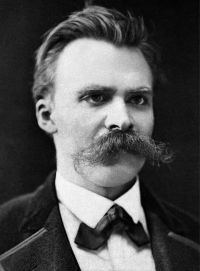
“ Just as some poor black-and-white engraving of a masterpiece of the painter's brush may, to an eye untrained in the harmony of colour, be a better interpretation of the artist's meaning than his own proper work, so our feeble copies of the transcendent splendour and beauty may suit some purblind and untrained eyes better than the serener and loftier perfection which we humbly copy. ”
 Friedrich Wilhelm Nietzsche,
Thoughts Out of Season, Part II
Friedrich Wilhelm Nietzsche,
Thoughts Out of Season, Part II
“ We think of the æsthetic phenomenon of the detachment from all personal concern with which the painter sees the picture and forgets himself, in a stormy landscape, amid thunder and lightning, or on a rough sea: and we require the same artistic vision and absorption in his object from the historian. But it is only a superstition to say that the picture given to such a man by the object really shows the truth of things. Unless it be that objects are expected in such moments to paint or photograph themselves by their own activity on a purely passive medium! ”
Various, The Catholic World, Vol. 01, April to September…
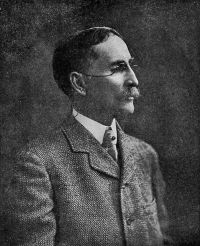
“ But, amidst deformity or poverty of art in the material element, if there is any, however slight, artistic power employed, the outward defects will be qualified, and almost transformed, to the eye of an appreciating spectator, through the inner power which speaks from the painter's soul to his own: just as we learn to overlook, or even to admire, plain features, and anything short of positive ugliness of outline, in those whose mental greatness and moral beauty we have learned to venerate and to love. ”
 Birge Harrison,
Landscape Painting
(1909)
Birge Harrison,
Landscape Painting
(1909)
“ When I try to draw aside the veil, and peer into the mists of the future, I seem to see another art, less material, more akin to the pure spirit of music; an art stripped of all that is gross and material; an art in which abstract beauty alone shall rule. In this new art values may very possibly be unnecessary, and all will be stated in terms of beautiful color. ”
Austin Hall and Homer Eon Flint, The Blind Spot (1951)
“ Our greatest paintings, our noblest sculpture, came from that age; all the priceless relics that we call classic. And in its stead we had the mechanical age. Man likewise became a mechanism, emotionless, with no taste for Nature. ”
De Witt H. Parker, The Principles of Aesthetics
“ For a work of art demands a complete abandon of self, an entire absorption in it of attention and emotion. Every picture has a frame, and every other work of art an ideal boundary to keep you in its world. Beyond the frame you shall not go; beyond the stage you shall not pass; beyond the outline of the statue you shall not look. And if you do pass beyond, you have lost the full intensity and flower of the experience; and whatever comparisons you then make will not concern its original and genuine beauty. Every work of art is jealous ”
Mrs. Russell Barrington, The Life, Letters and Work of Frederic Leighton…
“ This weakness, among the many, of the critical faculty in æsthetic matters, and the curious bluntness of their perceptions, is seen not in connection with the plastic arts only, but over the whole artistic field, in the domains of music and the drama, as in that of painting and sculpture. ”
 John Ruskin,
The Relation of Art to Use
John Ruskin,
The Relation of Art to Use
“ For instance, almost the whole system and hope of modern life are founded on the notion that you may substitute mechanism for skill, photograph for picture, cast-iron for sculpture. That is your main nineteenth-century faith, or infidelity. You think you can get everything by grinding--music, literature, and painting. You will find it grievously not so; you can get nothing but dust by mere grinding. ”
 Georg Wilhelm Friedrich Hegel,
The Philosophy of Fine Art, volume 1…
Georg Wilhelm Friedrich Hegel,
The Philosophy of Fine Art, volume 1…
“ Thus, to take an example, we find the art of painting, in its representation of the Passion, not unfrequently dallies round the expression of ribaldry visible in the hideous contortions and grimaces of tormenting common soldiers; and, in its attachment to such discordant emotions, especially when depicting what is criminal, shameless, or evil, permitting the glad serenity of the Ideal to pass away. Even when such disruption loses its force, we find frequently that ugliness, or, at least, the absence of real beauty, is set up in its place. ”
John Lord, The Old Roman World : the Grandeur and Failure of Its Civilization
“ I am not speaking of those glories which art ought to represent, but of those attractions which it presents when degraded. What conservative influence can result from the Venus of Titian? Why did not art reform morals, as morals elevated art? And why did art degenerate? Why did it not keep its own? The truth is, that art is esoteric, and not popular. The imagination of the vulgar is not sufficiently cultivated to see, in the emblems which art typifies, those passions or sentiments which have moved generations with enthusiasm. ”
“ It may be, of course, that in moments of passionate excitement the mind grasps some new [178] idea, or the nervous tension suggests to the mechanical parts of the body some new form of expression; but such are accidents which belong to the great scheme of life, and not to this art, or any art, alone. You all know the story of the painter who, in despair at not being able to carry out the intention of his imagination, dashed his brush at the imperfect canvas, and with the scattering paint produced by chance the very effect which his brush guided by his skill alone, had failed to achieve. ”
James Rees, Foot-prints of a letter carrier…
“ Artists of well-known reputation lend themselves to this work of destruction; and specimens denote the highest order of talent, as well as the most exquisite workmanship of art,—art devoted to the production of the most vulgar and disgusting subjects the human mind ever conceived or a diseased imagination conjured. ”
John Lord, The Old Roman World : the Grandeur and Failure of Its Civilization
“ How degrading the pictures which are found amid the ruins of ancient baths! Art was sensualized, perverted, corrupting. Paintings appealed either to perverted tastes, or fostered a senseless pride, or stimulated unholy passions, or flattered the vanity of the rich—brought angels down to earth, not raised mortals to heaven. They commemorated the regime of tyrants, or amused the wealthy classes, whose wealth had bought alike the muse of the poets and the visions of the sculptor. Art was venal. ”
J. S. Memes, History of Sculpture, Painting…
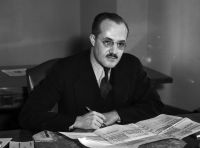
“ But in the fine arts, to whose labours, taste, by these philosophers, is confined, truth is beauty, falsehood deformity; hence, to discriminate between even their minutest shades, requires the constant exercise of the most refined taste. Or, shall we maintain with others, that beauty consists in certain arrangements and proportions of the parts to a whole; or in the fitness of means to an end? This, as far as an intelligible description of beauty, applies equally to the pursuits of the philosopher and of the artist. ”
 Willard Huntington Wright,
Modern Painting, Its Tendency and Meaning
Willard Huntington Wright,
Modern Painting, Its Tendency and Meaning
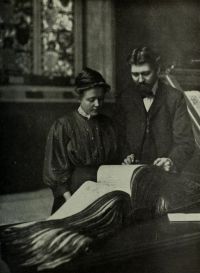
“ THROUGHOUT the entire history of the fine arts, no period of æsthetic innovation and endeavour has suffered from public malignity, ridicule and ignorance as has painting during the last century. The reasons for this are many and, to the serious student of art history, obvious. ”
 Charles William Wallace,
Spider-webs in Verse: A Collection of Lyrics for Leisure Moments…
Charles William Wallace,
Spider-webs in Verse: A Collection of Lyrics for Leisure Moments…
“ Sitting before it, there are yearly hundreds of canvases and brushes and paints and paintings; but they lack the beauty.—The words, the rhythm, the metre, the music of Paradise Lost? Millions of productions, from musty tomes in the British Museum to the upper left-hand corner of the “patent inside” of a newspaper, have all these; but no beauty.What then? That same indefinable something which in man we call the soul, and in art, the spirit; that which the admiring soul instinctively feels and recognizes. ”
De Witt H. Parker, The Principles of Aesthetics
“ An artist may, for example, through a vivid portrayal, so excite the animal lust and cruelty which lurk hidden in all of us as to make the most morally reprehensible objects acceptable. Nature has taken many a revenge on civilization through art. Although no one should demand that these appeals be entirely excluded, yet when they operate alone, without the sublimation of insight, they are flagrantly unaesthetic in their influence, because they deprive the work of art of its freedom. ”
Sir Archibald Alison, Travels in France during the years 1814-15
“ It is in the neglect of this great principle that the defect of many of the first pictures of modern times is to be found—in the confused multitude of unnecessary figures—in the contradictory expression of separate parts—in the distracting brilliancy of gorgeous colours; in the laboured display, in short, of the power of the artist, and the utter dereliction of the object of the art. ”
 Fanny Kemble,
Records of a Girlhood
Fanny Kemble,
Records of a Girlhood
“ Destitution, absolute hunger, cold and nakedness, are no more subjects for artistic representation than sickness, disease, and the real details of idiotcy, madness, and death. All art should be an idealized; elevated representation (not imitation) of nature; and when beggary and low vice are made the themes of the dramatist, as in this piece, or of the poet, as in the works of Crabbe, they seem to me to be clothing their inspirations in wood or lead, or some base material, instead of gold or ivory. The clay of the modeler is more real, but the marble of the sculptor is the clay glorified. ”
Herbert J. Hall, The Untroubled Mind
“ It is really the art by which the painter excludes the commonplace and irrelevant from his landscape. Sometimes we have to do this consciously; for the most part, it should be a natural, unconscious selection. ”
“ They are all morbid outcomes of an unwholesome and unnatural taste, suggestive only of that refinement which is blasé of tenderness, humanity, or morality, and which is nearly past all excitements except such as are monstrous and beastly, the demoralising refinement of decay. Artistic?—yes; we must grant to them the praise of artistic execution; but this is the whole length which we can go in the matter of praise, and this is not enough for art to be of real utility to daily life and its hourly obligations. ”

“ But, even in artists, modern life tends to deform these ideals, and in any exhibition of modern paintings ninety-nine out of a hundred of these works will be ugly; they will display, perhaps, admirable technique, complete mastery of detail, fine brush work, perhaps unexceptionable drawing, but the combination of these qualities will produce merely a sense of ugliness on the retina of the observer of them. ”
Henry James, The Golden Bowl — Complete
“ The infirmity of art was the candour of affection, the grossness of pedigree the refinement of sympathy; the ugliest objects, in fact, as a general thing, were the bravest, the tenderest mementos, and, as such, figured in glass cases apart, worthy doubtless of the home, but not worthy of the temple—dedicated to the grimacing, not to the clear-faced, gods. ”
