Balance (physiology)

Definition and stakes

Various,  Popular Science Monthly (1912)

“ More recent studies have led investigators to believe that the nervous system does not in any sense create function, but is to be regarded merely as the great regulator, the transforming apparatus called into existence to assist in preserving the equilibrium of each living organism, amid a play of energies, light, heat, electric waves, etc. As long as the equilibrium is undisturbed we say that the body is in a state of rest, but let that balance be disturbed by any stimulus and a reaction takes place. ”
Source: Wikisource

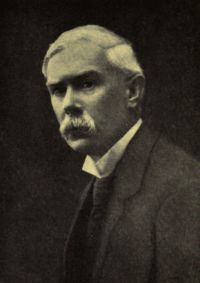
Portrait of John Uri Lloyd John Uri Lloyd,  Etidorhpa; or, The End of Earth

“ Instead of exercising its influence on a brain, and thence indirectly on a material body, your mind force is exerting its action through energy on matter itself. Matter is here subservient. It is nearly the same as vacuity, mind being a comprehensive reality. The positions we have heretofore occupied have been reversed, and mind now dominates. Know, that as your body is now absolutely without weight, and is suspended in a frictionless medium, the most delicate balance of a chemist can not approach in sensitiveness the adjustment herein exemplified. ”
Source: Gutenberg

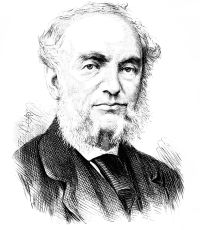
Portrait of Herbert Spencer Herbert Spencer,  The Principles of Biology, Volume 2… (1899)

“ If it is a mechanical force, then the immediate effect is some distortion of the part—a distortion having for its limit that attitude in which the resistance of the structures to further change of position, balances the force tending to produce the further change; and the ultimate effect, supposing the force to be continuous or recurrent, is such a permanent alteration of form, or alteration of structure, or both, as establishes a permanent balance. ”
Source: Gutenberg

Get perspective with Kwize: daily news enlightened by great literature