Agnes Giberne, Nigel Browning (1898)
“ Do the advantages more than compensate for the disadvantages, or vice versa? You perceive? Sometimes there seems to be a complete balance of forces—an equilibrium—the scale will not incline either way. ”
Agnes Giberne, Nigel Browning (1898)
“ Do the advantages more than compensate for the disadvantages, or vice versa? You perceive? Sometimes there seems to be a complete balance of forces—an equilibrium—the scale will not incline either way. ”
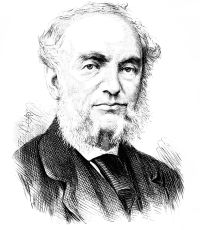 Balfour Stewart,
The conservation of energy
(1881)
“ Suppose, for instance, that a man is accurately balanced in a scale-pan, and that some water enters his ear; of course he will become heavier in consequence, and if the balance be sufficiently delicate, it will exhibit the difference. ”
 Mary Baker Glover,
Science and Health
(1875)
“ Adjust a balance, and a single weight removed from one of the scales gives preponderance to the opposite one; so with body and mind; what you cast into the scale of matter to weigh for or against health, you take away from Intelligence, and its power to hold the balance against matter. ”
Harold Speed, The Practice and Science of Drawing
“ There is another form of balance that must be although it is connected more with the subject matter of art, as it concerns the mental significance of objects rather than rhythmic qualities possessed by lines and masses; I refer to the balance there is between interest and mass. The all-absorbing interest of the human figure makes it often when quite minute in scale balance the weight and interest of a great 225mass. ”
 Abu Hamid al-Ghazālī,
Al-Ghazali letter to Administrative Heads of all Government Departments
“ Then good, even though it be just an atom's weight will be placed in one scale and evil having the same amount will be placed in another, then man will be subjected to the verdict of the balance and he will be very worried, and anxious to know which of the scales rises and falls: "Then he whose deeds weigh heavy in the Balance shall live a life which is pleasing, but he whose weight is light in the Balance, his head will be in the Plunging. ”
Worthington Hooker, Science for the School and Family…
“ Scales and Steelyards.—In the common scale-beam we have a lever, the two arms of which are equal, and therefore equal weights suspended at the ends balance. If they be not exactly equal, a heavier weight will be necessary on the shorter arm than on the longer. The inequality will injure the buyer if the prop be too near the scale in which the weights are placed, and the seller if it be too near that which holds the article to be sold. ”
 William Stanley Jevons,
The principles of science
“ It is upon this principle, as we shall see, that all accurate processes of measurement depend. If for a weight in a scale of a balance we substitute another weight, and the equilibrium remains entirely unchanged, then the weights must be exactly equal. The general test of equality is substitution. Objects are equally bright when on replacing one by the other the eye perceives no difference. Objects are equal in dimensions when tested by the same gauge they fit in the same manner. ”
Various, The Germ: Thoughts towards Nature in Poetry…
“ What, then, is there but the mind to determine its own state of happiness, or misery: just as the motion of the scales depends upon themselves, when two equal weights are put into them. The balance ought to be truly hung; but if the unpleasant scale is heavier, then the motion is in favor of the pleasant scale, and vice versa. ”
 Jonathan Swift,
The Works of the Rev. Jonathan Swift
(1801)
“ When the balance is broken, whether by the negligence, folly, or weakness of the hand that held it, or by mighty weights fallen into either scale, the power will never continue long in equal division between the two remaining parties, but, till the balance is fixed anew, will run entirely into one. ”
James White, The Eighteen Christian Centuries
“ The political sleight-of-hand men, who considered the safety of the world to depend on the balance of power, where a weight must be cast into one scale, exactly sufficient, and not more than sufficient, to keep the other in equilibrio, were never so much puzzled since the science of balancing began. ”
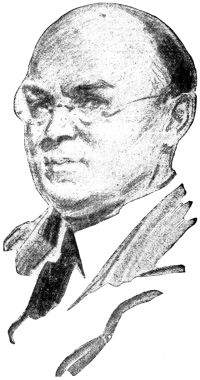 Edwin Balmer,
The Man Higher Up
(1926)
“ Yes; everything on which there is a duty when it is taken off the boats has to be weighed, and to do this there are big scales, and for each one a scale house. When a scale is being used there are two men in the scale house. One of these is the Government weigher, who sets the scale to a balance and notes down the weight in a book. The other man, who is an employee of the company, writes the weight also in a book of his own; and he is called the company’s checker. But though there are half a dozen scales, almost everything, when it is possible, is unloaded in front of Scale No. ”
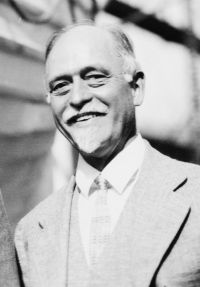 Irving Fisher,
The Purchasing Power of Money
“ II.30 We all know that, when a balance is in equilibrium, the tendency to turn in one direction equals the tendency to turn in the other. Each weight produces on its side a tendency to turn, measured by the product of the weight by its arm. The weight on the left produces, on that side, a tendency measured by 5,000,000 × 20; while the weights on the right make a combined opposite tendency measured by 200,000,000×.10+200,000,000×.25+90,000,000×.33 1/3. The equality of these opposite tendencies represents the equation of exchange. ”
 H. Rider Haggard,
Allan Quatermain
“ And so the balance sways and the story runs—here a gain, there a loss, and Nature’s great average struck across the two, whereof the sum total forms one of the factors in that mighty equation in which the result will equal the unknown quantity of her purpose. ”
 Josiah Willard Gibbs,
Scientific Papers of Josiah Willard Gibbs
(1906)
“ The equilibrium which is due to such passive properties is thus widely distinguished from that caused by the balance of the active tendencies of the system, where an external influence, or a change in the initial state, infinitesimal in amount, is sufficient to produce change either in the positive or negative direction. ”
 Éliphas Lévi,
The history of magic
(1922)
“ It is said in the Bible that God has ordered all things according to weight, number and measure. Omnia in pondere et numero et mensura disposuit Deus. Weight is equilibrium, number is quantity, measure is proportion—these three, and these are the eternal or divine basis of the science of Nature. Here now is the formula of equilibrium: Harmony results from the analogy of contraries. Number is the scale of analogies, the proportion of which is measure. The entire occult philosophy of the Zohar might be termed the science of equilibrium. ”
 Christopher Morley,
Plum Pudding: Of Divers Ingredients…
“ Attention is drawn not to the individual items, but to the balance of the whole. That is the test of a list. But there is a good balance, a balance of power, and a balance of mere weight or prestige. It is the power we are after here. ”
 Bahá'u'lláh,
The Kitáb-i-Aqdas
“ Weigh not the Book of God with such standards and sciences as are current amongst you, for the Book itself is the unerring Balance established amongst men. In this most perfect Balance whatsoever the peoples and kindreds of the earth possess must be weighed, while the measure of its weight should be tested according to its own standard, did ye but know it. ”
 Leonardo da Vinci,
A Treatise on Painting
(1802)
“ The complex balance is, when a man carries a weight not his own, which he bears by different motions; as in the figure of Hercules stifling Anteus, by pressing him against his breast with his arms, after he has lifted him from the ground. He must have as much of his own weight thrown behind the central line of his feet, as the weight of Anteus adds before. ”
 Denman W. Ross,
A theory of pure design: harmony…
“ The equilibrium may be one of physical forces (forces of weight or resistance) or forces of will. It may be an equilibrium of sense-impressions or attractions, of interests, of alternative propositions or ideas. It may be the equilibrium of a perfect antithesis. Certain moments of Time, certain points of Space, are [Pg 2] distinguished from others by instances of equilibrium or balance. The balance being lost, in any case, we have at once some movement. If this movement is regular, and marked in its regularity, we get, instead of Balance, Rhythm. ”
William Stanley Jevons,
The principles of science
“ Determinations of weight seem to come next in exactness, owing to the fact that repetition without error is applicable to them. An ordinary good balance should show about one part in 500,000 of the load. ”
Andrew Gray, Lord Kelvin: An account of his scientific life and work
“ When the stretch is of a certain amount, there is equilibrium—the action of the spring just balances the weight,—and if the spring be stretched further there will be a balance of pull developed tending to bring the system back towards the equilibrium position. ”
Ontario. Department of Education, The Ontario Readers: The High School Reader…
“ I saw, methought, a pair of golden scales hanging by a chain in the same metal over the table that stood before me; when, on a sudden, there were great heaps of weights thrown down on each side of them. I found upon examining these weights, they showed the value of everything that is in esteem among men. I made an essay of them, by putting the weight of wisdom in one scale, and that of riches in another, upon which the latter, to show its comparative lightness, immediately "flew up and kicked the beam." ”
 Philip Schaff,
Nicene and Post-Nicene Fathers…
(1885)
“ For some bodies we count, some we measure, and some we weigh; [8] those which are by nature continuous we apprehend by measure; to those which are divided we apply number (with the exception of those which on account of their fineness are measured) ; while heavy objects are distinguished by the inclination of the balance. ”
 Three Initiates,
The Kybalion
(1908)
“ You simply overcome one law by counter-balancing it with another, and thus maintain an equilibrium. The laws of balance and counter-balance are in operation on the mental as well as on the physical planes, and an understanding of these laws enables one to seem to overthrow laws, whereas he is merely exerting a counter-balance. ”
 Herbert Spencer,
First Principles
“ For in every case the balance arrived at is relative, and not absolute—is a cessation of the motion of some particular body in relation to a certain point or points, involving neither the disappearance of the relative motion lost, which is simply transformed into other motions, nor a diminution of the body’s motions with respect to other points. Thus understanding equilibration, it manifestly includes that equilibrium mobile, which at first sight seems of another nature. ”
Harvard Psychological Studies, Volume 1
“ The subjects wish 'to take in the whole field,' they wish 'not to be disturbed by too large a black space in the center'; and when, in order to cover in some way the whole space, the small line is drawn in or the large one pushed out, they have, nevertheless, a feeling of equilibrium in spite of the reversal of mechanical balance. ”
 William Whewell,
History of scientific ideas
(1858)
“ The most complex frame-work on which weights are supported, as the roof of a building, or the cordage of a machine, are still examples of equilibrium. In such cases we may have many forces all combining to balance each other; and the equilibrium will depend on various conditions of direction and magnitude among the forces. And in order to understand what are these conditions, we must ask, in the first place, what 214 we understand by the magnitude of such forces;—what is the measure of statical forces. ”
William Stanley Jevons,
The principles of science
“ If two weights A and B be placed in the scales of the best balance we cannot be sure that the equilibrium of the beam indicates exact equality, because the arms of the beam may be unequal or unbalanced. But if we take B out and put another weight C in, and equilibrium still exists, it is apparent that the same causes of erroneous weighing exist in both cases, supposing that the balance has not been disarranged ”
 Andrew Ure,
A Dictionary of Arts, Manufactures and Mines
“ To discover whether two weights be equal, we must oppose them to each other in a machine where they act in a similar manner, and then see if they maintain an equilibrium; for example, we fulfil this condition if we suspend them at the two extremities of a lever, supported at its centre, and whose arms are equal. Such is the general idea of a balance. The beam of a good balance ought to be a bar of well-tempered steel, of such form as to secure perfect inflexibility under any load which may be fitly applied to its extremities. ”
Herbert Spencer,
Essays: Scientific, Political, & Speculative…
“ And we may further notice how, in this first step of rational mechanics, we see illustrated the truth awhile since named, that as magnitudes of linear extension are the only ones of which the equality is exactly ascertainable, the equalities of other magnitudes have at the outset to be determined by means of them. For the equality of the weights which balance each other in scales, depends on the equality of the arms: we can know that the weights are equal only by proving that the arms are equal. ”
 Gaston Tissandier,
Popular Scientific Recreations
“ We see that animals (and men) are continually altering the position of the centre of gravity; for if a man bears a load he will lean forward, and if he takes up a can of water in one hand he will extend the other to preserve his balance or equilibrium.Fig. 27.—Balancing a weight on a nail and key. The experiment shown in the accompanying illustration is apparently very difficult, but it will be found easy enough in practice if the hand be steady. ”
 Thomas P. Jones,
Conversations on Natural Philosophy…
“ If you were to carry a rod or pole with an equal weight fastened at each end of it, you would hold it in the middle of the rod, in order that the weights should balance each other; whilst if the weights were unequal, you would hold it nearest the greater weight, to make them balance each other. ”
 Frederick Marryat,
The Pacha of Many Tales
“ Of course we are: but there is a universal balance throughout nature, and everything finds its level. There is order, when there appears disorder—and no stream runs in one direction, without a counter stream, to restore the equilibrium. ”
Donald Walker, Walker's manly exercises (1855)
“ When the balancer is able to walk firmly and in good position along the bar, and to spring off whenever he may lose his balance, he may attempt to turn round, first at the broad, then at the narrow end, and to return. ”
Sir E. A. Wallis Budge, The Literature of the Ancient Egyptians
“ If the hand-balance is askew, the pans of the balance, which perform the weighing, hang crookedly, and a correct weighing cannot be carried out, and the result is a false one; even so the result of wickedness is wickedness.'"This peasant came the ninth time to lay his complaint [before Rensi] , and said, "The great balance of men is their tongues, and all the rest is put to the test by the hand balance. When thou punishest the man who ought to be punished, the act telleth in thy favour. ”
Herbert Spencer,
The Principles of Biology, Volume 2…
(1899)
“ And in the absence of this hypothesis there remains only one other. The alternative possibility is, that the balance of the preservative and destructive forces is self-sustaining—is of the kind distinguished as a stable equilibrium: an equilibrium such that any excess of one of the forces at work, itself generates, by the deviation it produces, certain counter-forces which eventually out-balance it, and initiate an opposite deviation. ”
“ Then, knowing the weight of one scholar, the weights of all the others may be ascertained by their relative distances from the fulcrum when they exactly balance. These interesting experiments may be tried by any child as soon as he understands the ground rules of arithmetic, and the simple fact that, for two children to balance, the product of the weight of one multiplied into his distance from the fulcrum will exactly equal the product of the weight of the other into his distance from the fulcrum. ”
Roscoe R. Rau, Selling Home Furnishings: A Training Program
“ View from living room to hall in a city apartment. Interior woodwork, mantel, and furniture are of wood in tones which range from the dark chest to the blond chair.A room, or a group, is in balance when it appears to be at rest; that is when the total imaginary weight, or pull, on the attention, of everything on one side of a center appears to the mind to equal the total weight of everything on the other side. An accurate feeling for balance can be acquired easily by experiment and practice. There are two kinds of balance: Even or formal, known as bisymmetric balance ”
Denman W. Ross,
A theory of pure design: harmony…
“ A line having no balance or symmetry in itself may become balanced. The line may be regarded as if it were a series of dots close together. The line is then a relation of positions indicated by dots. It is a composition of attractions corresponding and equal. It is only necessary, then, to find what I have called the center of equilibrium, the balance-center of the attractions, and to indicate that center by a symmetrical inclosure. The line will then become balanced. Fig. 93Here is a line. ”
Denman W. RossThree InitiatesWilliam Matthew Flinders PetrieHarold SpeedHerbert SpencerVariousWilliam Stanley JevonsEdwin BalmerBalfour StewartFrederick Marryat David HumeBahá'u'lláhIrving FisherJames WhiteAgnes GiberneMary Baker GloverAbu Hamid al-GhazālīJonathan SwiftWorthington HookerLeonardo da Vinci
