Boiling water

Definition and stakes

Mary Wollstonecraft Shelley,  Rambles in Germany and Italy in 1840… (1844)

“ Boiling water, or other liquid, presents only an inanimate element, changed to the touch, not to the eye; but molten metal, red and fiery, takes a new appearance, and seems to have life,—the heat appears to give it voluntary action, and the sense of its power of injury adds to the emotion with which it is regarded; as well as the fact that it takes and preserves the form into which it flows. In this every-day world a new sensation is a new delight. ”
Source: Gutenberg

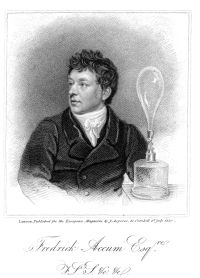
Portrait of Friedrich Christian Accum Friedrich Christian Accum,  Culinary Chemistry

“ Boiling is a much more common operation than any of those we have considered, with the exception perhaps of roasting. It consists, as every body knows, in subjecting the materials of food to the influence of heat, through the medium of boiling water, or of steam.
The water employed for boiling meat or pulse should be soft, and the joint should be put on the fire immersed in cold water, in order that the heat may gradually cause the whole mass to become boiled equally.
”
Source: Gutenberg

Woman's Institute of Domestic Arts and Sciences,  Woman's Institute Library of Cookery…

“ When the atmospheric pressure on the surface of the water is lessened, boiling takes place at a lower temperature than that mentioned, and in extremely high altitudes the boiling point is so lowered that to cook certain foods by means of boiling water is difficult. As the water heats in the process of boiling, tiny bubbles appear on the bottom of the vessel in which it is contained and rise to the surface. Then, gradually, the bubbles increase in size until large ones form, rise rapidly, and break, thus producing constant agitation of the water. ”
Source: Gutenberg

Get perspective with Kwize: daily news enlightened by great literature