Centrifugal force

Definition and stakes

Various Scientific American Supplement…

That is, it has no motion, either from or toward the center, except that which is produced by the action of the centripetal force. It has, therefore, this identity also with a falling body, that it starts from a state of rest. This brings us to a far more comprehensive definition of centrifugal force. This is the resistance which a body opposes to being put in motion, at any velocity acquired in any time, from a state of rest. Thus centrifugal force reveals to us the measure of the inertia of matter.
Source: Gutenberg

Various The Catholic World, Vol. 19, April 1874‐September 1874

We might add that centrifugal forces are not active powers, as the theory assumes, but only components of the rotatory movement, and affections of the rotating matter. Hence, if the ether surrounding the earth does not rotate with it, its condensation through centrifugal force is a patent impossibility; while, if the ether rotates with the earth, its condensation through centrifugal force will again be impossible, inasmuch as its centrifugal force will be greater and greater in proportion as its distance from the earth is greater.
Source: Gutenberg

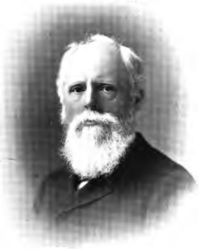
Portrait of James Croll James Croll Stellar Evolution and Its Relations to Geological Time

Centrifugal force must always be balanced by centripetal force. The difficulty is to understand what force counterbalances the centrifugal force of the rotating material of the vortex-atom. It is not because the centrifugal tendency of the rotating material is controlled by the exterior incompressible fluid, for it offers no resistance whatever to the passage of the atom through it—in short, in so far as the motion of the atom is concerned, this fluid is a perfect void.
Source: Gutenberg

Get perspective with Kwize: daily news enlightened by great literature