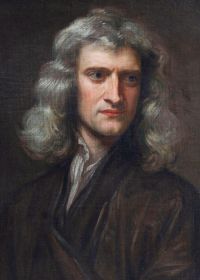
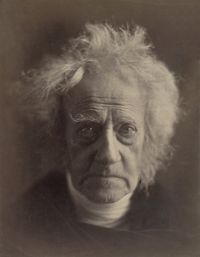
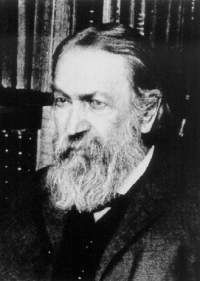
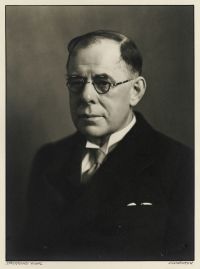
Classical mechanics, a foundational branch of physics, describes the movement of objects under the influence of forces, grounded in Newton’s laws and expanded through analytical approaches. It is divided into statics, kinematics, and dynamics, with subsequent advancements focusing on energy and mathematical rigor. Newton formulated mechanics in terms of forces and motion, while Ostwald highlighted its constraints when viewed through an energy-based lens.
Spencer differentiated pure mechanics from the complexities of real-world applications, and Slosson warned against extending it to living systems. This synthesis portrays classical mechanics as a precise yet context-dependent framework, essential in physics but distinct from contemporary theories such as relativity and quantum mechanics.
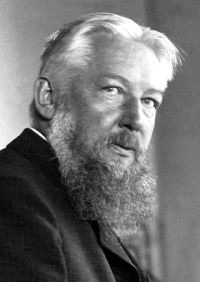 Wilhelm Ostwald,
Natural Philosophy
Wilhelm Ostwald,
Natural Philosophy