Chemical law

Definition and stakes

Mrs. Marcet,  Conversations on Chemistry, V. 1-2

“ Every chemical combination is an illustration of this rule. But let us proceed—
The 6th law is, that the force of chemical affinity between the constituents of a body is estimated by that which is required for their separation. This force is not always proportional to the facility with which bodies unite; for manganese, for instance, which, you know, is so much disposed to unite with oxygen that it is never found in a metallic state, yields it more easily than any other metal.
”

Source: Gutenberg

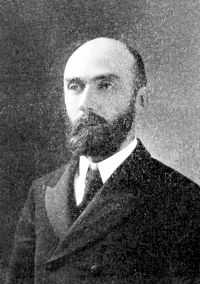
Portrait of Josiah Willard Gibbs Josiah Willard Gibbs,  Scientific Papers of Josiah Willard Gibbs (1906)

“ But however it may be with these acids, the peroxide of nitrogen and the perchloride of phosphorus evidently furnish us with the means of studying the laws of chemical equilibrium in gas-mixtures in which chemical change is possible and does in fact take place reversibly, with varying conditions of temperature and pressure. Or, if from any considerations we can deduce a general law determining the proportions of the component gases necessary for the equilibrium of such a mixture under any given conditions, these substances afford an appropriate test for such a law. ”
Source: Wikisource

Various,  Eclectic Magazine of Foreign Literature…

“ A few days after, nitrogen was liquefied by the same pair of experimenters, under greater atmospheric pressure at a somewhat higher temperature.
The next thing is to naturally ask: What is the use of all this? That remains to be proved. The most unlikely chemical truths have often brought about immense practical results. All that we can as yet say is, that there is now no exception to the law that matter of all kinds is capable of taking the three forms, solid, aqueous, gaseous.
”
Source: Gutenberg

Get perspective with Kwize: daily news enlightened by great literature