Cranial cavity

Definition and stakes

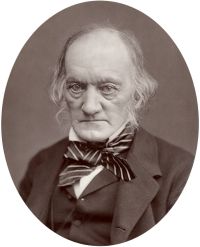
Portrait of Thomas Henry Huxley Thomas Henry Huxley,  On the Relations of Man to the Lower Animals

“ This groove, therefore, indicates the line of separation between that part of the cranial cavity which contains the cerebrum, and that which contains the cerebellum; and as the brain exactly fills the cavity of the skull, it is obvious that the relations of these two parts of the cranial cavity at once informs us of the relations of their contents. ”
Source: Gutenberg

H. Hesketh-Prichard,  Through the Heart of Patagonia

“ The origins of the nerves are very imperfectly shown in the cast; only their exits from the cranial cavity are clear. The most interesting are the optic and trigeminal nerves, which pass out of the cranial cavity at first by a common exit, which is soon subdivided by a bony partition into two canals, the former no less than 0.08 m., the latter 0.045 m. ”
Source: Gutenberg

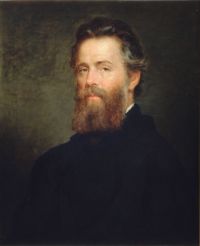
Portrait of Herman Melville Herman Melville,  Moby Dick; Or, The Whale

“ Apply this spinal branch of phrenology to the Sperm Whale. His cranial cavity is continuous with the first neck-vertebra; and in that vertebra the bottom of the spinal canal will measure ten inches across, being eight in height, and of a triangular figure with the base downwards. As it passes through the remaining vertebrae the canal tapers in size, but for a considerable distance remains of large capacity. Now, of course, this canal is filled with much the same strangely fibrous substance—the spinal cord—as the brain; and directly communicates with the brain. ”
Source: Gutenberg

Get perspective with Kwize: daily news enlightened by great literature