Dative case

Definition and stakes

R. G. Latham,  A Handbook of the English Language

“ The -n is by no means radical; besides which, it is the sign of an accusative case, and is not the sign of a nominative.
§ 213. Dative.—In the antiquated word whilom (at times) , we have a remnant of the old dative in -m. The sense of the word is abverbial; its form, however, is that of a dative case.
§ 214. Genitive.—Some call this the possessive case. It is found in substantives and pronouns (father's, his) , but not in adjectives. It is formed like the nominative plural, by the addition of the lene sibilant (father, fathers; buck, bucks)
”
Source: Gutenberg

Unknown,  Medicina de Quadrupedibus (1914)

“ The one may be admitted as well as the other when there is no difference of form between the two, viz. in the ā stems, in the i stems with an originally short root-syllable, or in the weak declensions. However as in the majority of cases where the distinction is possible the dative is certainly used, I admit it wherever a clear accusative form does not occur. In one case, viz. Wið earena sar ⁊ sweȝe 1422 I am tempted to understand the uninflected sar as a dative, for sweȝe cannot possibly be an accusative. ”
Source: Wikisource

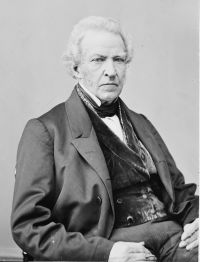
Portrait of James Moore Wayne James Moore Wayne,  United States v. Wood (39 U.S. 430…

“ A defendant in two answers to a bill in equity, swears unequivocally to a fact, and as positively against it. A document is produced executed by himself, decisive of the truth of the fact. In such a case can a living witness be wanted; or could any number of living witnesses prove, more certainly, the false swearing than it would be proved by the document and the defendant's contradictory oaths? Or, take the case of defendant being sued in equity, to recover from him the contents of a lost bond. ”
Source: Wikisource

Get perspective with Kwize: daily news enlightened by great literature