Dramatic unity

Definition and stakes

Henry Norman Hudson,  Shakespeare: His Life, Art, And Characters…

“ Instead, therefore, of a vital unity, like that of a tree, the work has but a sort of aggregative unity, like a heap of sand.
Which may in some fair measure explain what I mean by dramatic composition. For a drama, regarded as a work of art, should be in the strictest sense of the term a society; that is, not merely a numerical collection or juxtaposition, but a living contexture, of persons and events. For men's natures do not, neither can they, unfold themselves severally and individually; their development proceeds from, through, and by each other.
”
Source: Gutenberg

Chautauqua Institution,  The Chautauquan, Vol. 04, April 1884…

“ He wanted a dramatic form in which to tell the story of the fall of Julius Cæsar, and the story of English history. He had to discard the old unities of time and place. The only Aristotelian unity that remains in our English literature is that of subject. The subject of a dramatic action, or an epic story, must have unity. There must be one action having a beginning, a middle, and an end; and there must be a constant, regular, orderly, striking, impressive advance from the beginning to the end. ”
Source: Gutenberg

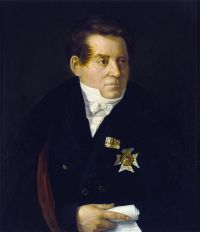
Portrait of August Wilhelm von Schlegel August Wilhelm von Schlegel,  Lectures on Dramatic Art and Literature

“ For the sake of the prescribed Unity of Time the French poets must fain renounce all those artistic effects which proceed from the gradually accelerated growth of any object in the mind, or in the external world, through the march of time, while of all that in a drama is calculated to fascinate the eye they were through their wretched arrangement of stage- scenery deprived in a great measure by the Unity of Place. Accidental circumstances might in truth enforce a closer observance of this rule, or even render it indispensable. ”
Source: Gutenberg

Get perspective with Kwize: daily news enlightened by great literature