Egg (biology)

Definition and stakes

comte de Georges Louis Leclerc Buffon,  Buffon's Natural History, Volume 03…

“ Their internal organization is such that they derive nourishment from the lymph, the matrix of the hen, and by which they form the white membranes, and at last the shell. The egg therefore has a kind of life and organization, a growth, expansion, and a form which it assumes by its own powers. It does not live like an animal, nor vegetate like a plant, nor is possessed of the power of reproduction; nevertheless it grows, acts externally, and is organized. ”
Source: Gutenberg

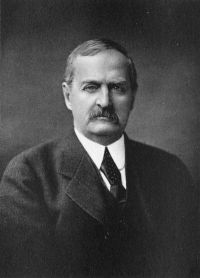
Portrait of Henry Cadwalader Chapman Henry Cadwalader Chapman,  Evolution of Life (1873)

“ We see, therefore, that the development of the chick and the mammal is the same, while the difference between their eggs is not an essential one,—the nutriment for the mammalian egg being furnished from time to time, while that for the bird's egg is supplied at once in the form of yolk. A homely illustration of this difference is that of a man who receives his yearly food from day to day, and of one who receives his yearly food at once. ”
Source: Wikisource

Various,  The Atlantic Monthly, Volume 10…

“ In common parlance, we understand by an egg something of the nature of a hen's egg, a mass of yolk surrounded with white and inclosed in a shell. But to the naturalist, the envelopes of the egg, which vary greatly in different animals, are mere accessories, while the true egg, or, as it is called, the ovarian egg, with which the life of every living being begins, is a minute sphere, uniform in appearance throughout the Animal Kingdom, though its intimate structure is hardly to be reached even with the highest powers of the microscope. ”
Source: Gutenberg

Get perspective with Kwize: daily news enlightened by great literature