Empirical experience

Definition and stakes

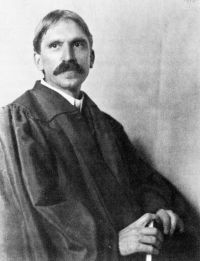
Portrait of Bertrand Russell Bertrand Russell,  The Problems of Philosophy (1912)

“ All knowledge that something exists must be in part dependent on experience. When anything is known immediately, its existence is known by experience alone; when anything is proved to exist, without being known immediately, both experience and a priori principles must be required in the proof. Knowledge is called empirical when it rests wholly or partly upon experience. ”
Source: Wikisource

William James,  Psychology: Briefer Course

“ It may be a thing entirely unknown to our previous experience, something which no simple association of concretes could ever have evoked. The great difference, in fact, between that simpler kind of rational thinking which consists in the concrete objects of past experience merely suggesting each other, and reasoning distinctively so called, is this: that whilst the empirical thinking is only reproductive, reasoning is productive. An empirical, or 'rule-of-thumb,' thinker can deduce nothing from data with whose behavior and associates in the concrete he is unfamiliar. ”
Source: Gutenberg

Get perspective with Kwize: daily news enlightened by great literature