“ It is likely that the idolized French ballet killed the interest of the people in their simple and idyllic folk-dances. The peasant going to the town felt the contempt that a patrician had for the country art and naturally grew to dislike his traditional old-fashioned village dance. The music that he heard in the city cafés cast its spell upon him, as did the city dances. ”
Folk dance
Definition and stakes
The theme of “folk dance” has been addressed by authors such as Anna Pavlova, W. O. E. Oesterley, J. E. Crawford Flitch, Alice C. Fletcher and Ernest William Hawkes. It is often associated with terms like dancing, music, country, minuet and dancer.
Quotes about “folk dance”
E. K. Chambers, The Mediaeval Stage, Volume 1… (1903)
“ Just as the ‘country’ dance is derived from the processional dance, so the other type of folk-dance, the ronde or ‘round,’ is derived from the comparatively stationary dance of the group of worshippers around the more especially sacred objects of the festival, such as the tree or the fire [547] . ”
“ By means of a dance the savages express their joy, sorrow, anger, tenderness and love. Dance has its peculiar psychology, which varies according to racial temperament, climate and other conditions. This is best illustrated in the various styles of the folk-dance. To the vigorous races of Northern Europe in their cold and damp climate dancing became naturally a function of the legs. The Scandinavian and Finnish folk-dances betray more heavy and massive motion, while those of Spain, Hungary and Italy or France give an impression of romantic grace, coquettish agility and fire. ”
“ As the music continues, the dance gets wilder and wilder until it ends abruptly. The steps of the Hungarian folk-dances are as varied as the music. Now they are gliding and sharp, then again graceful and curved. Some of the dances are quiet and of seductive nature, others of involved steps and tricky tempo. ”
“ The performance was exceedingly effective, though the instructor had only inexperienced young amateurs at his disposal. The character of the English folk-dances made rather the impression of a wholesome sport than of a social ceremonial. ”
“ Since we have devoted a chapter to the folk-dances, it will be fitting to describe a few of the most noted dances of the nobility in order to complete our comparative treatment of such a vast subject, so little systematized and so much ignored. While the general tone of all the folk-dances is masculine, that of all the social dances seems predominantly effeminate, rather soft and delicate. ”
“ The future choreography does not necessarily need to be based upon syncopated rhythm only, but upon the various factors of the style, the method of expression and the spiritual issues.The physical and spiritual bases of every folk-art lie in the rural life. A folk-song or a folk-dance is and remains the product of idyllic village atmosphere. ”
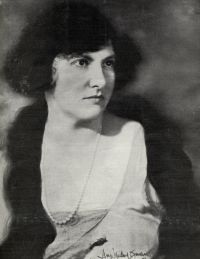 Marion Bauer,
How music grew
(1925)
Marion Bauer,
How music grew
(1925)
“ Dancing Songs In the folk dance, man shows the feelings and dispositions of his race. From this dance of the people, all music gradually took a measured form, a rhythmic thing that is lacking in the song of primitive people. In primitive times, all dances were sung, particularly was this the case with the Slav race. As instruments were perfected, they took the place of primitive drums and singing as accompaniment to the dance. ”
“ Sometimes the dancers circle round the fire holding each other’s hands, sometimes they go in gliding promenade step, sometimes they dance singly, as if challenging or fearing the cracking and high-leaping flame. There is no doubt that this is a rare survival of the ancient sacrificial temple dance. The legendary and mythologic element is the unique peculiarity of the Esthonian folk-dances. ”
E. K. Chambers, The Mediaeval Stage, Volume 1… (1903)
“ The dance had been from the beginning a subject of contention between Christianity and the Roman world [531] ; but whereas the dances of the East and South, so obnoxious to the early Fathers, were mainly those of professional entertainers, upon the stage or at banquets, the missionaries of the West had to face the even more difficult problem of a folk-dance and folk-song which were amongst the most inveterate habits of the freshly converted peoples. As the old worship vanished, these tended to attach themselves to the new. ”
“ How true a mirror the folk-dances and the folk-songs have been and are in showing the racial differences in regard to beauty, is best to be seen if we take the reader from semi-tropical Spain into cold, conventional England, where æsthetic views have developed so differently. In this field we owe much to Cecil Sharp, whose careful works on English folk-dances are of exceptional service to the student of choreography. ”
“ The savages to-day dance most of their sexual dances to rhythmic recitation of certain words. Music is in every phase of evolution the only true essence of that which forms the subject of the dance.To the transformation of more or less primitive folk-dances into those of strictly religious character is due the principal idea of the modern ballet. In the Oriental temples dancing underwent a strange transformation. While dancing was made the basis of dramatic and symbolic ideas, yet this very fact became detrimental to the musical influence upon the choreography. ”
Constance D'Arcy Mackay, Patriotic Plays and Pageants for Young People
“ Red Plume wears a headdress of brilliant scarlet feathers. LIBERTY DANCEThis dance is for a pageant given on a very large scale. It is formed of commingled groups of the young people of all nations, and is symbolic of the Old World coming to the New. The peasant costumes of Germany, Russia, Italy, Ireland, Scotland, France and Sweden should be worn, and the dances should be the folk dances of the various nations, with their appropriate music. ”
“ It is strange to contemplate what different directions the development of the dance in various countries and in various ages has taken. In ancient Egypt and Greece the primitive folk-dances developed into spectacular religious ballets, in Japan they assumed the same impressionistic character as the rest of the national art, in aristocratic France the folk-dances grew to a gilded salon art, in Italy they became acrobatic shows, while in Russia they transformed themselves into spectacular racial pantomimes. ”
Spiritual Folk-Songs of Early America
“ All who are familiar with the folk-dance revival in England realize the importance of Playford’s English Dancing Master in preserving a large number of tunes and dances that were no longer traditionally extant. The folk material embodied in the shape-note books is no less important and far more varied; it is, in fact, indispensible to all who desire a comprehensive knowledge of British and American folk-music. ”
W. H. Matthews, Mazes and Labyrinths: A General Account of Their History and Development
“ With regard to our native dances mentioned above, we may note that every care has been taken by competent investigators to discover and to preserve as much as possible of the pure tradition, and we have the satisfaction of knowing that, narrowly as they escaped oblivion, the English Folk-Dance Society will see to it that such a danger will not threaten them again for a very long time. ”
“ Urban ideals have been of great influence upon the French country people, upon their traditional folk-dances and folk-songs, and this has deprived the race of valuable ethnographic reserve capital, in which many other nations excel. The French, like the English, have been strong in cosmic tendencies but weak in ethnic. While science grows out of the cosmic principles, art’s vigor lies in those of ethnographic nature. An average Frenchman is a great connoisseur of dancing and indulges in it with a particular pleasure. ”
“ To old Irish, Scotch and English folk-dances belong the ‘All in a Garden Green,’ ‘Buckingham House,’ ‘Dargason,’ ‘Heartsease,’ and ‘Oranges and Lemons.’ They are all graceful and dignified, but depict more the English middle class or nobility than the people. Thus in the ‘All in a Garden Green’ the man begins by shaking the hand of his lady partner and kissing her twice, which was rather the custom of the fashionable ballroom than of a puritan people. ”
“ Energy or dreaminess, fire or coolness, and a multitude of other racial qualities assert themselves automatically in a3 folk-dance. The list of forces that make and preserve a nation’s dances is incomplete without the addition of the powerful element of national pride, weakness or other peculiarities. On the contrary, in the Far East, in Japan, Java, China, etc., dancing is exclusively a motion of the hands and fingers alone. In ancient Rome dancing was predominantly the rhythmic motion of the body, with vibratory or rotatory movements of breast or flanks. ”
“ All folk-dancing, broadly speaking, is a natural form of æsthetic courtship. The male intends to win the female by his beauty, grace and vigor, or vice versa. From the point of view of sexual selection we can understand, on the one hand, the immense ardor with which every sensuous part of the human body has been brought into the play of the dance, and, on the other, the arguments of the pseudo-moralists to classify it with the frivolous and least tolerated arts.The stamp of frivolity, put upon the dance by the Christian clergy, has retarded its natural development for several centuries. ”
“ Like the designs of the Esthonian national dress, the figures of their primitive and simple folk-dances have a tendency of128 never-ending lines. The colors, white, black and red—the symbols of red blood, white light and black earth—suggest dreamy, melancholy, but determined traits of a semi-Oriental race. Dance here is not a sport, not an amusement, not a medium of love-making, not a social function, but a magic motion to influence the great powers of Nature, and a semi-mythologic ceremony for the purpose of future joy and happiness. ”
“ Since our space is limited, the writer must refrain from more detailed and further description of the previously mentioned types of the Russian folk-dances. He need only repeat that they surpass by far the folk-dances of all the rest of the world, in that they are so much more racial, so rich in plastic lines, and so perfect in their artistic appeal; it seems as if a remarkable genius had presided over their invention and execution. They are masterfully original from the beginning and continually furnish new ideals of choreographic beauty. ”
“ It seems like a paradox that a country which gave to the world the classic ballet in the modern sense, Noverre, Blasis and Vestris, never produced any folk-dances of such racial flavor as we find in many other nations. ”
“ The great value of Dalcroze’s method lies in his insistence on perfect rhythm as an elementary training244 upon which the coming art of dancing can be based. The various folk-dances are outspokenly rhythmic, but they contain that peculiar racial flavor which is very difficult to keep outside its proper atmosphere and race. We have found that the best Russian dancers could not give the simple folk-dances of another race with the racial perfection which a native untrained folk-dancer would have imparted to it. ”
“ In no other country have the folk-dances reached such a variety of forms, such a high degree of development and an individuality so distinctly racial and139 rich in dramatic and imaginary poses, steps, gestures and mimic expressions as in Russia. In the Russian dances we can trace the elements of all the hundreds of ancient and modern tribes and nationalities who have been molten in one homogeneous mass of people, a world in itself. ”
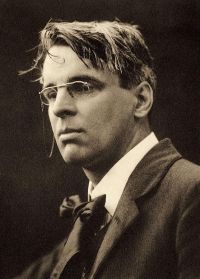 William Butler Yeats,
The Wind Among the Reeds
(1899)
William Butler Yeats,
The Wind Among the Reeds
(1899)
“ When I play on my fiddle in Dooney, Folk dance like a wave of the sea; ”
“ The Bohemian, Ruthenian, Servian and Bulgarian folk-dances are each typical of their race. A tendency of most of the Slavic folk-dances is that the two sexes should mingle as little as possible. Men and women join hands in certain figures, emphasizing the dramatic meaning of the dance, otherwise they remain separated. They rarely dance in couples as the other European races do. They make promenades, march or gallop; they leap and bound in such a manner that the woman faces the man but rarely touches him. ”
“ The real dance is performed inside the ring, usually by a girl, who sometimes has a man partner; this dance may be pantomimic, humorous or full of wildest joy and agility. The writer has witnessed some Chorovody which were141 performed with such skill and finesse of plastic pose and mimic art as to leave many ballet celebrities far in the background. The Russian folk-dancer employs every inch of his body, his hands, legs, toes, heels, hips, shoulders, head and the mimic art so masterfully and correctly that you must often marvel his born talent and lively interest in dancing. ”
“ They all give the impression of a refinement of manners that belongs more121 to the early French social dances than to the folk-dances of a heavy and realistic race. We know how the English high society and court imitated the French in the seventeenth and eighteenth centuries, so it is only natural that it accepted with certain modifications the French social dances. ”
“ Though the Indian uses musical instruments for his social ceremonies, such as the turtle-shell harp, wooden flute and whistles, he never applies their tunes to the dances that have a more serious or religious meaning. The Snake Dance, like the Dream Dance, is based on a legend, but the story of it is more involved, tragic and mystic, therefore its ghastly nature and weird symbolic gestures appear42 more vivid and direct than the themes of any other of the Indian folk-dances. But the steps and poses of every Indian dance are similar to each other, slow, compact, impassive and dignified. ”
E. K. Chambers, The Mediaeval Stage, Volume 1… (1903)
“ The minstrels borrowed this type of folk chanson, and the conjoint dance and song themselves found their way from the village green to the courtly hall. In the twelfth century ladies carolent, and more rarely even men condescend to take a part [543] . Still later carole, like tripudium, seems to become a term for popular rejoicing in general, not necessarily expressed in rhythmical shape [544] .The customs of the village festival gave rise by natural development to two types of dance [545] . ”
Portal:The Folk-Lore Society, Folk-Lore (1896)
“ A woman carrying a curious old wooden ladle for money and a clown make up the party. The articles used in the dance are kept in the church-tower in the custody of the vicar of the parish. [6] Dr. Plot, in 1686, mentions this custom, which seems then to have been in temporary abeyance, doubtless owing to the Civil Wars. The dance, according to his account, took place in the Christmas holidays, and the stags' horns were painted with the arms of the landowners. ”
Portal:The Folk-Lore Society, The Folk-Lore Journal (1883)
“ It is made by all, or, at least, by most of the guests, both male and female. In some of the villages, e.g. Rosehearty, there is at times a dance. Each young woman selects a young man for the first dance, which is called the "favour reel," and ties a ribbon round his arm. ”
Baroness Emmuska Orczy Orczy, A Bride of the Plains
“ They get very excited in the mazes of the dance, they shout to the gipsies to play faster [Pg 20] and ever faster; each holds his partner tightly round the slim waist and swings her round and round, till she stumbles, giddy and almost faint in his arms.And round the dancers in a semicircle the spectators stand in a dense crowd—the older folk and the girls who have not secured partners—they watch and watch, indefatigable like the dancers, untiring like the musicians. ”
“ It is due to their opposition that the religious dances have faded out under the Western civilization. The warfare against dancing generally, on the part of the Apostles of Christianity, dates back to the fanatic era of theological and nationalistic differences. In all countries where the religion descends directly from a racial folk-lore, dancing has remained in high esteem at home and in the temples. This we find true in Egypt, Greece, India and China. ”
Related terms
Authors who wrote about “folk dance”
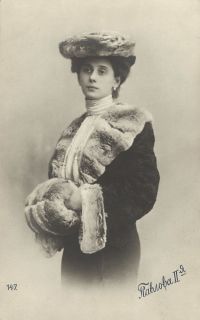 Anna PavlovaW. O. E. OesterleyJ. E. Crawford Flitch
 Alice C. FletcherErnest William HawkesS. A. Barrett
 Ned Wayburn
 James MooneyMarion BauerE. K. Chambers
 Lucy ThompsonAlice Bertha Gomme
 James Owen Dorsey
 Louis Charles ElsonJohn H. WeeksConstance D'Arcy MackayJessie Laidlay Weston
 Mary JohnstonKarl GroosW. H. Matthews