Freight rate

Definition and stakes

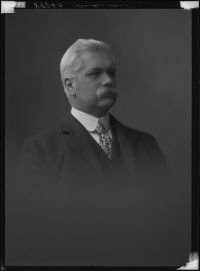
William Zebina Ripley,  Railroads: Rates and Regulations

“ Yet the enhancement of railway revenues would indeed be enormous from such an increase of freight rates. For these necessities of life, an increased freight rate might become an actual charge upon the people, without reducing their consumption, like a tax upon salt. Only upon goods the use of which might be freely lessened, would higher freight rates be reflected in a corresponding decline in the volume of business. Moreover, with all high grade traffic, the value of service principle fails utterly by itself alone to prescribe the upper level of a reasonable charge. ”
Source: Gutenberg

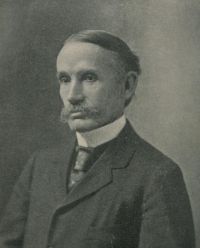
Portrait of William Graham Sumner William Graham Sumner,  Earth-Hunger and Other Essays (1913)

“ The economic parallel between rents in Europe and freight rates in America is very close and real. Rates are prices; they result from a conflict of interests; and the conflict is intricate because many interests enter into it. Freight rates are the rate of return on capital invested and work done by the railroad company and they enter into the cost of production of the shipper. They also affect the relative profits of big shippers and little shippers and the relative prosperity of towns and ports. Freight rates are, therefore, in our country, a means of distributing returns on industry. ”
Source: Wikisource

The Railway Library, 1909

“ That which makes possible the low freight rate of the American railroads is the magnitude of the scale upon which the transportation is conducted. The large cars, with a capacity of from thirty to fifty tons, and the powerful locomotives that draw a score or more of these loaded cars in one train, permit an almost infinitesimal freight charge per pound or per yard that, however, yields by the carload [105] or by the trainload no inconsiderable revenue. For example, the average weight of the carload of food products is about 30,000 pounds. ”
Source: Gutenberg

Get perspective with Kwize: daily news enlightened by great literature