“ I am not able to find such a term;—talent, ability, genius, belong distinctly to the raw material, which is the subject-matter, not to that excellence which is the result of exercise and training. When we turn, indeed, to the particular kinds of intellectual perfection, words are forthcoming for our purpose, as, for instance, judgment, taste, and skill; yet even these belong, for the most part, to powers or habits bearing upon practice or upon art, and not to any perfect condition of the intellect, considered in itself. ”
Intellectual ability
Definition and stakes
The theme of “intellectual ability” has been addressed by authors such as Katherine M. H. Blackford, Lewis M. Terman, H. G. Wells, Charles Darwin and Various. It is often associated with terms like knowledge, genius, education, intelligence and intellect.
Quotes about “intellectual ability”
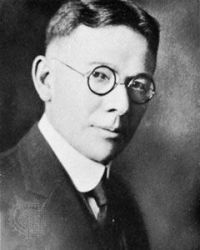 Lewis M. Terman,
The Scientific Monthly, Volume 14…
Lewis M. Terman,
The Scientific Monthly, Volume 14…
“ An essential aspect of the higher thought processes is the ability to associate ideas on the basis of similarities or differences. This ability is involved in such diverse mental acts as the understanding of simple figures of speech, the appreciation of poetry, the scientific classification of natural phenomena, and the origination of hypotheses of science or philosophy. Intellectual superiority is especially evidenced in the ability to note essential likenesses and differences, as contrasted with those which are superficial, trivial or accidental. ”
George Ticknor Curtis, Creation or Evolution? A Philosophical Inquiry
“ And does the intelligence consist, in degree or in kind, in nothing but a repetition of the same experiences as those through which his progenitors were carried, or is there a something in him to which his individual experiences contribute the mental food by which the mind is nourished and by the assimilation of which its individual intellectual growth becomes possible? ”
John Lord, Beacon Lights of History, Volume 14…
“ The higher intellectual powers of man, such as those of ratiocination, abstraction, self-consciousness, etc., probably follow from the continued improvement and exercise of the other mental faculties. ”
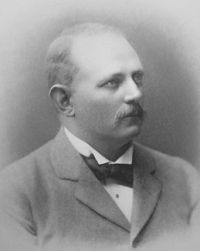 P. H. Emerson,
Naturalistic Photography for Students of the Art
P. H. Emerson,
Naturalistic Photography for Students of the Art
“ In all these ways we should have been adding to the sum of knowledge. And in the greatest steps we made in our advancement we should have made use of our constructive imagination,—the highest intellectual power, according to recent psychologists. ”
 James Frederick Ferrier,
Philosophical Works of the Late James Frederick Ferrier
(1875)
James Frederick Ferrier,
Philosophical Works of the Late James Frederick Ferrier
(1875)
“ The doctrine had been continually gaining ground, either per incuriam, or by design, that the senses were to some extent intellectual, were capable of cognition, or were competent to place intelligible data before the mind. But if sense can act as intellect, what is the use of intellect—why any intellect at all? If sense can intelligently apprehend anything, why can it not intelligently apprehend everything? Let man diligently cultivate his senses, and his advances in knowledge shall be immense. ”
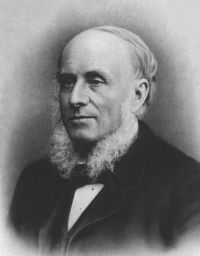 Alexander Bain,
Popular Science Monthly
(1877)
Alexander Bain,
Popular Science Monthly
(1877)
“ The greatest contrast is between what belongs to intelligence, and what belongs to the feelings and the will. The more strictly intellectual department comprises Mechanical Art, Language, the Sensible World, the Sciences, Fine Art ”
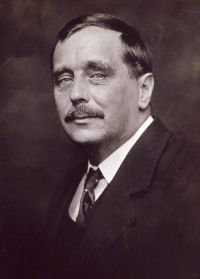 H. G. Wells,
Mankind in the Making
H. G. Wells,
Mankind in the Making
“ We are attempting generalization about a class of remarkably peculiar and difficult persons. They are persons either of great intellectual power or simply of great imaginative power, whose bias and quality it is to apply these exceptional powers not directly and simply to their personal advancement and enrichment, but primarily through philosophical, scientific, or artistic channels, to the increase of knowledge or of wisdom or of both. ”
Various, The Catholic World, Vol. 20, October 1874‐March 1875
“ What do you mean by development of the intellect? If you simply mean that the intellect is furnished with materials of thought in proportion as sensible objects are perceived, and that, by being so furnished, it can easily perform a number of intellectual operations, I admit your assertion; but if you mean that the soul itself is substantially developed in proportion as the organs are growing more perfect, then your assertion is both groundless and absurd. ”
George Henry Lane Fox Pitt-Rivers, Conscience & Fanaticism: An Essay on Moral Values
“ The objective mind, it will therefore be seen, is potentially selective, that is to say, the measure of its quality is its capacity to select at will intellectual nourishment from the whole range of humanity and nature, free from the oppression of its psychic environment. ”
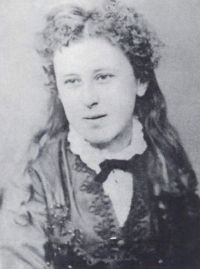 Vernon Lee,
Proteus
(1925)
Vernon Lee,
Proteus
(1925)
“ I mean that, as people grow more intelligent, or more people grow intelligent at all, we shall discover other opportunities for exercising intellectual energy and for obtaining the thrill and uplift of intellectual prowess. ”
Various, The Atlantic Monthly (1858)
“ Concede intellectual power, or the spiritual element, then add this temperament, and there follows a certain subtile, penetrative, radical quality of thought, a characteristic percipience of principles. And principles are not only seen, but felt; they thrill the nerve as well as greet the eye ”
 John Henry Newman,
The Idea of a University Defined and Illustrated
John Henry Newman,
The Idea of a University Defined and Illustrated
“ Such a power is the result of a scientific formation of mind; it is an acquired faculty of judgment, of clear-sightedness, of sagacity, of wisdom, of philosophical reach of mind, and of intellectual self-possession and repose,—qualities which do not come of mere acquirement. ”
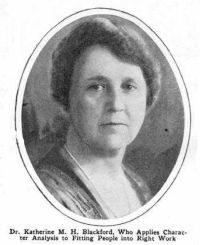 Katherine M. H. Blackford,
Analyzing Character
Katherine M. H. Blackford,
Analyzing Character
“ Intellectually you have a good, active mind of the theoretical type. Your mind is quick to grasp theories, ideals, abstractions, and such intangible and purely mental concepts. Your imagination is active, and is inclined to run away with plans, schemes, and inventions, with speculations and with visions of future prospects. However, your plans and inventions are liable to be purely along mental and intellectual lines, rather than practical. ”
 Joseph Dietzgen,
The Positive Outcome of Philosophy
Joseph Dietzgen,
The Positive Outcome of Philosophy
“ The means and the instrument by the help of which they strive for their ideal is the intellect. It is quite natural that intellectual research led to the study of the intellect, to the "improvement of the intellect," to the "critique of reason," to "logic," and finally to the understanding that the faculty of thought is an inseparable part of the monistic whole, of the absolute which lends support, consistency, reason and sense to all thought. ”
Baron John Emerich Edward Dalberg Acton Acton, A Lecture on the Study of History
“ The sum total of all intellectual excellence is good sense and method. When these have passed into the instinctive readiness of habit, when the wheel revolves so rapidly that we cannot see it revolve at all, then we call the combination genius. But in all modes alike, and in all professions, the two sole component parts, even of genius, are good sense and method.—Coleridge, June, 1814, Mem. ”
 James Sully,
Popular Science Monthly
(1885)
James Sully,
Popular Science Monthly
(1885)
“ We may inquire into those peculiarities of sensibility and emotion, as well as of intellect, which are discoverable in the typical psychical organization of the great man, and may trace out some of the more important reflex influences of the life of intellectual production on his mind and character. What we all recognize as genius displays itself in some large original conception, whether artistic, scientific, or practical. ”
 William Wordsworth,
The Prose Works of William Wordsworth
William Wordsworth,
The Prose Works of William Wordsworth
“ But, in the name of my countrymen, I do repeat these accusations, and tax them with an utter want of intellectual courage—of that higher quality, which is never found without one or other of the three accompaniments, talents, genius, or principle;—talents matured by experience, without which it cannot exist at all; or the rapid insight of peculiar genius, by which the fitness of an act may be instantly determined, and which will supply higher motives than mere talents can furnish for encountering difficulty and danger, and will suggest better resources for diminishing or overcoming them. ”
The Atlantic Monthly — Intellectual Character
“ No person can be called educated, until he has organized his knowledge into faculty, and wields it as a weapon. We purpose, therefore, to invite the attention of our readers to some remarks on Intellectual Character, the last and highest result of intellectual education, and the indispensable condition of intellectual success. ”
 John of the Cross,
Ascent of Mount Carmel
John of the Cross,
Ascent of Mount Carmel
“ No less admirable are, on the one hand, his synthetic skill and the logic of his arguments, and, on the other, his subtle and discriminating analyses, which weigh the finest shades of thought and dissect each subject with all the accuracy of science. ”
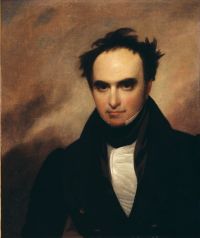 Daniel Webster,
The Great Speeches and Orations of Daniel Webster
Daniel Webster,
The Great Speeches and Orations of Daniel Webster
“ Mind is the great lever of all things; human thought is the process by which human ends are ultimately answered; and the diffusion of knowledge, so astonishing in the last half-century, has rendered innumerable minds, variously gifted by nature, competent to be competitors or fellow-workers on the theatre of intellectual operation. ”
H. G. Wells,
Mankind in the Making
“ There must be, to begin with, a developing sense and feeling for truth and for duty as something distinct and occasionally conflicting with immediate impulse and desire, and there must be certain clear intellectual elements established already almost impregnably in the mind, certain primary distinctions and classifications. ”
Francis William Sullivan, The Free Range
“ The law that human intellects will seek their own intellectual level, providing the person is sound in principle, had worked out in her case, and, once she had made her decision, she clung to it with all the steadfastness of a strong and passionate nature. ”
Saint of Alexandria Clement, The writings of Clement of Alexandria… (1869)
“ But that which par excellence is termed knowledge, bears the impress of judgment and reason, in the exercise of which there will be rational cognitions alone, applying purely to objects of thought, and resulting from the bare energy of the soul. ”
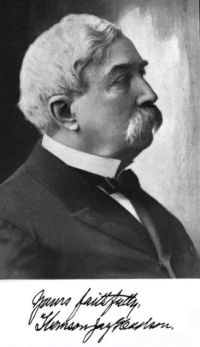 Thomson Jay Hudson,
The Law of Psychic Phenomena
Thomson Jay Hudson,
The Law of Psychic Phenomena
“ The question arises, What part does the subjective mind play in the normal operation of the human intellect? This question may be answered in a general way by saying that the most perfect exhibition of intellectual power is the result of the synchronous action of the objective and subjective minds. When this is seen in its perfection the world names it genius. In this condition the individual has the benefit of all the reasoning powers of the objective mind, combined with the perfect memory of the subjective mind and its marvellous power of syllogistic arrangement of its resources. ”
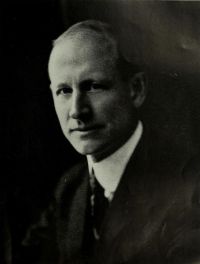 Frank Pierrepont Graves,
A student's history of education
Frank Pierrepont Graves,
A student's history of education
“ His central thought appears more definitely through the philosophical principles in his famous Essay concerning the Human Understanding, and through the intellectual training suggested in his other educational work, Conduct of the Understanding, which was originally an additional book and application of the Essay. ”
Ontario. Department of Education, Ontario Normal School Manuals: Science of Education
“ But the possession of an intellectual and moral nature which responds to appropriate stimulations implies, also, that as man develops intellectually, he will find meaning in human life as realized in himself and others. Thus he becomes able to recognize worth in human life and to determine the conditions which favour its highest growth, or development. ”
Harper's New Monthly Magazine, No…
“ The first comprehends knowledge, purely intellectual, whether derived from observation, memory, reflection, books, or men, Aristotle, or Fleet-street. The second demands training, not only intellectual, but moral ”
Alexander Bain,
Popular Science Monthly
(1878)
“ It is an effort of prime importance to trace exhaustively the inducements and allurements to intellectual exertion. What are the intrinsic charms of knowledge, whether in pursuit or in possession? The difficulty of the answer is increased rather than diminished by the flow of fifty years' rhetoric. ”
Various, The Southern Literary Messenger…
“ Are they not rife with all the useful reasoning—the philosophic intelligence—the happiness of application, that cultivated man could devise for the assistance of untutored intellect?From the logic of the sage we learn, by a spirit of imitation natural to human beings, to quicken our own powers of reasoning. The perspicuity of arrangement and expression, so admirable in our master, becomes gradually a part of our own style. ”
 Will Levington Comfort,
The Public Square
(1923)
Will Levington Comfort,
The Public Square
(1923)
“ It was so in my training. We seek to silence all opinions, all half-truths, all thinking, in fact, in order to Know. We postulate, of course, a center of Spontaneous Knowledge, or Genius, above the mind. ”
J. D. Buck, The New Avatar and The Destiny of the Soul
“ But for the “Common People,” the average intelligent student, for whom Science and the pursuit of Knowledge is not a Profession, but a desire to know, and to understand, in order to be able to use wisely and well, it is of far less importance to know what others think or believe, deny or affirm, on the subject of Psychology, than to realize what are the faculties, capacities, and powers of their own souls. ”
Henry Davenport Northrop, New Century Speaker and Writer… (1901)
“ And the range of topics is very wide; it embraces science and art, history and philosophy; above all, the knowledge of human nature that teaches how the mind he addresses is to be convinced and persuaded, and how a willing ear is to be won to his discourse. ”
Various, Blackwood's Edinburgh Magazine…
“ He is expected to write philosophy and biography: skill in drawing individual character, the power of describing individual achievements, with a clear perception of general causes, and the generalizing faculty of enlarged philosophy. ”
David Masson, The Three Devils: Luther's, Milton's…
“ The mind thinks with what it knows; and, if you alter the knowledge in any one whit, you alter the thinking instrumentality in proportion. Our whole practice of education is based on this idea, and yet somehow the idea is allowed to lurk. ”
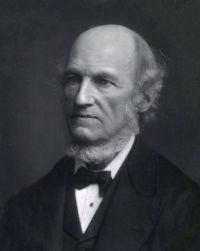 William Benjamin Carpenter,
Popular Science Monthly
(1873)
William Benjamin Carpenter,
Popular Science Monthly
(1873)
“ That is a low and imperfect condition of mental development; and all that we call education tends to produce the habit of mind that shall enable us to distinguish the true from the false—actual facts from the creations of our imagination. I do not say that we ought to reject every thing that to us, in the first instance, may seem strange. I could tell you of a number of such things in science within your own experience. ”
 Brigham Young,
Journal of Discourses — Volume 13…
Brigham Young,
Journal of Discourses — Volume 13…
“ They have the foundation, and they can improve and add knowledge to knowledge, wisdom to wisdom, light to light, and intelligence to intelligence. This power to increase in wisdom and intelligence so that we can know things for ourselves is within every one of us. ”
Joseph Dietzgen,
The Positive Outcome of Philosophy
“ One of the first requirements for the education of the object of philosophy is to recall its various names. The understanding, or the power of knowledge, is also called intelligence, intellect, mind, spirit, reason, power of cognition, of conception, of distinction, of imagination, of judgment, and of drawing conclusions. ”
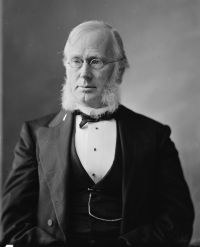 George Frisbie Hoar,
Autobiography of Seventy Years…
George Frisbie Hoar,
Autobiography of Seventy Years…
“ He can use to great advantage the most varied learning, the profoundest philosophy, the most compelling logic. He must master the subject with which he has to deal, and he must have knowledge adequate to illustrate and adorn it. ”
Henry Stephen, The Calcutta Review, 3rd Series… (1925)
“ Thus in the constant effort to acquire and elaborate ideas and preserve knowledge of things as necessary to its own preservation and higher development, the Self is working intellectually. Are we to say, then, that Intellect is the supreme function of mind, and that the Self is essentially Intellect—considering the other functions to be merely contributory? ”
Universal House of Justice, A Compilation on Bahá'í Education
“ Answer.—He has the innate character, the inherited character, and the acquired character which is gained by education.With regard to the innate character, although the divine creation is purely good, yet the varieties of natural qualities in man come from the difference of degree; all are excellent, but they are more or less so, according to the degree. So all mankind possess intelligence and capacities, but the intelligence, the capacity, and the worthiness of men differ. ”
 Samuel Johnson,
Lives of the English Poets : Prior…
Samuel Johnson,
Lives of the English Poets : Prior…
“ His frequent references to history, his allusions to various kinds of knowledge, and his images selected from art and nature, with his observations on the operations of the mind and the modes of life, show an intelligence perpetually on the wing, excursive, vigorous, and diligent, eager to pursue knowledge, and attentive to retain it. ”
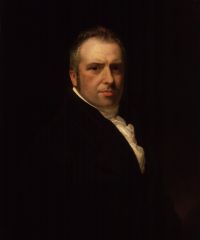 William Hone,
The Every-day Book and Table Book…
William Hone,
The Every-day Book and Table Book…
“ It is at all times agreeable to a philosophical mind, and an understanding which busies itself, not only with the surface and present state of things, but also with their substance and remote tendencies, to contemplate the exercise of human power, and the triumphs of human ingenuity, whether developed in physical or mental efforts, in the pursuit of objects which comprehend a mixture of both. ”
 John Stuart Mill,
Utilitarianism
John Stuart Mill,
Utilitarianism
“ A cultivated mind—I do not mean that of a philosopher, but any mind to which the fountains of knowledge have been opened, and which has been taught, in any tolerable degree, to exercise its faculties—finds sources of inexhaustible interest in all that surrounds it; in the objects of nature, the achievements of art, the imaginations of poetry, the incidents of history, the ways of mankind past and present, and their prospects in the future. ”
Related terms
Authors who wrote about “intellectual ability”
Katherine M. H. BlackfordLewis M. TermanH. G. Wells Charles DarwinVariousWilliam WordsworthJohn Stuart MillAlexander BainJohn LordGeorge Henry Lane Fox Pitt-RiversVernon LeeP. H. EmersonJames Frederick FerrierGeorge Ticknor CurtisJoseph DietzgenJohn Henry NewmanJames SullyDaniel WebsterFrancis William SullivanThomson Jay Hudson