Land law regulates the rights to use, transfer, or prevent others from accessing land, differentiating real estate from personal property. It overlaps with contract law through agreements concerning land use and deals with restrictions such as easements. Authors like Theodore Roosevelt criticized the insufficiency of land laws in arid regions, while S.
Laing expressed concern over England’s intricate system as an obstacle to land transfers. Legal systems, ranging from homestead acts to indigenous rights, illustrate varied methods of reconciling ownership, sovereignty, and social fairness. Contemporary discussions stress the importance of aligning legal requirements with cultural values to ensure land rights enhance individual empowerment and promote development.
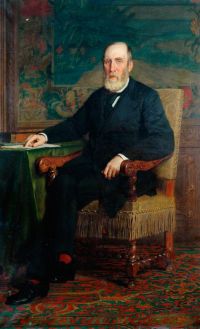 S. Laing,
A Modern Zoroastrian
S. Laing,
A Modern Zoroastrian