“ The letter you write, whether you realize it or not, is always a mirror which reflects your appearance, taste and character. A "sloppy" letter with the writing all pouring into one corner of the page, badly worded, badly spelled, and with unmatched paper and envelope—even possibly a blot—proclaims the sort of person who would have unkempt hair, unclean linen and broken shoe laces; just as a neat, precise, evenly written note portrays a person of like characteristics. ”
Letter paper
Definition and stakes
The theme of “letter paper” has been addressed by authors such as Mary Owens Crowther, Jean Wilde Clark, Emma Elizabeth Thoyts, Edward Arthur Dawe and Sidney Farnsworth. It is often associated with terms like note, envelope, business, writing and handwriting.
Quotes about “letter paper”
Anonymous, Business Correspondence, Vol. 1…
“ For instance, the style of paper is a matter that progressive business houses no longer ignore. The policy of the house may be revealed in the envelope and letter paper before one has had time to read even the date line. Some firms provide different grades of stationery for different departments, the sales letters going out in a much finer dress than letters from other departments. ”
Various, The Black Cat, Vol. I, No. 5, February 1896 (1895)
“ I tore open the envelope and read the one word which comprised the answer, standing alone, naked of punctuation, on the yellow sheet: ‘Come.’“‘That means war to the knife,’ I thought, tossing the paper on my dressing-table. ‘No words wasted.’“As I made preparations for the trip I caught myself glancing at the letter now and then. ‘Come!’ After all, it had a certain charm of its own, that word. Like all affirmative expressions, it possessed drawing power. The more I looked at it, the more alluring it appeared. Then I examined the signature. ”
Maud C. Cooke, Twentieth Century Culture and Deportment
“ The letter itself, as a whole, is now to be considered, and to facilitate its writing there should be some one corner in every home devoted to this purpose. The incentive to letter-writing is always damped, the happy thought we would send our friend takes flight, if we must find the pens upstairs, the paper down, the ink bottle in the pantry, empty or not, as the case may be, and our patience wherever it may be after the search is ended. ”
Thomas E. Sanders, Twenty Talks to Teachers (1908)
“ To my personal knowledge many teachers fail to arrange the form of the letter to appeal to the eye, and this is essential. Paragraphing counts for much in a letter of application. The long, loose, scrawly, disjointed letter, hard to follow when reading it, with pages mixed until you must turn the sheet once or twice to tell for sure where the sentence is continued—these letters often cost the writer a position, and it is right that they should. Use the standard business letter size of paper of good quality. Make your left-hand margin uniform. ”
Anonymous, Business Correspondence, Vol. 1…
“ One well-known corporation regularly uses six different grades of paper for its letters; one grade is engraved upon a thin bond of excellent quality and used by the president of the company when writing in his official capacity; another grade is engraved upon a good quality of linen paper and is used by the other officers, sales managers and heads of office departments when writing official letters to outside parties; when writing to officers or employees of their own concern, the same letterhead, lithographed on a less expensive grade of paper, is used ”
Alfred B. Chambers, The New Century Standard Letter-Writer
“ The young person who would learn to write a good business letter should, with pen, ink and suitable paper begin to practice faithfully after the above model. If necessary, write and re-write it a dozen times or more, until your letter resembles it closely. ”
Anonymous, Business Correspondence, Vol. 1…
“ The quality of the paper, the kind of printing or engraving, the mechanical make-up—all these things contribute to the IMPRESSION a letter makes upon the recipient even BEFORE THE MESSAGE IS READ. Many letters come to nothing because their dress is unattractive, cheap, slovenly; and so progressive business men are learning to select their stationery with care to insure for it both tone and dignity. ”
Jean Wilde Clark, A Desk Book on the Etiquette of Social Stationery (1910)
“ ONE MAY acquire the art of letter-writing. Few possess it. A glance down the page of a fair example of our correspondence finds it studded with personal "I's" and filled with household groans. The Letter We Look for The letter which is a joyous thing, bringing with it a subtle touch of the sender, and conveying the sense of a personal chat, is the one we seek at the postman's ring. Many clever, fluent talkers become incoherent at the touch of ink. They cannot put themselves on paper and the non-expressive, disappointing type of letter is the result. ”
Anonymous, Business Correspondence, Vol. 1…
“ PART IV—THE DRESS OF A BUSINESS LETTER—CHAPTER 13 All business houses recognize the necessity for having printed letterheads and envelopes, but the variety of designs and styles are infinite. Nothing, not even the paper, affords such an index to the character of the individual or firm as the typography of the envelope and letterhead. An impression, favorable or otherwise, is created BEFORE THE LETTER IS READ. This chapter describes the methods of printing, engraving and lithographing ”
Gerald Stanley Lee, The Ghost in the White House
“ There are people who sit down with a pen and a piece of paper, stick out their tongues and chewing on one end of the pen, and slaving away and sweating ink on the other, scrooge out a letter once in three weeks that they have put off six months. ”
Anonymous, Business Correspondence, Vol. 1…
“ It is not exaggeration to claim that the success of many business letters often depends upon the paper. The difference between the letter of an obscure country merchant or lawyer, and that of his well-known correspondent in the city, lies often in its mechanical appearance. The one, who is not trained to observe what he considers trifling items, uses paper that is cheap and easily available; the other, experienced in the details that tend to increase the dignity of the house, selects his stationery with care from a wider assortment. ”
 M. E. W. Sherwood,
Manners and Social Usages
“ Do not send a blurred, blotted, slovenly note to any one; it will remain to call up a certain prejudice against you in the mind of the recipient. The fashion is not now, as it once was, imperative that a margin be left around the edge of the paper. People now write all over the paper, and thus abolish a certain elegance which the old letters undoubtedly possessed. But postage is a consideration, and all we can ask of the youthful letter-writers is that they will not cross their letters. Plaid letters are the horror of all people who have not the eyes of a hawk. ”
Charlotte Marie Mason, Home Education — Part 5
“ One letter should be perfectly formed in a day, and the next day the same elemental forms repeated in another letter, until they become familiar. By-and-by copies, three or four of the letters they have learned grouped into a word--'man,' 'aunt'; the lesson to be the production of the written word once without a single fault in any letter. At this stage the chalk and blackboard are better than pen and paper, as it is well that the child should rub out and rub out until his own eye is satisfied with the word or letter he has written. ”
Mary Owens Crowther, How to Write Letters (Formerly The Book of Letters…
“ For instance, light, the kind or height of chair or desk, the tension of the typewriter, the location of the paper and carbon paper, all tend to make or break the efficiency of the typist and are cost factors. In offices where a great deal of routine mail is handled, the writing of the envelopes and the mailing is in the hands of a separate department of specialists with sealing and stamp affixing machines. The proper planning of a correspondence department is a science in itself, and several good books exist on the subject. But all of this has to do with the routine letter. ”
Alfred B. Chambers, The New Century Standard Letter-Writer
“ Another practice of the past, now happily discarded, is that of crossing letters; only a school girl, nowadays, would cross and recross a sheet of writing paper, and two sheets of paper are used if one sheet will not contain all that is to be said. If half the second sheet of paper is left blank it is not torn off, a whole sheet being more convenient to hold and to fold, and if a few last words are necessary for the completion of a letter they are written on the margin and not across the writing on the face of the pages. ”
Edmund G. Gress, The Art & Practice of Typography
“ However, the greater number of business men recognize the advertising possibilities of the envelop, and not only have the paper match that used for letterheads, but see to it that the typographic treatment is also in accord with that on the letter sheet. ”
T. De Witt Talmage, Around the Tea-Table
“ Through postal cards we not only come to economy in stamps, and paper, and ink, and envelopes, but to education in brevity. As soon as men and women get facility in composition they are tempted to prolixity. Hence some of us formed the habit of beginning to read a letter on the second page, because we knew that the writer would not get a-going before that; and then we were apt to stop a page or two before the close, knowing that the remaining portions would be taken in putting down the brakes. ”
Edmund John Kennedy, With The Immortal Seventh Division
“ From country districts a local paper means a great deal to a man, for it keeps him in touch with home affairs. But above all, keep up a regular correspondence with your men; it is difficult for the home folk to realize how much a letter means. A striking object lesson is afforded on the arriving of a mail, by the hurried withdrawal of the fortunate receivers of letters from the mail bag, like the lions at the Zoo which, on receiving their food, withdraw to enjoy it in solitude. ”
Anonymous, Business Correspondence, Vol. 1…
“ Firms that cater to women of the better class follow out the current styles in writing paper. The "proper" size and shape of sheet and envelope immediately make a favorable impression. Various tints may be used to good effect and, instead of a flaring lithographed letterhead, the firm's monogram may be stamped in the upper left-hand corner. The return card on the envelope should not be printed on the face but on the reverse flap. ”
 Aldous Huxley,
Those barren leaves
(1925)
“ I have all her letters still—a score of scribbled notes sent up by messenger from one wing of the Hotel Cecil to the other and a few longer letters written when she was on her holiday or week-ending somewhere apart from me. Here, I spread out the sheets. It is a competent, well-educated writing; the pen rarely leaves the paper, running on from letter to letter, from word to word. A rapid writing, flowing, clear and legible. Only here and there, generally towards the ends of her brief notes, is the clarity troubled; there are scrawled words made up of formless letters. ”
Anonymous, Business Correspondence, Vol. 1…
“ Stationery should be representative of the business from which it comes. The impression created by a well-dressed man, as well as of a well-dressed letter, is seldom analyzed; the first glance is generally sufficient to establish that impression. A letter soliciting an investment of money, if printed on cheap stock, may create such a tawdry impression as to be discarded instantly by the average business man, although the letter may come from an entirely reliable house and contain an excellent business proposition on good, substantial paper. ”
Unknown, The Laws of Etiquette; Or, Short Rules and Reflections for Conduct in Society
“ In writing a letter of business it is extremely vulgar to use satin or glazed gold-edged paper. Always employ, on such occasions, plain American paper. Place the date at the top of the page, and if you please, the name of the person at the top also, just above the ‘Sir;’ though this last is indifferent. ”
 Stratton D. Brooks,
Composition-Rhetoric
“ Paper.+—The nature of the letter determines to some extent our choice of paper. Business letters are usually written on large paper, about ten by eight inches in size, while letters of friendship and notes of various kinds are written on paper of smaller size. White or delicately tinted paper is always in good taste for all kinds of letters. The use of highly tinted paper is occasionally in vogue with some people, but failure to use it is never an offense against the laws of good taste. ”
Alfred B. Chambers, The New Century Standard Letter-Writer
“ In social correspondence it is, often, considered good form to write on the first and third pages of a sheet of note paper, leaving the second and fourth pages blank, or to write on the fourth and 177first pages, leaving the other two unwritten upon. This is done for the convenience of having the letters written without using a blotting pad. A postscript was formerly supposed to convey the pith or gist of a lady's letter—a poor compliment, it must be confessed, to her intelligence ”
 Eliza Leslie,
The behaviour book
“ For letter writing ruled paper is rarely used, except by children. In writing for the press, no other is so convenient. A page of ruled lines to slip beneath, is indispensable to those who cannot otherwise write straight. They are to be had for a few cents at every stationer’s. It is well to get three different sizes. If you write a small hand, the lines should be closer together than if your writing is large. If you are addressing a friend and have much to say, and expect 153to fill the sheet, begin very near the top of the first page. ”
Edith B. Ordway, The Etiquette of To-day
“ If, however, social note paper is used for a short business letter to a business man, open the sheet out flat, turn it so that the left side becomes the top of the sheet, and use as you would a single large sheet of commercial paper. ”
 Jane Austen,
Letters of Jane Austen
(1906)
“ I have now attained the true art of letter-writing, which we are always told is to express on paper exactly what one would say to the same person by word of mouth. ”
Thomas Baines, Shifts and Expedients of Camp Life…
“ Of course, for purposes of correspondence, a traveller will take care to supply himself with some one of the substantial and economical portable desks in which pens, ink, note-paper, and envelopes are always at hand to enable him to write a creditable letter from almost any part of the world. ”
“ The letter we all love to receive is one that carries so much of the writer's personality that she seems to be sitting beside us, looking at us directly and talking just as she really would, could she have come on a magic carpet, instead of sending her proxy in ink-made characters on mere paper. ”
Me. Clergyman of Brunswick, The Life and Death of Mrs. Maria Bickford
“ We must get up something which has never been dreamed of before. It’s of no use to think of starting a common newspaper; the very idea of it is vulgar—yet it must be a publication of some kind. Now, I propose that we issue a journal in the shape and style of a Letter; print it in the smallest type—cram a large amount of racy matter into a small space—and then fold it up and seal it. Let the price be six cents a copy, and a figure indicating this sum can be stamped with red ink on the outside, as though it were the postage by mail. ”
Emma Elizabeth Thoyts, The Key to the Family Deed Chest… (1903)
“ OLD LETTERS. There were always two divisions of handwriting: the formal hand, employed for clerk’s work, and a freer, less mechanical, less careful style, used for private correspondence. Writing was a profession, and, as late as the sixteenth century, when it was necessary to communicate with persons at a distance, a professional scribe was employed to write the letter. ”
Anonymous, Business Correspondence, Vol. 1…
“ A paragraph on the saving on five thousand circulars that would pay for the machine brings the proposition home to the reader and then, with interest at the height, the last paragraph—the climax—urges the reader to fill out a post card to secure the additional information regarding capacity, quality of work and cost. Logic, unity, sequence, climax—each does its part in carrying the load.The principles of style and form in letter writing do not reach their highest pulling power as long as the correspondent handles them like strange tools. ”
Richard Marsh, Confessions of a Young Lady: Her Doings and Misdoings
“ I laid down my pen, raked out the envelope, took out the sheet of paper. On it was the sentence, not in Miss Winston's small, exquisite penmanship, but in my own great sprawling hand. For a moment or two I stared at it in bewildered surprise. ”
 Marie Belloc Lowndes,
Love and hatred
“ The words had been written, or rather printed, in ink, on a very common sheet of notepaper—the kind of notepaper which is sold in penny packets in every village and small sweetstuff shop in the kingdom.Now in theory there is nothing easier than to despise and disregard an anonymous letter. ”
Related terms
Authors who wrote about “letter paper”
Mary Owens CrowtherJean Wilde ClarkEmma Elizabeth ThoytsEdward Arthur DaweSidney Farnsworth David Nunes CarvalhoHarry Jewett JeschkeAnonymousVariousEliza LeslieAlfred B. Chambers
 Alexandre Dumas
 Lewis Carroll
 Emily PostBarkham BurroughsMaud C. Cooke
 Fyodor Dostoyevsky
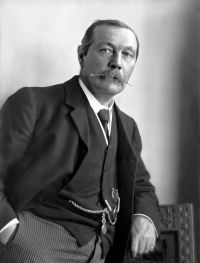 Arthur Conan Doyle
 George Orwell
 Charles Dickens
David Nunes CarvalhoHarry Jewett JeschkeAnonymousVariousEliza LeslieAlfred B. ChambersAlexandre DumasLewis CarrollEmily PostBarkham BurroughsMaud C. CookeFyodor DostoyevskyArthur Conan DoyleGeorge OrwellCharles Dickens