“ The new society at last, proportionate to Nature, In man of you, more than your mountain peaks or stalwart trees imperial, In woman more, far more, than all your gold or vines, or even vital air. Fresh come, to a new world indeed, yet long prepared, I see the genius of the modern, child of the real and ideal, Clearing the ground for broad humanity, the true America, heir of the past so grand, To build a grander future. ”
Modern world
Definition and stakes
The theme of “modern world” has been addressed by authors such as John Henry Newman, William Wotton, Gilbert Keith Chesterton, William Hazlitt and H. G. Wells. It is often associated with terms like civilization, society, science, culture and art.
Quotes about “modern world”
Various, The Continental Monthly, Vol. 6…
“ What we now are, we have become by our own culture and development, and by the inflowing of those great modern ideas which have affected all the world, and helped to build up its civilization into such stately proportions. ”
“ These modern Utopians with the universally diffused good manners, the universal education, the fine freedoms we shall ascribe to them, their world unity, world language, world-wide travellings, world-wide freedom of sale and purchase, will remain mere dreamstuff, incredible even by twilight, until we have shown that at that level the community will still sustain itself. ”
Emory Adams Allen, The Prehistoric World; Or, Vanished Races
“ By the aid of that dim, uncertain light, we are asked to recognize a form of government and society which, under the clearer light of modern researches is seen to bear an equally strong resemblance to institutions more in keeping with the genius of the New World. ”
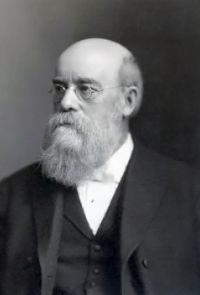 Washington Gladden,
The Church and Modern Life
“ That would mean, of course, a tremendous overturning in the business of the world; a radical revision of the ideals and standards of the great majority; a new point of view and a new aim in life for the most of us. ”
 Alfred North Whitehead,
Science and the modern world
(1925)
“ This new tinge to modern minds is a vehement and passionate interest in the relation of general principles to irreducible and stubborn facts. All the world over and at all times there have been practical men, absorbed in ‘irreducible and stubborn facts’: all the world over and at all times there have been men of philosophic temperament who have been absorbed in the weaving of general principles. It is this union of 4passionate interest in the detailed facts with equal devotion to abstract generalisation which forms the novelty in our present society. ”
William James, Psychology: Briefer Course
“ But the richer insight of modern days perceives that our inner faculties are adapted in advance to the features of the world in which we dwell, adapted, I mean, so as to secure our safety and prosperity in its midst. ”
Earl John Russell Russell, Adventures in the Moon, and Other Worlds
“ In the room of these troubles, in which the world has hitherto been employed, all men are to occupy and delight themselves in viewing the peaceful operation of these newly discovered rules. Such is to be the prosperity from modern calculation; but I confess I have little confidence in the judgment of those who are convinced that the world is just going to be wise. I enter into no engagement, therefore, to leave you my dominions in any such tranquillity ”
Alfred North Whitehead,
Science and the modern world
(1925)
“ These ideas we inherit—they form the tradition 262of our civilisation. Such traditional ideas are never static. They are either fading into meaningless formulae, or are gaining power by the new lights thrown by a more delicate apprehension. ”
Alfred North Whitehead,
Science and the modern world
(1925)
“ In the previous chapters I have been examining the reactions of the scientific movement upon the deeper issues which have occupied modern thinkers. No one man, no limited society of men, and no one epoch can think of everything at once. ”
Washington Gladden,
The Church and Modern Life
“ The other source from which the influences have come by which religion has been purified, is that divine Spirit who is always in the world, and always waiting upon the threshold of every man's thought, and in the sub-conscious depths of every man's feeling, to enlighten our understanding and purify our desires. To every man he gives all that he can receive of light and power. ”
Alfred North Whitehead,
Science and the modern world
(1925)
“ One was that the final real entity is an organising activity, fusing ingredients into a unity, so that this unity is the reality. The other point of view is that the final real entities are substances supporting qualities. ”
Washington Gladden,
The Church and Modern Life
“ In some such way as this, then, religion begins. It is the response of the human nature to impressions made upon the mind and heart of man by the universe in which he lives. These impressions are not illusions, they are realities. All men experience them. Something is here in the world about us which appeals to our feelings and awakens our intellects. Being made as we are, we cannot escape this influence. It awes us, it fills us with wonder and fear and desire. ”
The Little Book of Modern Verse
“ Here the world's heaped gold is a pile of sand. Let them weary and work in their narrow walls: I ride with the voices of waterfalls!I swing on as one in a dream — I swing Down the airy hollows, I shout, I sing! The world is gone like an empty word: My body's a bough in the wind, my heart a bird! ”
Alfred North Whitehead,
Science and the modern world
(1925)
“ A climate of opinion—to use the happy phrase of a seventeenth 5century writer—requires for its understanding the consideration of its antecedents and its issues. Accordingly in this lecture I shall consider some of the antecedents of our modern approach to the investigation of nature. ”
Washington Gladden,
The Church and Modern Life
“ Every man has within him a sense of utter dependence. His mind is irresistibly preoccupied by the idea of a Power, lost in the immensity of time and space, which, from the depths of some dark mystery, governs the world. ”
Alfred North Whitehead,
Science and the modern world
(1925)
“ The common sense of the eighteenth century, its grasp of the obvious facts of human suffering, and of the obvious demands of human nature, acted on the world like a bath of moral cleansing. Voltaire must have the credit, that he hated injustice, he hated cruelty, he hated senseless repression, and he hated hocus-pocus. ”
Alfred North Whitehead,
Science and the modern world
(1925)
“ It has its own unity as an event. This total unity, considered as an entity for its own sake, is the prehension into unity of the patterned aspects of the universe of events. Its knowledge of itself arises from its own relevance to the things of which it prehends the aspects. It knows the world as a system of mutual relevance, and thus sees itself as mirrored in other things. ”
Washington Gladden,
The Church and Modern Life
“ Faith is the root, but faith without works is dead, being alone; and works concern your human relations.These principles enable us to determine what is the business of the church. Its business is to foster and propagate Christianity, and Christianity exists to establish in this world the kingdom of heaven. The church is not, therefore, an end in itself; it is an instrument; it is a means employed by God for the promotion, in the world, of the kingdom of heaven. The kingdom of heaven is not an ecclesiastical establishment ”
Alfred North Whitehead,
Science and the modern world
(1925)
“ The first phase of medieval art has a haunting charm beyond compare: its own intrinsic quality is enhanced by the fact that its message, which stretched beyond art’s own self-justification of aesthetic achievement, was the symbolism of things lying behind nature itself. In this symbolic phase, medieval art energised in nature as its medium, but pointed to another world. ”
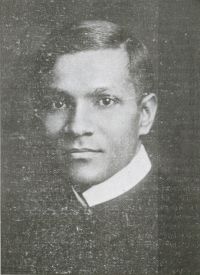 Benoy Kumar Sarkar,
The Science of History and the Hope of Mankind
(1912)
“ Religion, industry, state, education, and literature have been consciously transformed by the heroic efforts of such great men of the world, and these conscious and artificial transformations of the several aspects of social life have been the constituents of a new environment and thus the seeds of Renaissance. ”
 Julia Ward Howe,
Modern Society
“ When the money miracle shall be complete, when the gold Midas shall have turned everything to gold, then the human heart will cry for flesh and blood, for brain and muscles. Then shall manhood be at a premium, and money at a discount.The French have found, among many others, one fortunate expression. They speak of a life of representation, by which they mean the life of a person conspicuous in the great world. This society of representation has some recognition in every stage of civilization, since even nations which we consider barbarous have their festivals and processions. ”
Alfred North Whitehead,
Science and the modern world
(1925)
“ We are entering upon an age of reconstruction, in religion, in science, and in political thought. Such ages, if they are to avoid mere ignorant oscillation between extremes, must seek truth in its ultimate depths. There can be no vision of this depth of truth apart from a philosophy which takes full account of those ultimate abstractions, whose interconnections it is the business of mathematics to explore. ”
Alfred North Whitehead,
Science and the modern world
(1925)
“ Every scheme for the analysis of nature has to face these two facts, change and endurance. There is yet a third fact to be placed by it, eternality, I will call it. The mountain endures. But when after ages it has been worn away, it has gone. If a replica arises, it is yet a new mountain. A colour is eternal. It haunts time like a spirit. It comes and it goes. But where it comes, it is the same colour. It neither survives nor does it live. It appears when it is wanted. The mountain has to time and space a different relation from that which colour has. ”
Alfred North Whitehead,
Science and the modern world
(1925)
“ A static value, however serious and important, becomes unendurable by its appalling monotony of endurance. The soul cries aloud for release into change. It suffers the agonies of claustrophobia. The transitions of humour, wit, irreverence, play, sleep, and—above all—of art are necessary for it. Great art is the arrangement of the environment so as to provide for the soul vivid, but transient, values. Human beings require something which absorbs them for a time, something out of the routine which they can stare at. But you cannot subdivide life, except in the abstract analysis of thought. ”
Robert Mudie, The Modern Athens
“ To examine society with a view to determine the [160] general spirit and character of those who compose it, is like examining an animal with a view to a knowledge of the nature and operation of the living principle. If we examine it while alive and in the performance of its functions, we see the results without being able to understand the machinery ”
Robt. L. Taylor, Gov. Bob. Taylor's Tales
“ I believe the refinements of modern society, its elegant accomplishments, its intellectual culture, and its conceptions of the beautiful, are glorious evidences of our advancement toward a higher plane of being. ”
Alfred North Whitehead,
Science and the modern world
(1925)
“ Religion is the vision of something which stands beyond, behind, and within, the passing flux of immediate things; something which is real, and yet waiting to be realised; something which is a remote possibility, and yet the greatest of present facts; something that gives meaning to all that passes, and yet eludes apprehension; something whose possession is the final good, and yet is beyond all reach; something which is the ultimate ideal, and the hopeless quest. The immediate reaction of human nature to the religious vision is worship. ”
D. W. Bartlett, Presidential Candidates
“ Progress and development mark everything in nature—human societies, as well as everything else. Nothing in the physical world is still; life and motion are in everything; so in the mental, moral, and political. ”
Julia Ward Howe,
Modern Society
“ Modern society, concerning which you have bid me discourse to you, is this tricksy spirit, many-featured and many-gestured, coming in a questionable shape, and bringing with it airs from heaven and blasts from hell. ”
Alfred North Whitehead,
Science and the modern world
(1925)
“ Philosophy is not one among the sciences with its own little scheme of abstractions which it works away at perfecting and improving. It is the survey of sciences, with the special objects of their harmony, and of their completion. It brings to this task, not only the evidence of the separate sciences, but also its own appeal to concrete experience. It confronts the sciences with concrete fact.The literature of the nineteenth century, especially its English poetic literature, is a witness to the discord between the aesthetic intuitions of mankind and the mechanism of science. ”
Alfred North Whitehead,
Science and the modern world
(1925)
“ If my view of the function of philosophy is correct, it is the most effective of all the intellectual pursuits. It builds cathedrals before the workmen have moved a stone, and it destroys them before the elements have worn down their arches. It is the architect of the buildings of the spirit, and it is also their solvent:—and the spiritual precedes the material. Philosophy works slowly. Thoughts lie dormant for ages; and then, almost suddenly as it were, mankind finds that they have embodied themselves in institutions. ”
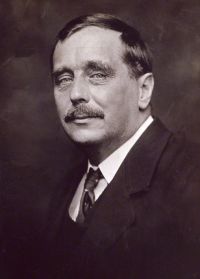 Herbert George Wells,
Mankind in the Making
(1903)
“ It insists as a cardinal necessity, not indeed as an end, but as an indispensable instrument by which this world State must be made and sustained, upon a great, a contemporary, and a universally accessible literature—a literature not simply of thought and science, but of power, which shall embody and make real and living the sustaining dreams of the coming time, and which shall draw together and bring into intelligent correlation all those men and women who are working now discontentedly and wastefully towards a better order of life. ”
Alfred North Whitehead,
Science and the modern world
(1925)
“ Faith in reason is the trust that the ultimate natures of things lie together in a harmony which excludes mere arbitrariness. It is the faith that at the base of things we shall not find mere arbitrary mystery. The faith in the order of nature which has made possible the growth of science is a particular example of a deeper faith. This faith cannot be justified by any inductive generalisation. It springs from direct inspection of the nature of things as disclosed in our own immediate present experience. There is no parting from your own shadow. ”
William Wotton, Reflections upon Ancient and Modern Learning (1694)
“ Now the Notion of the Eternity of Mankind, through infinite successive Generations of Men, cannot be at once more effectually and more popularly confuted, than by shewing how the World has gone on, from Age to Age, improving ”
Alfred North Whitehead,
Science and the modern world
(1925)
“ These unities, which I call events, are the emergence into actuality of something. How are we to characterise the something which thus emerges? The name ‘event’ given to such a unity, draws attention to the inherent transitoriness, combined with the actual unity. But this abstract word cannot be sufficient to characterise what the fact of the reality of an event is in itself. A moment’s thought shows us that no one idea can in itself be sufficient. For every idea which finds its significance in each event must represent something which contributes to what realisation is in itself. ”
 Woodrow Wilson,
The New Freedom: A Call for the Emancipation of the Generous Energies of a People
(1913)
“ We think of the future, not the past, as the more glorious time in comparison with which the present is nothing. Progress, development,—those are modern words. The modern idea is to leave the past and press onward to something new. ”
Alfred North Whitehead,
Science and the modern world
(1925)
“ Thus the self-knowledge inherent in the bodily event is the knowledge of itself as a complex unity, whose ingredients involve all reality beyond itself, restricted under the limitation of its pattern of aspects. Thus we know ourselves as a function of unification of a plurality of things which are other than ourselves. Cognition discloses an event as being an activity, organising a real togetherness of alien things. ”
P. L. Jacob, Military and religious life in the Middle Ages and at the period of the Renaissance (1870)
“ The emotions of the present may incline us to look back regretfully upon that past which reminds us of so much that is great and noble, in spite of its many and inevitable drawbacks, and which, by showing us the origin of modern society, by revealing to us the manner of its birth and its onward progress, may give us the key to its present critical condition when a profound and universal transformation seems about to take place. ”
 John Stuart Mill,
Auguste Comte and Positivism
“ But as society proceeds in its development, its phaenomena are determined, more and more, not by the simple tendencies of universal human nature, but by the accumulated influence of past generations over the present. ”
Alfred North Whitehead,
Science and the modern world
(1925)
“ The enormous success of the scientific abstractions, yielding on the one hand matter with its simple location in space and time, and on the other hand mind, perceiving, suffering, reasoning, but not interfering, has foisted onto philosophy the task of accepting them as the most concrete rendering of fact. ”
Related terms
Authors who wrote about “modern world”
 John Henry NewmanWilliam Wotton
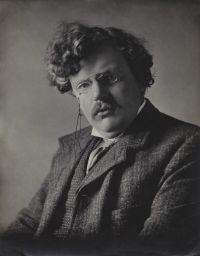 Gilbert Keith ChestertonWilliam Hazlitt
 H. G. WellsWashington GladdenAlfred North WhiteheadEarl John Russell Russell
 G. K. ChestertonVariousWilliam JamesD. W. BartlettHerbert George WellsJ. D. BuckJames W. LeeEmory Adams AllenBenoy Kumar Sarkar
 Walt WhitmanJulia Ward Howe
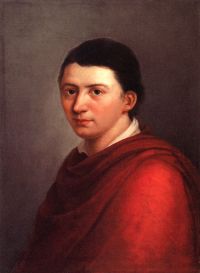 Friedrich von Schlegel
