“ Moment of Force.—In the study of motion we found that the quantity of motion is called momentum and is measured by the product of the mass times the velocity. In the study of parallel forces, especially such as tend to produce rotation, we consider a similar quantity. It is called a moment of force, which is the term applied to the effectiveness of a force in producing change of rotation. ”
Moment (physics)
Definition and stakes
The theme of “moment (physics)” has been addressed by authors such as Bertrand Russell, Richard Feynman, Sir Arthur Stanley Eddington, Robert S. Ball and H. G. Wells. It is often associated with terms like velocity, force, time, momentum and motion.
Quotes about “moment (physics)”
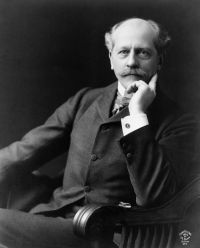 Percival Lowell,
The Evolution of Worlds
(1910)
“ The best we can do to keep our heads steady is to lay firm hold at each step on the great underlying principles of physics. One of these is the conservation of the moment of momentum. This expression embodies one of the grandest generalizations of cosmic mechanics. The very phrase is fittingly sonorous, with something of that religious sublimity which the dear old lady said she found such a consolation in the biblical word Mesopotamia. Indeed the idea is grand for its very simplicity. Momentum means the quantity of motion in a body. It is the speed into the number of particles or the mass. ”
 Bertrand Russell,
Our Knowledge of the External World…
(1914)
“ Thus, although we shall derive points and instants from things, we shall leave the bare possibility open that they may also have an independent existence as simple entities. We come now to the question whether the things in space and time are to be conceived as composed of elements without extension or duration, i.e. of elements which only occupy a point and an instant. Physics, formally, assumes in its differential equations that things consist of elements which occupy only a point at each instant, but persist throughout time. ”
 Lewis Carroll,
The Dynamics of a Parti-cle
(1874)
“ Moment is the product of the mass into the velocity. To discuss this subject fully, would lead us too far into the subject Vis Viva, and we must content ourselves with mentioning the fact that no moment is ever really lost, by fully enlightened Particles. ”
 Alfred North Whitehead,
The Concept of Nature
“ All this discussion as to the nature of time and space has lifted above our horizon a great difficulty which affects the formulation of all the ultimate laws of physics—for example, the laws of the electromagnetic field, and the law of gravitation. ”
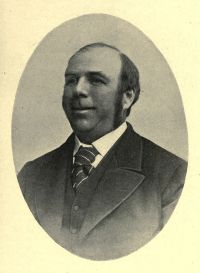 Robert S. Ball,
The Earth's Beginning
“ Every such action must be composed of the effects of one particle in the system on another, and as this must invariably produce an equal and opposite reaction the total moment of momentum is unaltered. ”
Bertrand Russell,
The A B C of atoms
(1923)
“ After mass and energy there is one physical quantity which plays a very fundamental part in modern physics, known as Action. Action here is a very technical term, and is not to be confused [Pg 153] with Newton’s ‘Action and Reaction.’ In the relativity theory in particular this seems in many respects to be the most fundamental thing of all. ”
Robert S. Ball,
The Earth's Beginning
“ Hence we may conclude that every such system as is presented to us in the infinite variety of Nature, must stand in intimate relation to some particular plane, being that which is known as the principal plane of moment of momentum. ”
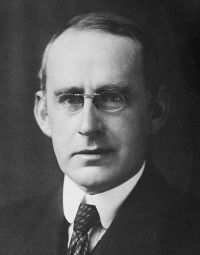 Sir Arthur Stanley Eddington,
The nature of the physical world
(1928)
“ I should like to make it clear that the limitation of the scope of physics to pointer readings and the like is not a philosophical craze of my own but is essentially the current scientific doctrine. It is the outcome of a tendency discernible far back in the last century but only formulated comprehensively with the advent of the relativity theory. The vocabulary of the physicist comprises a number of words such as length, angle, velocity, force, potential, current, etc., which we call “physical quantities”. ”
Aram D'Abro, The evolution of scientific thought from Newton to Einstein (1927)
“ It is, of course, to this mathematical duration that we appeal in all theoretical investigations in mechanics and physics.Primarily the only time of which we are conscious is an “egoistic” time, the time of our stream of consciousness. But as a result of our perception of change and motion in the exterior universe of space, it becomes necessary to extend the concept of duration throughout space, so that all external events are thought of as having occurred at a definite instant in time as well as at a definite point in space. ”
Bertrand Russell,
The A B C of atoms
(1923)
“ It means, in the first place, that the ultimate facts in physics must be events, rather than bodies in motion. A body is supposed to persist through a certain length of time, and its motion is only definite when we have fixed upon one way of dividing intervals between space and time. ”
Bertrand Russell,
Our Knowledge of the External World…
(1914)
“ In fact, in spite of difficulties as to measurement, the one all-embracing time still, I think, underlies all that physics has to say about motion. We thus have still in physics, as we had in Newton’s time, a set of indestructible entities which may be called particles, moving relatively to each other in a single space and a single time. The world of immediate data is quite different from this. Nothing is permanent; even the things that we think are fairly permanent, such as mountains, only become data when we see them, and are not immediately given as existing at other moments. ”
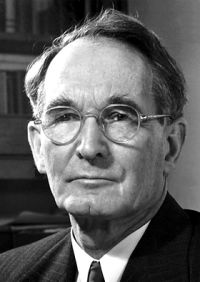 P. W. Bridgman,
The logic of modern physics
(1927)
“ We must first guess at what the laws are approximately, then design an experiment so that, in accordance with this guess, the effect of motion on some phenomenon is much greater than the expected effect on the clock, then from measurements with uncorrected clock time find an approximate expression for the effect of motion on mass or length, with which we correct the clock, and so on ad infinitum. ”
Erwin Freundlich, The foundations of Einstein's theory of gravitation (1924)
“ In short, the determination of the point of time for the occurrence of an event is the determination of the simultaneity of happening of two events, of which one is the arrival of the hands of a clock at a definite position at the point of observation. ”
Sir Arthur Stanley Eddington,
The nature of the physical world
(1928)
“ Second, what is the nature of that quantity which has under the name of time become a fundamental part of the structure of classical physics? By long history of experiment and theory the results of physical investigation have been woven into a scheme which has on the whole proved wonderfully successful. Time—the Astronomer Royal’s time—has its importance from the fact that it is a constituent of that scheme, the binding material or mortar of it. That importance is not lessened if it should prove to be only imperfectly representative of the time familiar to our consciousness. ”
Robert S. Ball,
The Earth's Beginning
“ Nature does not do things which are infinitely improbable, and, therefore, we may affirm that all material systems, with which we shall have to deal, do possess moment of momentum. However the system may have originated, whatever may have been the actions of forces by which it was brought into being, we may feel assured that the system received at its initiation some endowment of moment of momentum, as well as of energy. ”
Bertrand Russell,
The A B C of Relativity
(1925)
“ But we shall not take these disturbances at what is, for us, the moment in question, since that would make them depend upon the observer; we shall instead travel outward from the electron with the velocity of light, and take the disturbance we find in each place as we reach it. ”
Max Planck, Eight Lectures on Theoretical Physics… (1915)
“ It is my purpose to discuss with you today an hypothesis which represents a magnificent attempt to establish quite generally the dependency of the kinetic potential upon the velocities, and which is commonly designated as the principle of relativity. The gist of this principle is: it is in no wise possible to detect the motion of a body relative to empty space ”
Bertrand Russell,
Our Knowledge of the External World…
(1914)
“ The three main conceptions of physics are space, time, and matter. Some of the problems raised by the conception of matter have been indicated in the above discussion of “things.” But space and time also raise difficult problems of much the same kind, namely, difficulties in reducing the haphazard untidy world of immediate sensation to the smooth orderly world of geometry and kinematics. Let us begin with the consideration of space. ”
Ruđer Bošković, Of Space and Time (1922)
“ If a point of matter at any instant of time is at a certain point of space, & we do not know where it is at some other instant, let us inquire how much more probable it is that it should be somewhere else than at the same point as before. ”
 James Clerk Maxwell,
A Treatise on Electricity and Magnetism
(1873)
“ In the case of a connected system in motion, the configuration is continually changing at a rate depending on the velocities so that we can no longer assume that the momentum is the time-integral of the force which acts on it. ”
James Clerk Maxwell,
A Treatise on Electricity and Magnetism
(1873)
“ The smaller we suppose the increment of time δt, the greater must be the impressed forces, but the time-integral, or impulse, of each force will remain finite. The limiting value of the impulse, when the time is diminished and ultimately vanishes, is defined as the instantaneous impulse, and the momentum p, corresponding to any variable q, is defined as the impulse corresponding to that variable, when the system is brought instantaneously from a state of rest into the given state of motion. ”
Gilbert Newton Lewis, The Principle of Relativity, and Non-Newtonian Mechanics (1909)
“ Let us emphasize once more, that these changes in the units of time and length, as well as the changes in the units of mass, force, and energy which we are about to discuss, possess in a certain sense a purely factitious significance; although, as we shall show, this is equally true of other universally accepted physical conceptions. We are only justified in speaking of a body in motion when we have in mind some definite though arbitrarily chosen point as a point of rest. The distortion of a moving body is not a physical change in the body itself, but is a scientific fiction. ”
James Clerk Maxwell,
A Treatise on Electricity and Magnetism
(1873)
“ The fundamental dynamical idea of matter, as capable by its motion of becoming the recipient of momentum and of energy, is so interwoven with our forms of thought that, when ever we catch a glimpse of it in any part of nature, we feel that a path is before us leading, sooner or later, to the complete understanding of the subject. ”
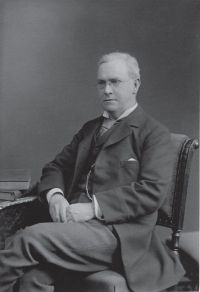 Horace Lamb,
1911 Encyclopædia Britannica, Volume 17…
(1911)
“ If there are no extraneous forces, the moment of momentum about any fixed axis is constant. For in time δt the mutual action between two particles at P and Q produces equal and opposite momenta in the line PQ, and these will have equal and opposite moments about the fixed axis. If extraneous forces act, the total angular momentum about any fixed axis is in time δt increased by the total extraneous impulse about that axis. ”
Sydney T. Klein, Science and the Infinite; or, Through a Window in the Blank Wall
“ A small light, when at rest, appears as a point of light, but when we apply quick motion, the product of Time and Space, to it, we get the appearance of a line of light, and this continuous line, formed by motion of a point, is, I think, analogous to the Physical Universe appearing to our finite senses as continuous in Time duration and Space extension, though really comprised in the Now and the Here, the whole of Creation being therefore an Instantaneous Thought. ”
Percival Lowell,
The Evolution of Worlds
(1910)
“ But from the expression for the moment of momentum we see that this is greatest when e is least. If, therefore, a is diminished, e must also be diminished, or the moment of momentum would be lessened, which is impossible. ”
 Lester Del Rey,
And It Comes Out Here
“ Out there is neither time nor space, apparently. How could the air leak out? You still feel gravity, but I can't explain that, either. Maybe the machine has a gravity field built in, or maybe the time that makes your watch run is responsible for gravity. In spite of Einstein, you have always had the idea that time is an effect of gravity, and I sort of agree, still. ”
Homer Heath Nugent, A Book of Exposition
“ It is interesting to realize that the modern development of science, in the relativity theory, has proved not only that time is not real, but a conception, but also has proved that the time of our conception does not flow uniformly at constant rate from past to future, but that the rate of the flow of time varies with the conditions; the rate of time flow of an event slows down with the motion relative to the event. ”
P. W. Bridgman,
The logic of modern physics
(1927)
“ The physical operations at the basis of the measurement of time have never been subjected to the critical examination which seems to be required. One method of measurement, for instance, involves the properties of light. ”
Bertrand Russell,
The A B C of Relativity
(1925)
“ We need four measurements to fix a position, and four measurements fix the position of an event in space-time, not merely of a body in space. Three measurements are not enough to fix any position. That is the essence of what is meant by the substitution of space-time for space and time. ”
Leigh Richmond, Where I Wasn't Going
“ Communication between particles by any means is apparently limited by the speed of light, which is a relationship between space and time, but apparently, from what we know of inertia, if the universe contained only a single particle, and that particle was in motion, it would continue to move regardless of the fact that its motion could not be checked upon in relation to other particles. ”
Bertrand Russell,
Our Knowledge of the External World…
(1914)
“ It consists, broadly speaking, in showing that, although the particles, points, and instants with which physics operates are not themselves given in experience, and are very likely not actually existing things, yet, out of the materials provided in sensation, it is possible to make logical constructions having the mathematical properties which physics assigns to particles, points, and instants. ”
Bertrand Russell,
The A B C of Relativity
(1925)
“ What is, for one observer, a description of the state of the world at a given instant, is, for another observer, a series of events at various different times, whose relations are not merely spatial but also temporal. For the same reason, we are concerned with events, rather than with bodies. In the old theory, it was possible to consider a number of bodies all at the same instant, and since the time was the same for all of them it could be ignored. But now we cannot do that if we are to obtain an objective account of physical occurrences. ”
James Clerk Maxwell,
A Treatise on Electricity and Magnetism
(1873)
“ It appears, therefore, that the condition of things at the point at any instant depends on the condition of things at a distance and at an interval of time previously, so that any disturbance is propagated through the medium with the velocity . ”
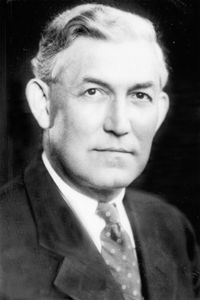 Robert Daniel Carmichael,
On the Theory of Relativity: Mass…
(1913)
“ Furthermore, if any relation other than is the true one, some modification at least of the theory of relativity would have to be made or else one would have to give up postulate which asserts the law of conservation of momentum. ”
Popular Science Monthly (1874)
“ But whether or not momentum necessarily accompanies motion, it was shown above that the same reason for conceiving color to be solely a mode of motion equally obtains in our conception of matter, mass, or inertia, as a mode of motion; and that "all the reality we know" exists, primarily, in changing, but ever-existing, relations and contrasts of modes of motion. ”
 Arthur Eddington,
Space Time and Gravitation: An outline of the general relativity theory…
(1920)
“ We see now that the choice of a permanent substance for the world of perception necessarily carries with it the law of gravitation, all the laws of mechanics, and the introduction of the ordinary space and time of experience. ”
Bertrand Russell,
Our Knowledge of the External World…
(1914)
“ When this is the case, we say that the motion is continuous at the time t; and when the motion is continuous at all times, we say that the motion as a whole is continuous. It is obvious that if the particle were to jump suddenly from P to some other point Q, our definition would fail for all intervals P1 P2 which were too small to include Q. Thus our definition affords an analysis of the continuity of motion, while admitting points and instants and denying infinitesimal distances in space or periods in time. ”
Sir Arthur Stanley Eddington,
The nature of the physical world
(1928)
“ It cannot be too strongly insisted that the terms distance, period of time, mass, energy, momentum, etc., cannot be used in a description of an atom with the same meanings that they have in our gross experience. ”
Alfred North Whitehead,
The Concept of Nature
“ On the orthodox theory the position of the equations of motion is most ambiguous. The space to which they refer is completely undetermined and so is the measurement of the lapse of time. Science is simply setting out on a fishing expedition to see whether it cannot find some procedure which it can call the measurement of space and some procedure which it can call the measurement of time, and something which it can call a system of forces, and something which it can call masses, so that these formulae may be satisfied. ”